Mourning Gecko Care Guide
Is a mourning gecko right for you?
They are one of the better small beginner geckos for someone who wants an interesting animal to watch rather than to hold. The care is genuinely light: room temperature, a small planted tank, a powdered diet, and low UVB. The colony behavior is fascinating, and the low cost of entry is real. The one thing to understand up front is that they breed on their own and keep breeding, so you are signing up to manage a growing group, not a single static pet.
Why mourning geckos are all female
This is the species' headline trait. Mourning geckos are parthenogenetic, which means the entire species is female and each animal reproduces by cloning rather than mating. A single female lays fertile eggs on her own, and every hatchling is a genetically identical female. That has three practical effects for keepers: you never buy or need a male, a lone gecko will still populate a tank, and they are naturally social, so a small colony is the normal way to keep them.
How big do mourning geckos get?
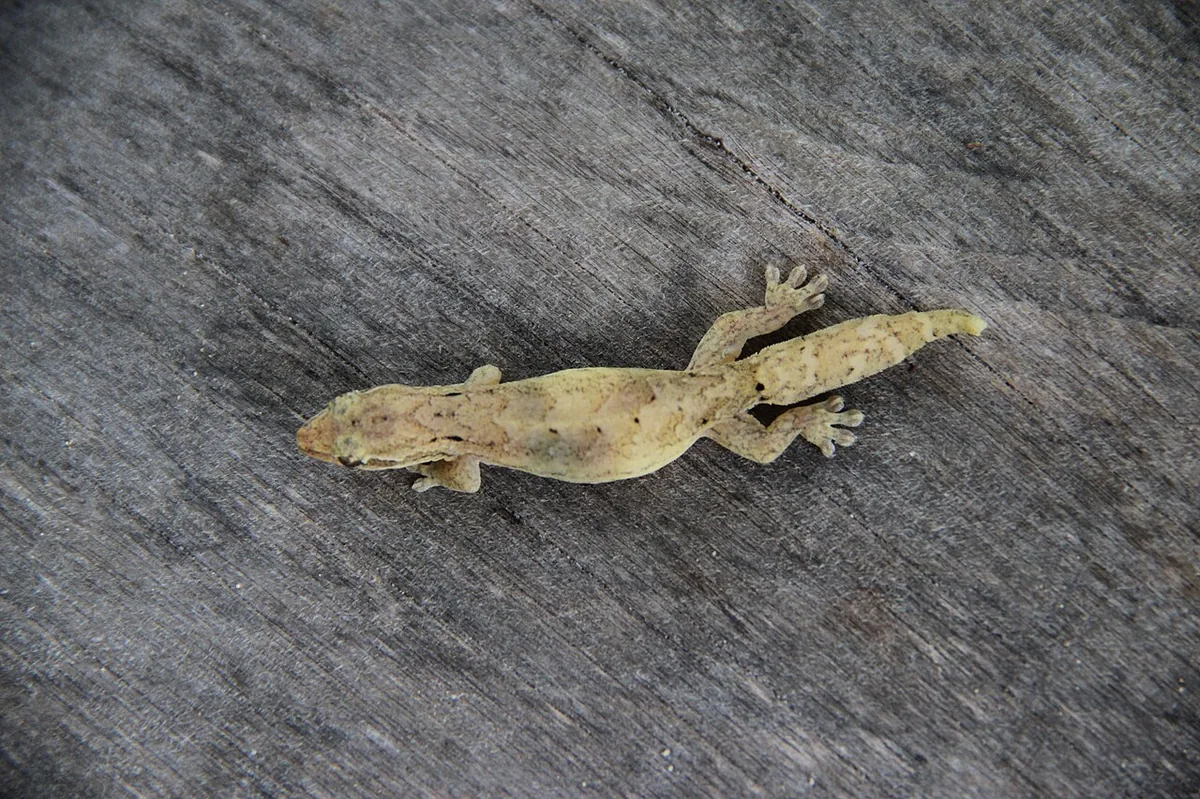
They are one of the smallest pet geckos, reaching roughly 3.5-4 inches (8.5-10 cm) in total length, and about half of that is tail. Snout-to-vent length is only around 1.5-2 inches. They weigh just a few grams. That tiny size is why compact vertical terrariums work so well and why handling is risky: a fall or a grab can injure an animal this small.
How long do mourning geckos live?
With good husbandry, mourning geckos commonly live around ten years, and some keepers report up to fifteen. Longevity depends on steady humidity, a calcium-adequate diet with UVB or dietary D3, and avoiding the chronic stress of an overcrowded colony. Egg-laying females that are not properly supplemented tend to have shorter lives, because each clutch pulls calcium from their bones.
What enclosure does a mourning gecko need?
Think vertical and planted. A 12 × 12 × 18 inch terrarium (roughly 12 gallons) comfortably houses one gecko up to a small colony of three or four. Height and climbable cover matter more than floor space, because they are arboreal and spend their time on glass, branches, and broad-leaf plants.
They are an excellent bioactive candidate: a drainage layer, live plants, and a cleanup crew of springtails and isopods support the 60-80% humidity they need and give the colony places to hide. Use glass with good cross-ventilation, a screen top plus front vents, so the air stays humid without going stagnant and mold-prone. Mist daily to hold humidity.
Do mourning geckos need heat?
Usually not. They are comfortable at about 72-80°F, which is normal room temperature in most homes, so many keepers run no heater at all. If your room drops into the 60s, add a low-wattage heat source to lift the ambient temperature a few degrees. They are a shaded-forest species, not a desert basker, so there is no hot basking spot to provide. Avoid overheating, which stresses them quickly.
Do mourning geckos need UVB?
Current best practice says yes, even though they are active at dusk and night. Because the females lay eggs almost continuously, their calcium demand never really stops, and UVB-driven vitamin D3 is the most reliable way to support that. Use a low-output tube in Ferguson Zone 1 to 2, such as an Arcadia ShadeDweller or a Zoo Med T5 HO 5.0, on a 12-hour cycle, mounted at the distance the bulb maker specifies. If you choose not to run UVB, you must supply vitamin D3 through the diet with a calcium-plus-D3 supplement. UVB is the preferred route.
What do mourning geckos eat?
Their staple is a complete powdered crested-gecko diet, the same kind used for crested and gargoyle geckos.
- Staple: a complete powdered diet (Repashy, Pangea, Black Panther Zoological, and similar) mixed with water, offered fresh and replaced every 24-48 hours.
- Feeder insects (1-2 times a week): calcium-dusted and very small. Their tiny mouths mean fruit flies (flightless), pinhead crickets, newborn dubia or discoid nymphs, red-runner nymphs, and bean beetles. Full-size crickets are too big.
- Supplements: dust feeders with calcium (plain calcium if UVB is present, calcium with D3 if not), and keep a small lick dish of calcium available at all times, because egg production drains calcium constantly.
Common health problems
- Metabolic bone disease (MBD), the "calcium crash": from too little calcium, D3, or UVB. Egg-laying females are the highest-risk group, since each clutch drains calcium. Signs include lethargy, weakness, tremors, a soft or rubbery jaw, and eggs with soft or translucent shells.
- Dehydration: from low humidity or missed misting. Signs are wrinkled or loose skin, sunken eyes, stuck shed, and lethargy. Hold the 60-80% humidity band.
- Dystocia (egg-binding): a female unable to pass eggs, closely tied to calcium depletion and a lack of a moist lay site. Signs include straining, a visible retained egg, and swelling. A case lasting more than 48 hours is a veterinary emergency.
The dystocia and MBD mechanisms above are drawn from crested and leopard gecko veterinary literature; there is no mourning-gecko-specific case series, but the disease class is the same across small geckos. Any suspected case needs a reptile vet.
Managing a colony that clones itself
This is the part most care sheets skip, and it is the responsible-keeper heart of the species. A trio in a 12 × 12 × 18 tank starts laying from around eight months, roughly two eggs every four to six weeks, year-round. A small vivarium can overpopulate within a year. Crowding then causes competition, stress, weight loss in subordinate geckos, and worse reproductive health.
Have a surplus plan before you start. Realistic options: let a bioactive tank partly self-limit, since adults will eat some eggs and hatchlings, expand to a larger enclosure, or rehome extras to other keepers. The one thing you must never do is release them outdoors. Mourning geckos are already an established introduced species in places like Florida and Hawaii, and a single stray female can found a new population.
Common mourning gecko mistakes
- No UVB and no calcium for constantly laying females. The number-one killer specific to this species, leading to MBD, failed clutches, and dystocia.
- Ventilation and lid gaps. Hatchlings are minute and slip through screen ports and lid seams. Use front-opening glass, fine mesh, and seal every gap.
- Overcrowding. Not planning for population growth leads to chronic stress and thin, unhealthy subordinates.
- Letting humidity fall. Causes stuck shed and dehydration. Mist daily and lean on live plants.
- Treating them like a desert or handling species. A hot spot stresses them, and handling risks dropped tails and fatal falls.
- Feeders too large. An animal this small chokes on or refuses oversized prey. Fruit-fly and pinhead scale only.
Related guides
- Crested gecko care, which uses the same powdered diet and arboreal setup
- Gargoyle gecko care, another beginner-friendly arboreal gecko
- All lizard guides
Frequently asked questions
Do mourning geckos need a male?
No. Mourning geckos are parthenogenetic, meaning populations are all-female and reproduce by cloning, so no male exists or is required. A single female will lay fertile eggs on her own and produce genetically identical female offspring. This is the species' defining trait and the reason keepers house them in easy all-female colonies rather than pairs.
Can you handle mourning geckos?
Not really. They are tiny, extremely fast, easily stressed, and readily drop their tails when grabbed. A fall from handling height can injure or kill them. Care sources treat them as a display and observation species rather than a hands-on pet. Interact through feeding and tank maintenance instead of holding them.
Do mourning geckos need UVB?
Current best practice says yes. A low-level UVB source, Ferguson Zone 1 to 2 such as an Arcadia ShadeDweller or a Zoo Med T5 HO 5.0 on a 12-hour cycle, supports vitamin D3 and calcium metabolism. Because females lay eggs almost continuously, UVB meaningfully reduces the risk of metabolic bone disease. If you skip UVB, you must supplement dietary vitamin D3 instead.
How many mourning geckos can live together?
A 12 by 12 by 18 inch vertical terrarium comfortably holds a small colony of about three to four. They are social and generally do well in groups, but crowding triggers a hierarchy where subordinate geckos are stressed and outcompeted. Because they breed continuously, plan for population growth and be ready to expand housing or manage numbers.
Do mourning geckos need heat?
Usually not. They are comfortable at about 72 to 80°F, which is ordinary room temperature in most homes, so many keepers use no supplemental heat at all. If your room drops into the 60s, add a low-wattage heat source to lift the ambient temperature. They are not a desert species and need no hot basking spot.