Crested Gecko Care Guide
Is a crested gecko right for you?
Crested geckos are some of the easiest reptiles to care for. They're nocturnal so they don't need basking heat, they eat a commercial diet so daily insect feeding is optional, and they tolerate room temperatures across most US homes. Excellent first reptile for an apartment.
The catch: heat sensitivity. Crested geckos can die from sustained temperatures above 82°F. Arizona, Texas, and Florida summers without AC are a real risk.
Size
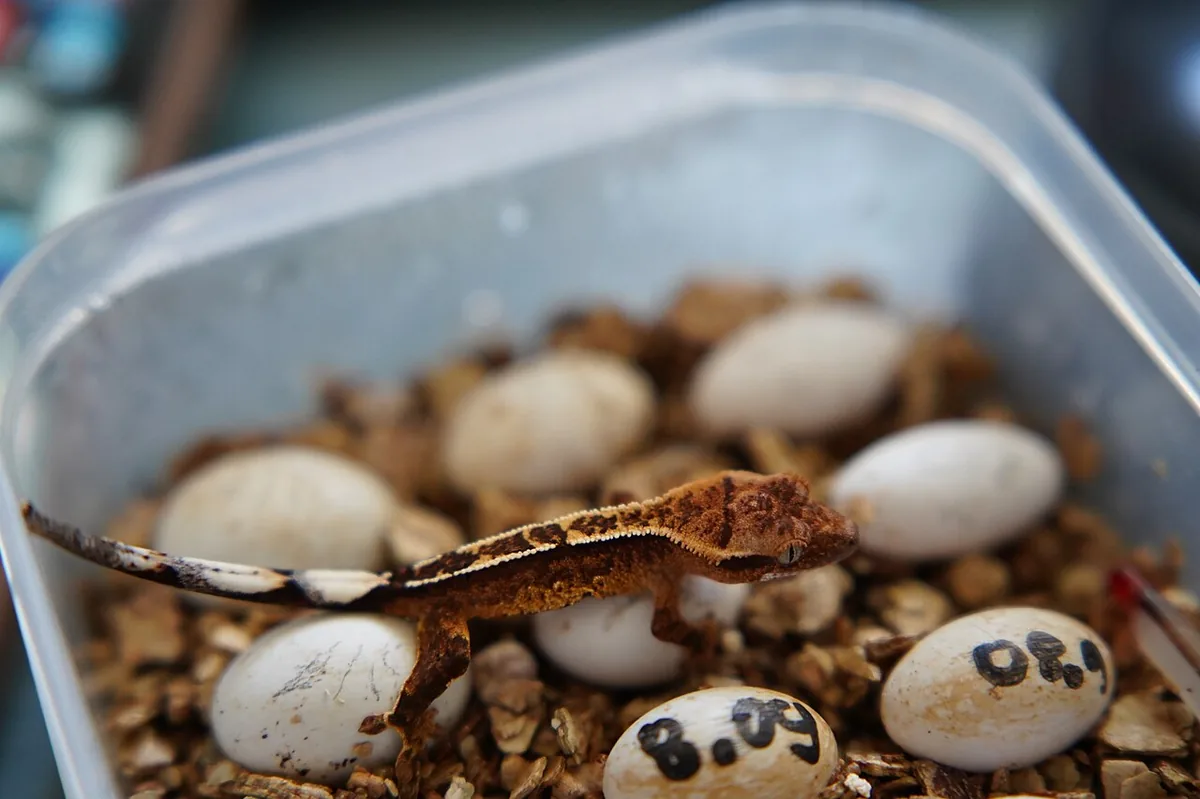
Adult crested geckos reach 6-9 inches in total length and 35-55 grams. They're small. Hatchlings are about 2-3 inches.
Lifespan
15-20 years in captivity. Many will outlive their first owner's college years and into the working career.
Enclosure
Minimum adult enclosure: 18" × 18" × 24" tall (45 × 45 × 60 cm). Height matters more than floor space, crested geckos are arboreal. Standard glass terrariums work well; front-opening designs preferred.
Decoration: cork bark slabs, sturdy branches (oak, dragonwood, manzanita), broad-leaved live or artificial plants (pothos works and is non-toxic). Build up vertical climbing structures. Substrate: coco fiber + sphagnum moss for naturalistic setups, or paper towel for hatchlings until they're feeding reliably.
Temperature
- Day: 72-78°F (22-26°C)
- Night: 65-72°F (18-22°C)
- Maximum tolerated: 82°F (28°C) sustained, over this is dangerous. Spikes above 85°F can be lethal.
Heat is rarely needed if room temperature stays in the comfort range. If supplemental heat is required (cold homes in winter), use a low-wattage halogen on a thermostat with a clear ambient temperature target. NOT a basking lamp.
Humidity
60-80% target, with daily cycling. Mist heavily at night to bring humidity to 80-90% briefly, allowing the enclosure to dry to 50-60% during the day. Constant high humidity (no dry phase) leads to bacterial and fungal problems.
Diet
Crested geckos eat commercial powdered diet mixed with water (called CGD. Crested Gecko Diet). Three major brands are accepted: Pangea (a standard), Repashy Superfoods (Grubs'n'Fruit, Sun-Fire formula), and Black Panther Zoological. Rotate flavors for variety.
Mix 1 part powder to 2 parts water; offer fresh every 1-2 days, removing uneaten food before it dries.
Insects (crickets, dubia roach nymphs) can be offered weekly as enrichment but aren't required when a good CGD is the staple. Dust insects with calcium if offered regularly.
Don't feed: mealworms (low nutrition), waxworms as a staple (too fatty), fruit baby food (insufficient calcium).
UVB
Optional. Low-output linear T5 UVB (Arcadia ShadeDweller) supports vitamin D3 metabolism in addition to dietary D3 in CGD. Recommended but not strictly required if a good CGD with proper D3 is the staple diet.
Handling
Crested geckos tolerate gentle handling but are jumpy and athletic. Handle close to soft surfaces (over a bed or sofa) until you know the animal's behavior. They can jump unexpectedly. Don't grab the tail, they autotomize (drop the tail) and crested gecko tails do NOT regenerate, unlike many other geckos.
Common health problems
- MBD: From insufficient calcium-with-D3 in diet, often from offering inadequate alternatives to a complete CGD.
- Floppy Tail Syndrome: Pelvic deformity from inadequate climbing structure (gecko sleeps head-down on glass for years). Provide proper vertical perches.
- Impaction: From inappropriate substrate or oversized prey.
- Tail loss: Stress response; tail does not regrow. Avoid stressors.
- Heat stress / death: From temperatures above 82-85°F.
Common crested gecko mistakes
- Letting temperatures spike in summer. Check the enclosure temperature on hot days. AC, fans, ice packs in a pinch.
- Skipping CGD for fruit baby food. Causes calcium deficiency and MBD.
- Grabbing the tail. It will drop. It will not grow back.
- Tall narrow enclosure with no horizontal branches. The animal gets pushed to sleep on glass, causing Floppy Tail Syndrome.
- Constant humidity with no dry phase. Leads to skin infections. Mist heavily then let it dry.
- Cohabiting two males. They fight.