How Long Do Red-Eared Sliders Live?
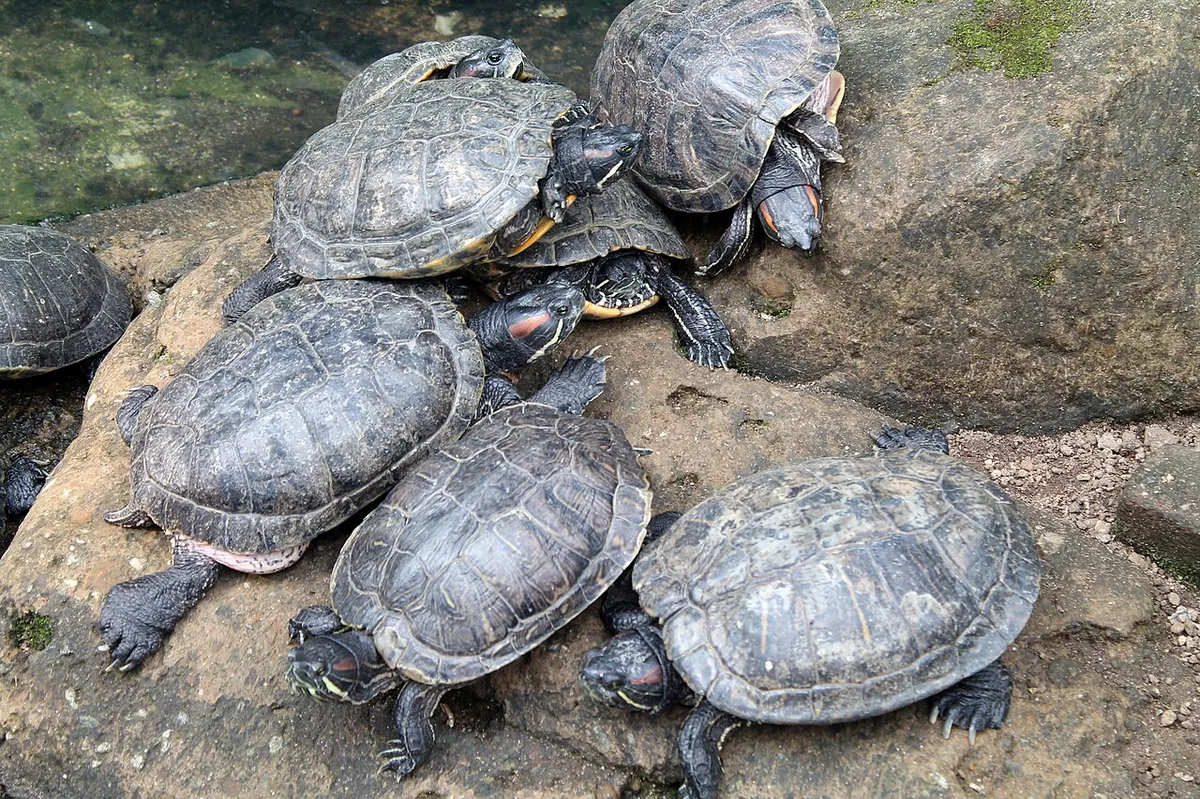
Red-eared sliders commonly live 20 to 30 years or more in captivity. Many do not, and the reasons are predictable: water quality, UVB failure, and being passed on once the adult outgrows the tank it was bought with.
Published lifespan figures
| Figure | Value | Notes |
|---|---|---|
| Commonly published | 20-30+ years in captivity | Widely quoted |
| Well-kept animals | Beyond 30 | Reported |
| Reality for many | Far shorter | Water quality and surrender |
Checked September 20, 2026 against the sources at the foot of this page. Where sources differ the range is shown rather than averaged.
What actually shortens it
Published lifespans describe well-kept animals. The gap between the figure above and what a red-eared slider actually lives is almost entirely husbandry, and these are the levers that matter most.
Water quality
Aquatic turtles eat and defecate in their water, and under-filtering shows up as shell and skin infections long before the water looks dirty. It is the commonest chronic problem in captive aquatic turtles.
UVB failure
Shelled species show calcium problems as soft shell and deformity, and it is usually a lighting failure rather than a diet one. Glass filters UVB out, and bulbs lose output within 6 to 12 months while still looking lit.
Being rehomed, repeatedly
Not a disease, but it belongs here. Animals that outgrow their housing get passed on, and each move is a stressor. For the species most often surrendered, this is a genuine determinant of how long they actually live.
Common questions
How long do red-eared sliders live?
Commonly 20 to 30 years or more in captivity, with well-kept animals exceeding that. Many captive sliders fall well short, usually for husbandry rather than inherent reasons.
What shortens a red-eared slider's life?
Poor water quality causing shell and skin infections, UVB failure causing shell deformity, and repeated rehoming as the animal outgrows tanks. Sliders are among the most surrendered reptiles.
Why do so many pet sliders die young?
Because a coin-sized hatchling is sold with a small kit and becomes a turtle needing 80 gallons or more. What follows is usually under-filtering, inadequate UVB, and eventually rehoming or release.