What do turtles eat?
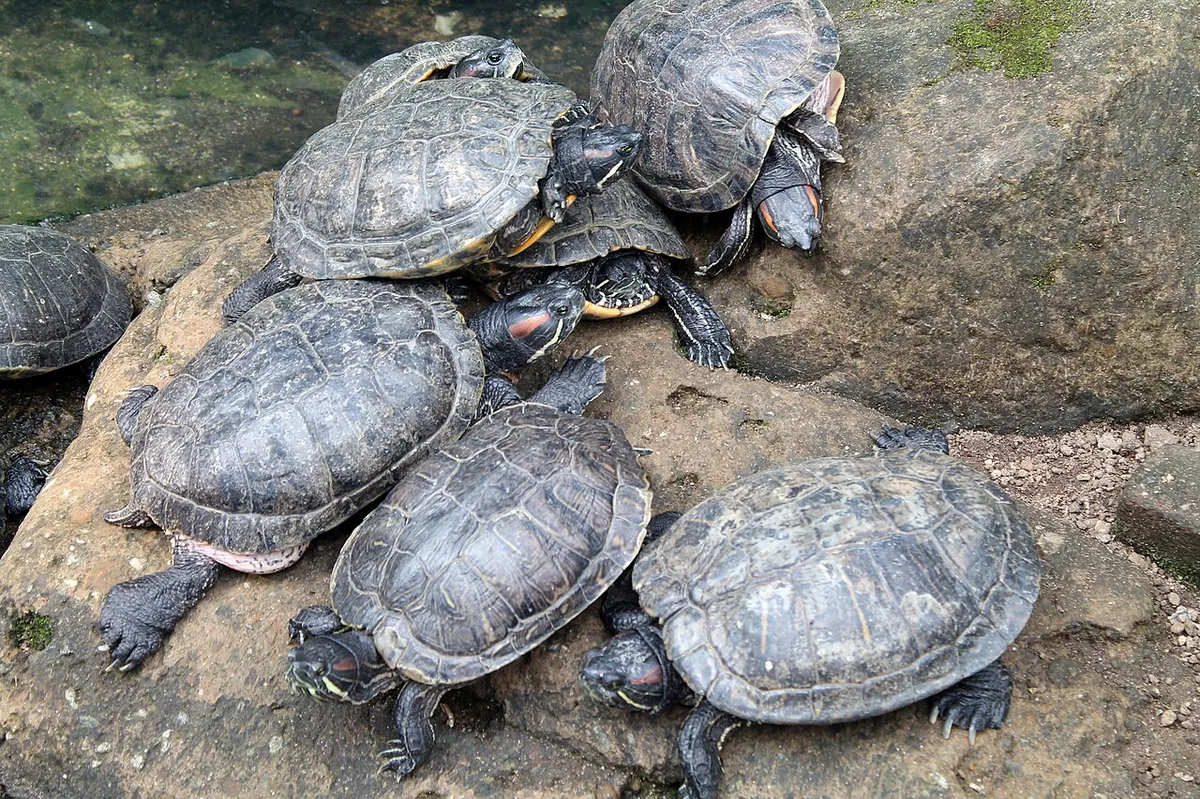
The short answer
Red-eared sliders are omnivores that become steadily more herbivorous with age. Hatchlings and juveniles need substantial animal protein; adults need mostly plants, with protein as a once or twice weekly item. Continuing to feed an adult a juvenile protein load is a leading cause of shell deformity and kidney disease in captive sliders.
Feeding schedule by age
| Life stage | Diet balance | How often | Notes |
|---|---|---|---|
| Hatchling / juvenile, under 1 year | ~50% protein, ~50% plants | Protein daily, greens daily, pellets every other day | Cuttlebone available |
| Sub-adult, 1-4 years | Shifting toward plants | Protein 2-3x/week, greens daily | Cuttlebone available |
| Adult, 4+ years | ~25% protein, ~75% plants | Protein 1-2x/week, greens daily, pellets 2-3x/week | Cuttlebone available |
What to feed
| Food | Role | Why |
|---|---|---|
| Collard greens | Staple plant | Good calcium ratio |
| Dandelion greens | Staple plant | Calcium and vitamin A |
| Red leaf / romaine lettuce | Staple plant | Hydrating; avoid iceberg |
| Aquatic plants (duckweed, anacharis) | Staple plant | Natural grazing behaviour |
| Earthworms | Protein | Well accepted, good nutrition |
| Dubia or discoid roaches | Protein | Clean, good ratio |
| Crickets, silkworms, mealworms | Protein | Rotate rather than rely on one |
| Guppies, mollies, platies, endlers | Protein | Safe feeder fish, no thiaminase |
| Commercial turtle pellets | Supplement | Cap at 25% of diet |
| Carrot, squash (shredded) | Rotation | Beta-carotene for vitamin A |
What never to feed
Items in this table are either outright toxic or cause predictable long-term harm. This is the part of the page worth reading twice.
| Do not feed | Why |
|---|---|
| Goldfish, rosy red minnows | Contain thiaminase, which destroys vitamin B1. |
| Avocado | Toxic. |
| Rhubarb | Toxic; very high oxalate. |
| Onion | Toxic. |
| Citrus | Not tolerated; avoid. |
| Mushrooms | Avoid. |
| Tomatoes | Commonly listed as avoid for this species. |
| A pellet-only diet | Nutritionally incomplete as a sole food and linked to shell problems. |
Where good sources disagree
Care sheets do not all say the same thing, and pretending otherwise helps nobody. These are the real points of difference between the sources cited at the foot of this page, and what we think the safe reading is.
The exact adult protein percentage.
ReptiFiles puts adults at about 25% protein and 75% plants. Other reputable care sources say 30/70, and some veterinary sheets describe adults as "almost entirely" herbivorous. The practical guidance is identical in all three: protein becomes a weekly item rather than a daily one, and plants become the bulk. Anyone feeding an adult slider protein several times a week is outside every one of these recommendations.
Whether feeder fish belong in the diet at all.
Some sources include safe live fish as useful enrichment and a natural foraging behaviour; others advise skipping live fish entirely because of parasite risk. Both agree completely on the part that matters most: goldfish and rosy red minnows are specifically unsafe because of thiaminase, whatever you conclude about feeder fish in general.
What most red-eared slider feeding advice gets wrong
Swollen eyes are a kitchen problem, not an eye problem.
The most common cause of puffy, closed or swollen eyelids in a red-eared slider is hypovitaminosis A, a dietary vitamin A deficiency, usually from a diet of plain pellets or protein with no dark leafy greens or orange vegetables. Owners routinely treat it as an infection. It needs a veterinary diagnosis, because genuine eye infections look similar, and it needs the diet corrected or it returns.
Turtles outgrow their diet, and the tank.
A hatchling slider is the size of a coin and an adult female can exceed 10 inches of shell. Feeding and housing both have to change with the animal. The protein load that builds a healthy hatchling will, continued for years, produce a pyramided shell and damaged kidneys in the adult.
Pellets are a supplement that markets itself as a meal.
Commercial turtle pellets are convenient and nutritionally useful, and they are the single most over-fed item in this species' care. Capping them at about a quarter of the diet, with the rest fresh plants and rotated protein, is the consensus across the sources below.
Common questions
What do turtles eat?
Pet aquatic turtles such as red-eared sliders are omnivores. They eat animal protein including earthworms, insects and safe feeder fish, plus leafy greens and aquatic plants, supplemented with commercial pellets. The balance shifts strongly toward plants as the turtle matures, with adults eating mostly vegetation.
What do red-eared sliders eat as adults?
Roughly 25% protein and 75% plant matter, with protein offered only once or twice a week and vegetables daily. Pellets should stay at or below a quarter of the overall diet. Adults that continue on a juvenile protein load commonly develop shell pyramiding and kidney problems.
Why are my turtle's eyes swollen?
Swollen or puffy eyelids in an aquatic turtle are most often caused by vitamin A deficiency, known as hypovitaminosis A, which comes from a diet lacking dark leafy greens and orange vegetables. It requires veterinary diagnosis because bacterial eye infections appear similar, and correcting the diet is part of the treatment.
Can turtles eat goldfish?
They should not be fed goldfish or rosy red minnows. Both contain thiaminase, an enzyme that breaks down vitamin B1 and causes a thiamine deficiency over time. If feeder fish are offered at all, guppies, mollies, platies and endlers are the commonly recommended safe alternatives.
How often should I feed a red-eared slider?
Juveniles under a year eat protein and greens daily, with pellets every other day. Adults eat greens daily but take protein only once or twice weekly and pellets two to three times weekly. Appetite is not a useful guide in this species; sliders beg persistently regardless of need.
Do red-eared sliders need calcium?
Yes. Calcium supports shell and bone development, and deficiency contributes to metabolic bone disease. The standard approach is a cuttlebone floated in the enclosure, replaced every one to two months, with the plastic backing removed. Calcium also depends on adequate UVB, without which the turtle cannot use it.