Red-Eared Slider Care Guide
Is a red-eared slider right for you?
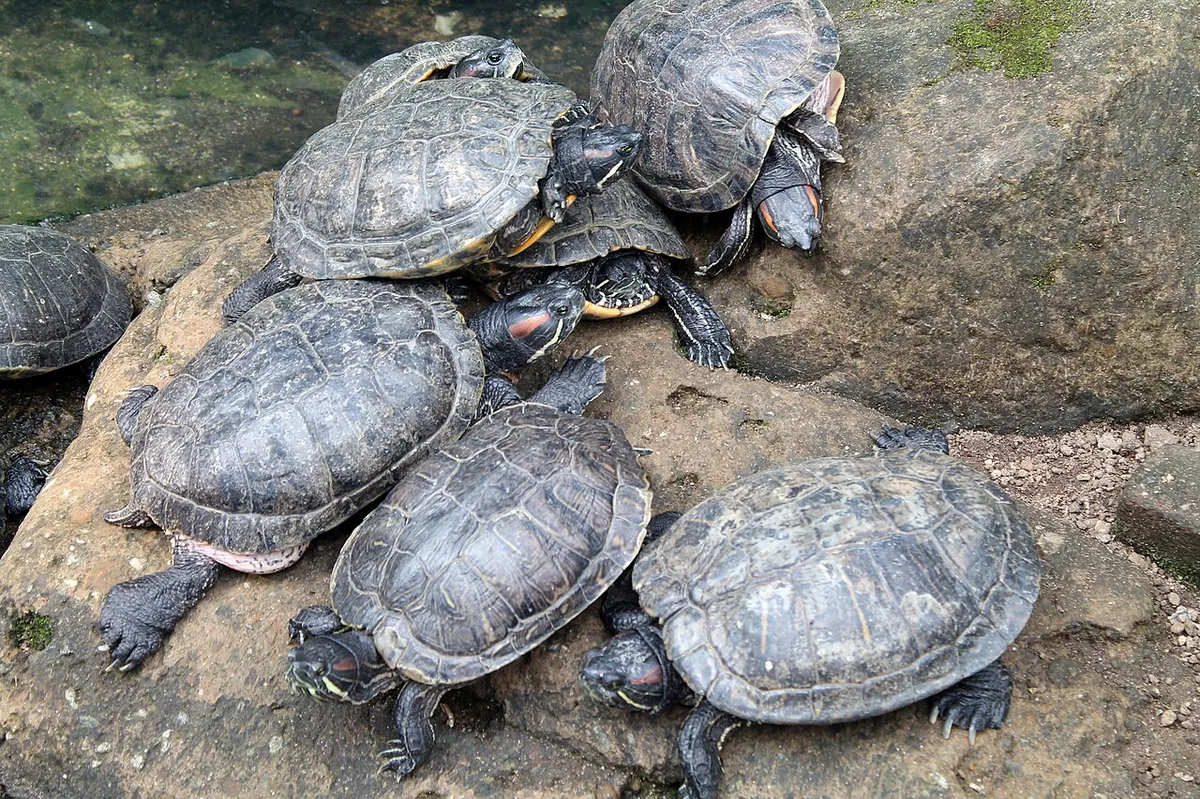
Red-eared sliders are good pets for keepers who can provide a large aquatic setup with appropriate filtration, basking platform, and UVB. They're active, observable, long-lived, and inexpensive to feed.
They're a poor match for apartment dwellers without space for a 100-gallon tank, for people unwilling to maintain a heavily filtered aquatic system, or for households that won't commit to UVB. The cute carnival-prize hatchling becomes a 10-inch turtle with a substantial habitat requirement within a few years.
If you live in the southern US and have outdoor pond space, that's actually the ideal setup, but escapes are an ecological problem (sliders are invasive). Secure your outdoor enclosure.
Size
Adult red-eared sliders: 8-12 inches shell length, with females larger than males. Hatchlings start around 1 inch and grow rapidly for the first 5-7 years. Most reach near-adult size by year 5-7.
Lifespan
20-30+ years with proper care. Some live 40+. This is a multi-decade commitment.
Tank size, the honest numbers
The widely-accepted rule is 10 gallons per inch of shell length. For a 10-inch adult female, that's a 100-gallon tank minimum. A 75-gallon tank is widely cited as the practical adult minimum for most individuals.
This is significantly more than what's typically sold in "starter kits." A 20-gallon tank that fits a hatchling will need to be upgraded multiple times. Plan for the adult tank from the start; you'll save money in the long run.
Water depth should allow the turtle to fully submerge and turn around freely, at least 1.5× shell length. Glass aquariums work; stock tank tubs also work and are cheaper for very large setups.
Filtration
Red-eared sliders produce significant waste. Use a strong external canister filter rated for 2-3× the tank volume. (For a 100-gallon tank, a filter rated for 200-300 gallons.) Brand examples: Fluval FX4 or FX6, Eheim Pro series, SunSun HW-704B (budget option).
Plan to do partial water changes (25-50%) every 1-2 weeks even with strong filtration. Without good filtration, water quality crashes fast and the turtle develops shell rot and respiratory infections.
Basking area
Above-water basking platform large enough for the turtle to fully exit the water and dry completely. Slope or ramp for easy access. The platform sits under a basking lamp and UVB bulb.
- Basking surface temperature: 90-95°F (32-35°C) measured at the shell where the turtle rests
- Water temperature: 75-82°F (24-28°C), use a submersible aquarium heater on a thermostat
Sliders bask to thermoregulate and to dry their shells. Inadequate basking causes shell rot and respiratory issues.
UVB
Required. Use a strong linear T5 HO UVB bulb (Arcadia 12% or Zoo Med Reptisun 10.0 T5 HO) mounted above the basking platform. UVB does not penetrate water effectively, so it must reach the turtle when basking, not when swimming.
Replace UVB bulbs every 6-12 months.
Diet
Red-eared sliders are omnivores. Diet shifts from carnivorous in juveniles (insects, fish, commercial pellet) to more herbivorous in adults (leafy greens with some protein).
Juveniles (under 4 inches): 70% commercial aquatic turtle pellets and protein (small fish, earthworms, dried krill), 30% leafy greens. Feed daily.
Adults (over 4 inches): 30% commercial pellets, 50% leafy greens (collard, dandelion, romaine, water lettuce, duckweed), 20% protein (small fish, earthworms, the occasional pinkie mouse). Feed every other day.
Good commercial pellets: Mazuri Aquatic Turtle Diet, Zoo Med Natural Aquatic Turtle Food, Repto-Min.
Avoid: Cooked meat, processed foods, dog or cat food.
Handling
Sliders generally don't enjoy handling, they're aquatic and stressed out of water. Pick up when necessary (cleaning, vet visits) by supporting the body from below; don't grab by the shell sides (they can bite and scratch). They are not interactive pets the way some lizards are.
Common health problems
- Shell rot: Bacterial or fungal infection of shell. Caused by poor water quality and inadequate basking. Signs: soft spots, foul smell, discoloration.
- Respiratory infection: From cold water, drafts, or chronic stress. Signs: open-mouth breathing, mucus, lopsided swimming.
- Vitamin A deficiency: From diet too heavy in pellets and too light in leafy greens. Signs: swollen eyes, listlessness.
- Metabolic bone disease: From inadequate UVB or calcium. Signs: soft shell, deformed shell growth.
- Pyramiding: Unnatural raised scutes from excess protein in the diet.
Common red-eared slider mistakes
- Undersized tank. 20-gallon tanks for adult sliders are common and grossly inadequate.
- Insufficient filtration. Sliders are messy. Undersized filters can't keep up.
- No basking platform. A floating dock or rock is not enough, the turtle needs to fully exit the water and dry off.
- UVB through glass aquarium lid. UVB doesn't pass through. Mount UVB inside or above a screen top.
- Adult diet too heavy in protein. Causes pyramiding and kidney problems.
- Cohabitation. Sliders may coexist but often don't. Aggression, food competition, and disease transmission are real risks.
- Releasing unwanted sliders into the wild. Sliders are invasive worldwide. Illegal in many areas. Surrender to a rescue or rehome instead.