Russian Tortoise Care Guide
Is a Russian tortoise right for you?
Russian tortoises are small, manageable, and active enough to be engaging. They work well for keepers with outdoor space they can secure (most climates in the southern US, much of California, the southwest, the Mediterranean climate of coastal Oregon). They're less ideal for apartment dwellers who can only offer indoor housing, the species is active and the indoor space requirement is larger than most people expect.
This is a 40-year commitment. Have a succession plan.
Size
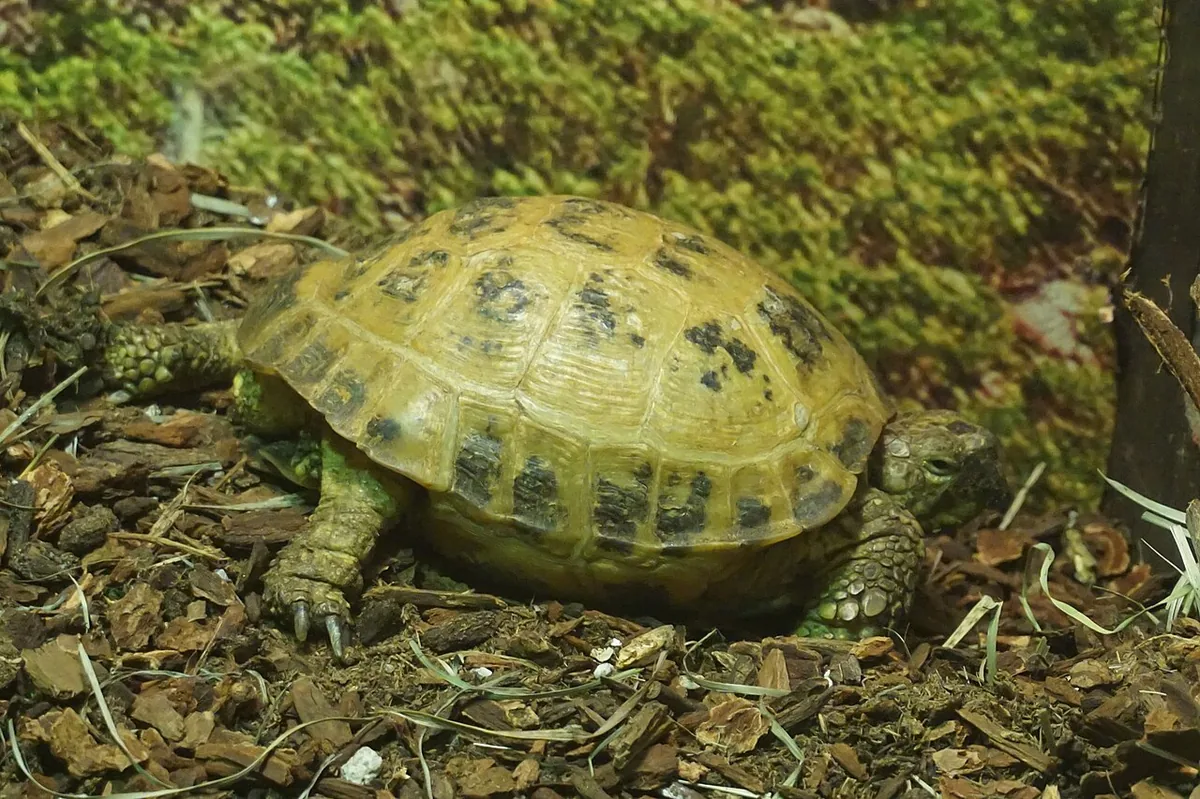
Adult Russian tortoises reach 5-8 inches in shell length and 1.5-2.5 pounds. Females are noticeably larger than males. Hatchlings are about 1 inch.
Lifespan
40+ years routinely; some documented over 50 years. A Russian tortoise will likely outlive the original adult who buys it.
Outdoor enclosure (strongly preferred)
If your climate supports outdoor housing for at least most of the year, this is the best option. Outdoor benefits: natural UVB, natural temperature gradients, natural grazing, natural digging, and behaviors not possible indoors.
Outdoor pen specifications:
- Minimum size: 8 ft × 4 ft for one adult; bigger is better
- Walls: at least 12 inches above ground and buried 8+ inches below ground (they dig)
- Top cover: partially shaded; some exposed to direct sun for thermoregulation
- Hide structures: tortoise houses, cool retreats, perhaps a heated insulated box for cool nights
- Predator-proof: wire mesh top if dogs, raccoons, or birds of prey are concerns
- Plant variety: grasses, edible weeds (dandelion, plantain, clover), let the tortoise graze
Indoor enclosure
If outdoor isn't possible, use a tortoise table (open-top wooden enclosure) at minimum 4 ft × 2 ft, ideally 6 ft × 3 ft or larger. Glass aquariums are inappropriate for tortoises, the glass walls create stress and inadequate ventilation. Open-top tables with low walls work much better.
Indoor setup needs:
- UVB (T5 HO, Arcadia 12% or Reptisun 10.0)
- Basking light (halogen flood, 90-95°F basking surface)
- Hides (warm side and cool side)
- Substrate (coco fiber + topsoil, deep enough for digging, 4+ inches)
- Water dish (shallow, for soaking)
- Edible plants if possible
Temperature
- Basking spot: 90-95°F (32-35°C)
- Ambient daytime: 75-85°F
- Cool side: 70-75°F
- Night: 60-70°F (no heat needed unless room drops below ~60°F)
Diet
Russian tortoises are grazers. Their diet should be 80%+ grasses and weeds, with some leafy greens, very limited vegetables, and essentially no fruit.
Good staples (offer daily): Dandelion (leaves AND flowers), plantain (the weed, not the banana), clover, mallow, hibiscus, grape leaves, mulberry leaves, grasses (lawn grass if pesticide-free).
Acceptable greens: Collard, mustard, turnip greens, romaine, endive, escarole.
Limited: Spinach (oxalates), kale (goitrogenic in excess), bell pepper, butternut squash, summer squash. Once or twice weekly.
Avoid: Lettuce (iceberg, head, no nutrition), fruit (sugar, causes parasitic overgrowth), commercial tortoise pellets (high protein, opposite of what Russian tortoises need), spinach as a staple.
Calcium: provide a cuttlebone in the enclosure for self-supplementation. Dust food lightly with calcium powder (no D3) twice weekly if UVB is properly provided.
Brumation
Russian tortoises naturally hibernate during cold months, this is called brumation in reptiles. In captivity, brumation is optional but, done correctly, supports natural cycles and reproductive health.
Brumation requires: A healthy tortoise (vet-checked, properly weighted, free of parasites), an empty digestive tract (stop feeding 2 weeks before brumation), and a brumation space at 40-50°F (4-10°C) consistently, typically a refrigerator-style brumation box in a cool basement or wine fridge.
Don't brumate: Hatchlings, sick or underweight animals, or animals you can't keep at consistent low temperatures. Half-brumation (cooling but not enough to truly slow metabolism) starves the animal slowly.
Handling
Tortoises generally don't enjoy handling but tolerate brief contact. They should not be held high above ground (dropping = shell fracture, often fatal). Pick up only when necessary, support with both hands, keep low to the ground.
Common health problems
- Metabolic Bone Disease / shell pyramiding: From inadequate UVB, too-high protein diet, or chronic humidity issues. The shell shows raised pyramids over each scute instead of being smooth.
- Respiratory infection: From cold, damp conditions. Symptoms: bubbling from nose, lethargy.
- Parasites: Common in wild-caught and recently-imported animals. Fecal exam by exotic vet.
- Bladder stones: From dehydration or high-protein diet. Symptoms: straining, lethargy.
- Egg binding: Female tortoises can develop infertile eggs; provide nesting substrate.
Common Russian tortoise mistakes
- Glass aquarium as adult housing. Use a tortoise table.
- Fruit and pellet diet. Causes parasite overgrowth and metabolic problems. These are grazers.
- Inadequate UVB. Causes shell pyramiding and MBD.
- Brumation without adequate temperature control. Causes slow starvation. Either brumate correctly or don't brumate at all.
- Cohabitation. Males fight; mixed pairs result in chronic harassment of the female.
- Underestimating the activity space. Russian tortoises range over significant territory in the wild. Indoor enclosures are almost always too small.