How Big Do Map Turtles Get?
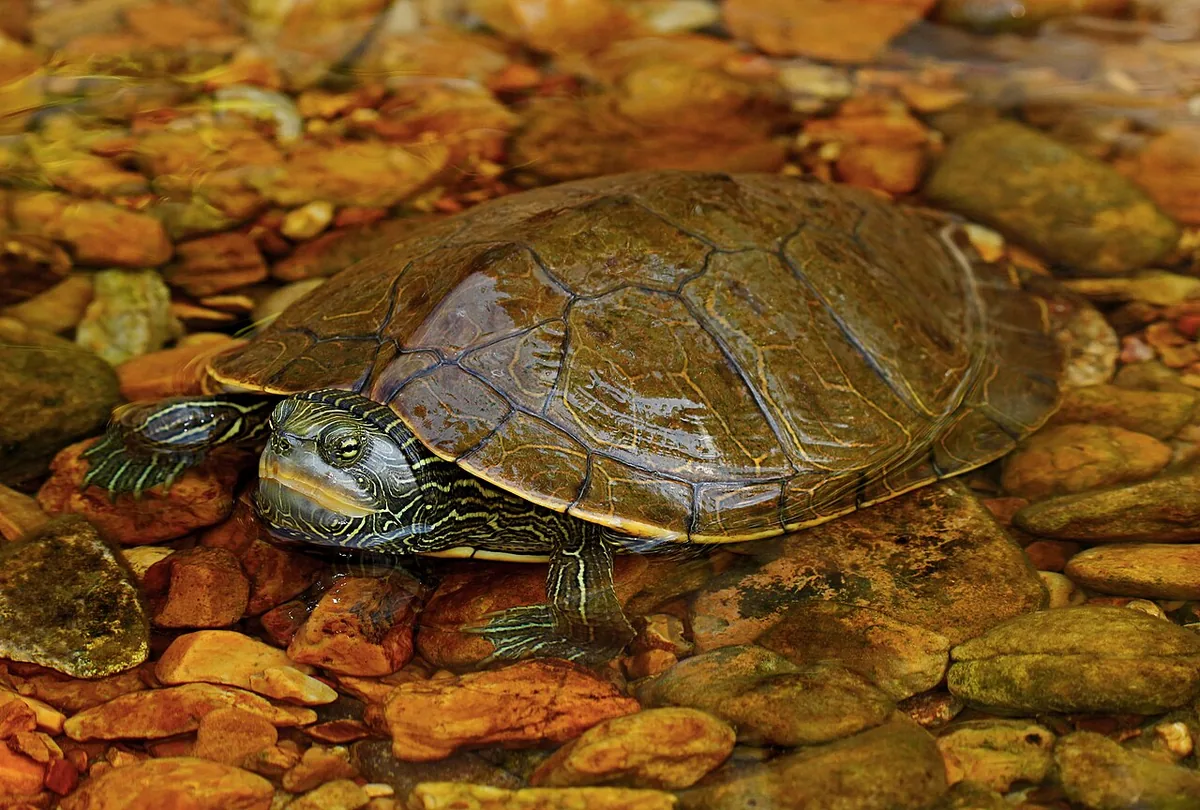
Male map turtles reach around 5 inches while females can reach 12, more than twice the length. Because hatchlings cannot be reliably sexed, the tank you will eventually need is genuinely uncertain at purchase.
Published adult size figures
| Figure | Value | Notes |
|---|---|---|
| Adult males | Around 5 in | Published figure |
| Adult females | Up to 12 in | More than twice male length |
| Head shape | Females develop broad heads | With alveolar crushing surfaces |
Checked September 20, 2026 against the sources at the foot of this page. Where sources differ the range is shown rather than averaged.
Getting there
The sexes diverge substantially
Males stay small-headed and small-bodied; females develop both greater size and the broad head that lets them crush molluscs.
You cannot tell at purchase
Sexing hatchlings is unreliable, which is why planning for the female outcome is the safer approach.
What that size means in practice
The tank depends on a coin flip
An adult female is commonly quoted as needing 600 litres or more, while a five-inch male needs considerably less. That is a different aquarium, not an upgrade.
Head shape changes the diet too
Broad-headed adult females are strongly molluscivorous while males remain primarily insectivores, so sex affects feeding as well as housing.
Common questions
How big do map turtles get?
Males typically reach around 5 inches and females up to 12, which is more than double. Females also develop noticeably broader heads with crushing surfaces in the jaw.
Why does map turtle sex matter so much for size?
Because the difference is not marginal. A five-inch male needs considerably less water than a female commonly quoted as needing 600 litres or more, and hatchlings cannot be reliably sexed.
Does size affect what map turtles eat?
Yes. Broad-headed adult females feed heavily on molluscs, while males remain primarily insectivores, so the sexes genuinely eat differently.