What do map turtles eat?
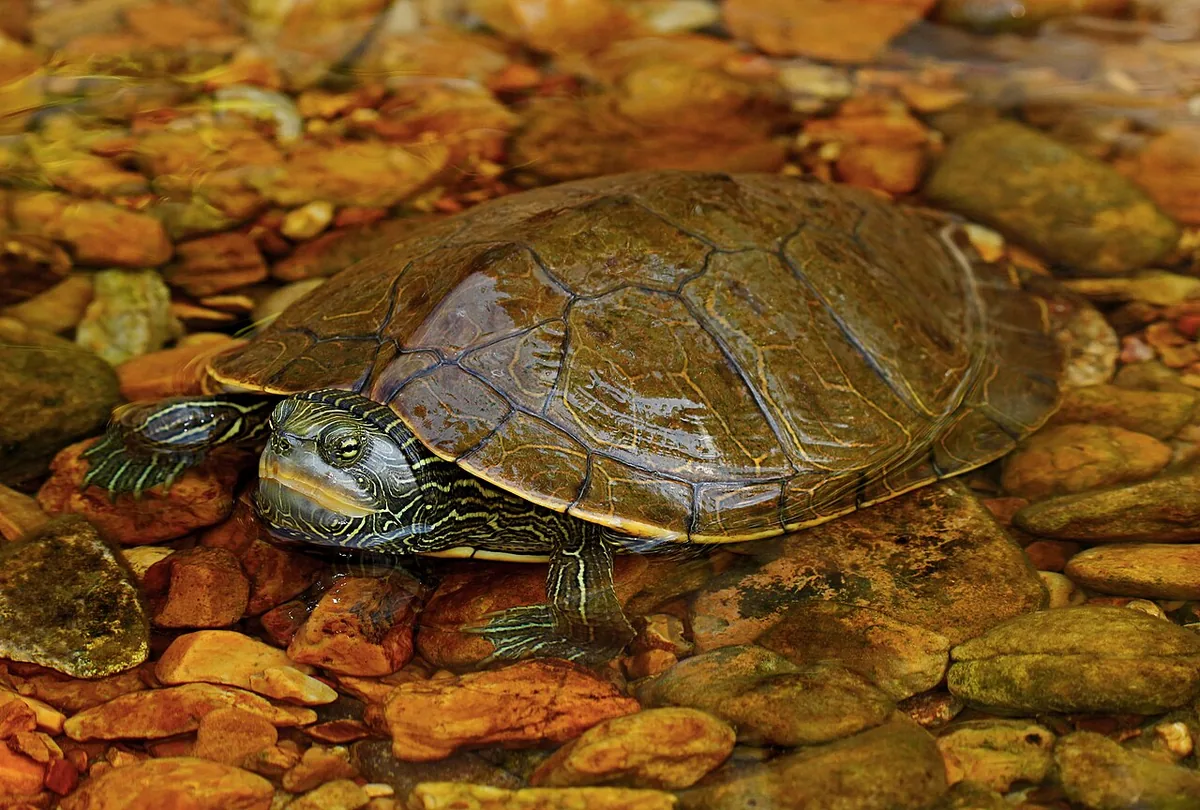
The short answer
Map turtles are mainly molluscivores, and this is the rare species where the animal's sex genuinely changes the correct diet. Across the genus, adult females develop broad heads with alveolar crushing surfaces and eat snails, clams and crayfish, while males stay small-headed and remain primarily insectivorous. The degree of difference varies by species.
Feeding schedule by age
| Life stage | Diet balance | How often | Notes |
|---|---|---|---|
| Juvenile (either sex) | Insects, small crustaceans | Daily | Small jaws; soft-bodied prey |
| Adult male | Aquatic insects, small crustaceans | Every other day | Stays insectivorous |
| Adult female | Snails, clams, crayfish | Every other day | Broad head built for crushing |
| Both | Commercial pellets | Minority of diet | Supplement, not the diet |
Intervals and ratios here follow the sources listed at the foot of this page, checked September 20, 2026. Where those sources differ, the disagreement is set out in Where good sources disagree rather than averaged into a single number. Figures resting on keeper consensus rather than a published source are labelled as such where they appear.
What to feed
| Food | Role | Why |
|---|---|---|
| Snails | Staple for females | Natural prey; the jaws are built for them |
| Crayfish | Staple | Well accepted by larger animals |
| Aquatic insects | Staple for males and juveniles | Matches the natural male diet |
| Earthworms | Staple | Readily taken by both sexes |
| Frozen shrimp and krill | Rotation | Good variety and calcium |
| Commercial turtle pellets | Supplement | Keep to a minority of intake |
| Leafy greens and aquatic plants | Minor | Less than a slider needs |
| Cuttlebone | Calcium | Left available; replace every 1-2 months |
What never to feed
Items in this table are either outright toxic or cause predictable long-term harm. This is the part of the page worth reading twice.
| Do not feed | Why |
|---|---|
| Goldfish and rosy red minnows | Contain thiaminase, which destroys vitamin B1. |
| A plant-led slider diet | Map turtles stay carnivore-leaning; this underfeeds them. |
| A pellet-only diet | Nutritionally incomplete and misses the calcium shelled prey provides. |
| Avocado | Toxic. |
| Poor water quality | Not a food, but this species tolerates it worse than sliders and stops feeding. |
Where good sources disagree
Care sheets do not all say the same thing, and pretending otherwise helps nobody. These are the real points of difference between the sources cited at the foot of this page, and what we think the safe reading is.
Whether to feed males and females differently in captivity.
The wild dietary split is well documented and driven by head morphology. In captivity most keepers offer a mixed diet to both sexes and let the animal take what it can handle, which works. The useful point is not to be surprised when a broad-headed female ignores insects in favour of snails, or when a small male cannot manage a large clam.
What most map turtle feeding advice gets wrong
The sex of your map turtle changes its diet.
This is unusual enough to be worth stating plainly. Adult female map turtles develop markedly wider heads with broad crushing surfaces in the jaw, and feed heavily on molluscs. Adult males stay small-headed and eat aquatic insects and small crustaceans. Care sheets that give one diet for the species are describing an average that fits neither adult well. Offer snails and crayfish for females and insect-based foods for males, and both for juveniles.
Snails are not a treat here, they are the point.
For a female map turtle, shelled prey is what the animal's skull is built to process, and it supplies calcium that pellets do not. Sourcing snails takes more effort than opening a tub of pellets, and it is the single biggest improvement most map turtle keepers could make to the diet.
They are not sliders, so water quality is a feeding issue.
Map turtles come from clear, fast-flowing rivers and are noticeably less tolerant of poor water conditions than sliders. A map turtle that goes off food is often telling you about the filtration rather than the menu. Check water parameters before changing the diet.
Common questions
What do map turtles eat?
Mainly molluscs and other invertebrates. Adult females eat snails, clams and crayfish, using broad jaws built for crushing shells. Adult males and juveniles are primarily insectivorous, taking aquatic insects and smaller crustaceans. Both need far less plant matter than a slider.
Do male and female map turtles eat different things?
Yes, and it is well documented across the genus Graptemys. Females develop wide heads with alveolar crushing surfaces and feed heavily on molluscs; an Animal Diversity Web account for Cagle's map turtle reports molluscs at 88% of the adult female diet. Males stay small-headed and remain primarily insectivores. The degree of difference varies between species.
Can map turtles eat pellets?
As a supplement, yes, but pellets should be a minority of the diet. They miss the calcium that shelled prey provides and do not match what either sex naturally eats. Snails, crayfish, insects and worms should form the bulk.
How often should I feed a map turtle?
Juveniles daily and adults roughly every other day. Because they are less tolerant of poor water quality than sliders, uneaten food is a bigger problem here, so feed measured amounts and remove leftovers.
Why has my map turtle stopped eating?
Check water quality first. Map turtles come from clear, fast-flowing rivers and respond to poor water conditions by going off food before other signs appear. Temperature, basking access and recent changes are the other common causes.