Woma Python Care Guide
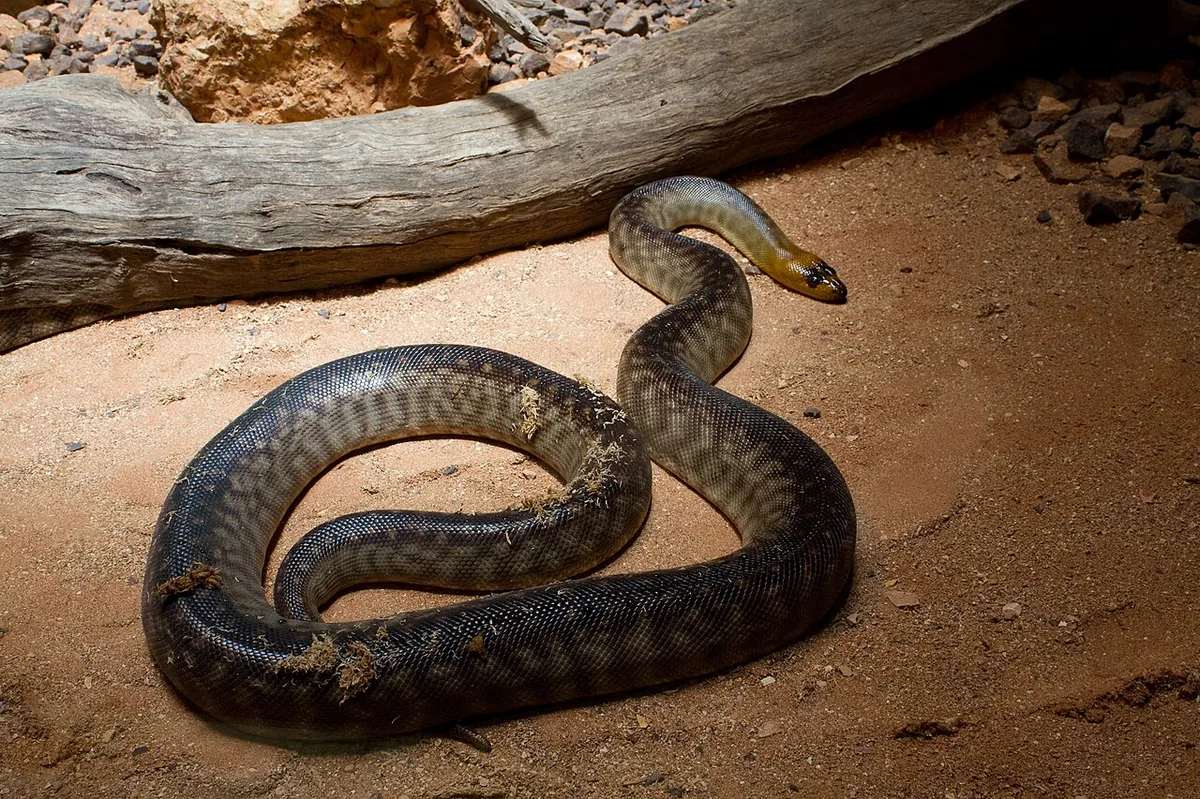
An Australian desert python with a banded body, a pale head and one genuinely unusual trait: like the rest of its genus it has no heat-sensing pits, which every other python has. Hardy, long-lived, and known for an enthusiastic feeding response.
Woma Python at a glance
| Adult size | ~5 ft typical · southern animals 7.5-8 ft |
| Lifespan | 20-30 years |
| Enclosure | 6 x 2 x 2 ft minimum for an adult |
| Temperature | Basking 85-90°F · cool end 70-80°F |
| Humidity | Low. Arid-habitat species |
| Substrate | Sand or aspen; they burrow |
| Heat pits | None (no labial pits). Unique to Aspidites among pythons |
| Heating safety | Thermostat-controlled and guarded only. No heat rocks |
| Diet | Rodents in captivity; wild diet includes many reptiles |
| Housing | Strictly solitary — cannibalism risk |
| Experience | Intermediate |
What most woma python care sheets get wrong
These are the errors that show up most often in secondary care sheets and forum advice. Each one is a real welfare issue, not a preference.
They are the pythons without heat pits.
Every other python has heat-sensing pits along the labial scales, used to detect warm-bodied prey in darkness. The genus Aspidites, which contains the woma and the black-headed python, does not. It is a real anatomical difference rather than a curiosity, and it is thought to relate to a wild diet containing a high proportion of reptiles, which are not warm. Practically it means a woma locates prey by scent and movement rather than by heat.
No heat pits is a burn-safety issue, not just a feeding one.
The practical consequence that matters most is not how a woma finds prey, it is how it fails to notice a hazard. Care guidance for Aspidites specifically warns against heat rocks because serious contact burns can result, and recommends thermostat-controlled, guarded heat sources. Womas do retain some thermal sensitivity through specialised rostral scales at the snout tip, but not the labial pit organs other pythons use. Never rely on the snake to move off something too hot.
The feeding response is the thing keepers warn each other about.
Womas are widely described as having an enthusiastic and somewhat indiscriminate feeding response. Combine that with no heat pits and you get a snake that will investigate anything entering the enclosure, including a hand. This is not aggression and it is manageable: use a hook to signal handling time, keep feeding separate and predictable, and never reach in without announcing yourself.
Arid does not mean neglect the water bowl, but it does mean dry.
Womas come from red sand desert and spinifex country. Keepers coming from ball pythons often raise humidity out of habit, which in this species contributes to scale rot and respiratory problems. Provide fresh water and keep the enclosure dry.
Why keep a woma python
- A python that genuinely looks different: banded body, broad pale head, no pits
- Manageable adult size for a python, and a hardy arid setup
- Long-lived at 20-30 years
- Active and inquisitive; womas are notably busy snakes
- Entirely captive bred, since Australia does not export wildlife
Why you might not want one
- Famously strong feeding response; a hook and a routine are not optional
- Cannibalistic, so no cohabitation at any age
- Needs real floor space: 6 ft of enclosure for an adult
- 20-30 year commitment
Common questions
Do woma pythons have heat pits?
No. The genus Aspidites, which includes the woma and the black-headed python, is the only python group that lacks heat-sensing pits. All other pythons have them along the labial scales to detect warm-bodied prey. Womas locate prey by scent and movement instead.
How big do woma pythons get?
Most adults are around five feet, though southern locality animals can reach seven and a half to eight feet. They are moderately built rather than heavy-bodied, and an adult needs an enclosure of at least six feet long so it can stretch out completely.
Are woma pythons aggressive?
Not aggressive, but they do have a famously enthusiastic feeding response and will investigate anything that enters the enclosure. Using a hook to distinguish handling time from feeding time, and keeping the feeding routine predictable, manages this well.
Can woma pythons be housed together?
No. There is a genuine risk of cannibalism, and cohabitation is not recommended at any age. Like other snakes with reptile-eating tendencies, they should be housed individually.
How long do woma pythons live?
Twenty to thirty years with good care, which makes them a long commitment. They are entirely captive bred in the pet trade, since Australia does not permit the export of its native wildlife.