Red-Eyed Crocodile Skink Care Guide
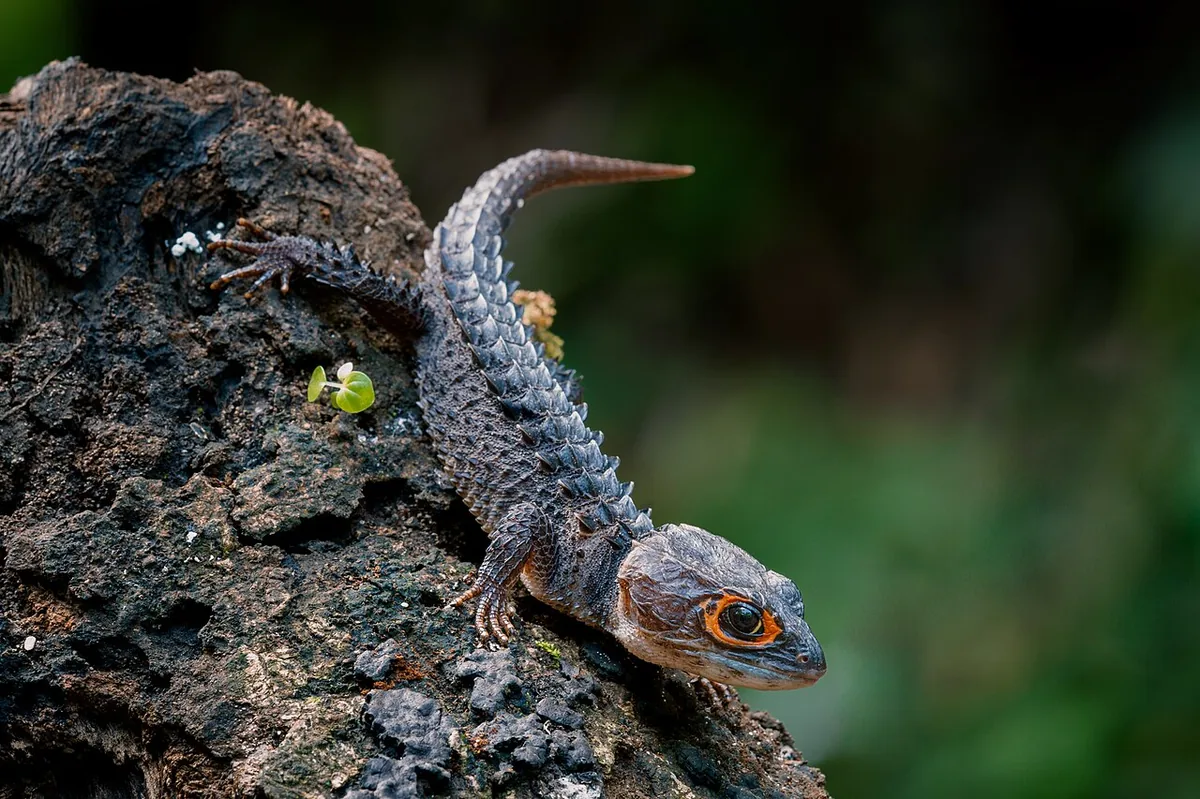
A 6-8 inch armored skink that looks like a miniature dragon and behaves like a shy forest animal. Cool and humid, not hot and dry. Display-first, and genuinely rewarding if you accept it is not a handling pet.
Red-Eyed Crocodile Skink at a glance
| Adult size | 6-8 in total length |
| Lifespan | 8-10 years |
| Enclosure | 30 x 12 x 12 in minimum (20-gal long) |
| Temperature | Ambient 72-76°F · basking ~85°F, never above 86°F |
| Humidity | 70-90%, daily misting or a misting system |
| UVB | Low-output (5-6%) recommended, not optional in practice |
| Diet | Crickets, dubia, isopods, worms. All live insects only |
| Handling | Minimal: drops its tail and stresses easily |
| Activity | Crepuscular (dawn and dusk) |
What most red-eyed crocodile skink care sheets get wrong
These are the errors that show up most often in secondary care sheets and forum advice. Each one is a real welfare issue, not a preference.
They are not a hot-basking lizard.
Most beginner lizard advice assumes a desert animal and pushes basking temperatures into the 95-100°F range. Crocodile skinks come from cool, wet forest floor habitat in New Guinea. Sustained heat above 86°F is dangerous. If a care sheet gives you a bearded dragon temperature gradient for this species, stop reading it.
A tail drop is not a minor event.
Crocodile skinks autotomize readily, and unlike a leopard gecko the regrown tail is usually a poor cosmetic match. Handling for the sake of handling costs the animal a tail. There is no husbandry benefit to it.
Wild-caught is still the default, not the exception.
Captive breeding is improving but a large share of animals in US stores are imported. An imported skink typically arrives dehydrated and carrying parasites. A fecal check with an exotics vet in the first weeks is reasonable, not paranoid.
Why keep a red-eyed crocodile skink
- Looks like nothing else in the hobby: armored dorsal scales and a bright orange eye ring
- Small footprint. A correct adult setup fits a 20-gallon long
- Active at dawn and dusk, when most keepers are actually home
- Vocal. They squeak, which almost no other pet lizard does
- Thrives in a bioactive setup, so maintenance drops once it is established
Why you might not want one
- Not a handling animal. They drop their tails and stress visibly
- Humidity is unforgiving. This species dies in dry rooms
- Shy. Expect to see a hiding animal for the first several weeks
- Most are still wild-caught, which means parasites and a rough start. Ask before you buy
Common questions
How big do red-eyed crocodile skinks get?
Adults reach 6 to 8 inches in total length, including the tail. Hatchlings are only 1.5 to 2 inches. They are a small, stocky lizard, and the adult size means a 20-gallon long enclosure is genuinely adequate floor space rather than a bare minimum you will outgrow.
Do red-eyed crocodile skinks make good pets for beginners?
Not really. They are hardy once their humidity is right, but that humidity is unforgiving, most available animals are wild-caught, and they are a display species rather than a handling one. A first-time keeper who wants to interact with their lizard will be happier with a leopard gecko or a bearded dragon.
What temperature do crocodile skinks need?
Ambient temperature of 72 to 76°F with a basking area around 85°F. Do not exceed 86°F. This is a cool forest-floor species, and overheating is one of the most common fatal mistakes because keepers apply desert-lizard advice to them.
Why is my crocodile skink squeaking?
Squeaking is normal and it is one of the species' most distinctive traits. They vocalize when startled, restrained, or handled. It is a distress signal, so frequent squeaking is a reason to handle the animal less, not a trick to show visitors.
Do red-eyed crocodile skinks need UVB?
Low-output UVB (around 5 to 6 percent) is strongly recommended. They are crepuscular rather than full sun baskers, so they do not need a high-output desert bulb, but keepers who provide low UVB report better long-term bone health and activity.
Can I keep two crocodile skinks together?
One male with one or two females can work in a large, well-planted enclosure with multiple hides. Two males will fight. Because sexing is difficult in juveniles, most keepers should plan for a single animal unless buying confirmed adults from a breeder.