← Red-Eyed Crocodile Skink care guide
What do red-eyed crocodile skinks eat?
The short answer
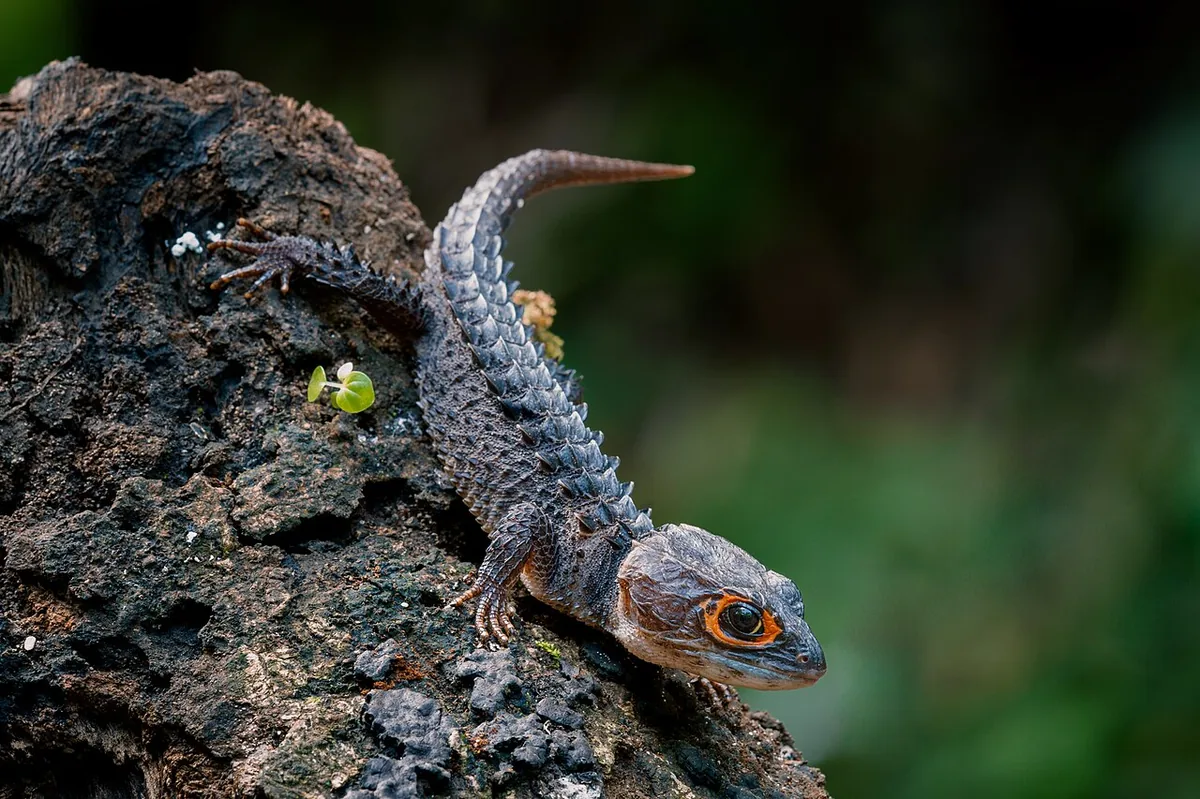
Red-eyed crocodile skinks are crepuscular insectivores from cool, humid forest floor. They eat a standard rotation of gut-loaded insects, but the practical challenge is behavioural: they are shy, they hide, and a keeper who only offers food in daylight from a bowl may rarely see them eat at all.
Feeding schedule by age
| Life stage | Diet balance | How often | Notes |
|---|---|---|---|
| Juvenile | Small insects | Daily | Growing |
| Adult | Insect rotation | Every 1-2 days | Offer near dusk |
| All ages | Bioactive clean-up crew | Constant | Provides ongoing foraging |
What to feed
| Food | Role | Why |
|---|---|---|
| Isopods | Staple | Ideal, and self-sustaining in a bioactive setup |
| Springtails | Supplement | Constant low-level food for a shy species |
| Dubia roaches | Staple | Good protein and ratio, low chitin |
| Crickets | Staple | Cheap and active; gut-load first |
| Black soldier fly larvae | Staple | Naturally calcium-rich |
| Hornworms, silkworms | Rotation | Hydrating and low fat |
| Waxworms, superworms | Treat only | High fat |
| Gut-loaded insects | Requirement | Feed the insects 24-48h before offering |
| Calcium dusting | Requirement | Insects are calcium-poor and phosphorus-rich |
What never to feed
Items in this table are either outright toxic or cause predictable long-term harm. This is the part of the page worth reading twice.
| Do not feed | Why |
|---|---|
| Feeding only in daylight | Misses when this crepuscular species actually forages. |
| Fruit and vegetables as a food group | Not usable by an insectivore. |
| Wild-caught insects | Pesticide, parasite and toxicity risk. |
| Fireflies / lightning bugs | Toxic to reptiles. |
| Prey larger than the space between the eyes | Standard feeder-size rule; impaction risk. |
| Relying on one feeder species | Variety covers what a single insect cannot. |
Where good sources disagree
Care sheets do not all say the same thing, and pretending otherwise helps nobody. These are the real points of difference between the sources cited at the foot of this page, and what we think the safe reading is.
Whether a bioactive setup is necessary.
It is not strictly required, but the species suits it unusually well. Isopod and springtail colonies give a shy, crepuscular animal something to forage continuously, which several keepers report improves feeding consistency over bowl-only routines.
What most red-eyed crocodile skink feeding advice gets wrong
A skink you never see eating is not necessarily a skink that is not eating.
These are shy, crepuscular animals that spend daylight hidden. New keepers frequently conclude their skink has stopped feeding when it is simply eating when nobody is watching. Weigh the animal and check for frass in the enclosure before assuming a problem.
Cool and damp is a feeding requirement, not just a comfort.
Crocodile skinks come from cool, humid New Guinea forest floor. An enclosure run at bearded dragon temperatures will suppress appetite and, past a point, cause real harm. If a settled animal stops eating, check the temperature and humidity before changing the feeders.
Common questions
What do red-eyed crocodile skinks eat?
Live insects: crickets, dubia roaches, black soldier fly larvae and worms, gut-loaded and dusted with calcium. Isopods and springtails in a bioactive enclosure provide additional continuous foraging that suits their shy nature.
Why don't I ever see my crocodile skink eat?
They are crepuscular and shy, feeding around dawn and dusk and hiding during the day. New arrivals in particular may not eat visibly for weeks. Weigh the animal and look for droppings rather than relying on watching it feed.
Do crocodile skinks need UVB?
Low-output UVB is recommended to support calcium metabolism. They are crepuscular rather than baskers, so a high-output desert bulb is inappropriate and potentially harmful.