← Red-Eyed Crocodile Skink care guide
Red-Eyed Crocodile Skink Enclosure and Habitat
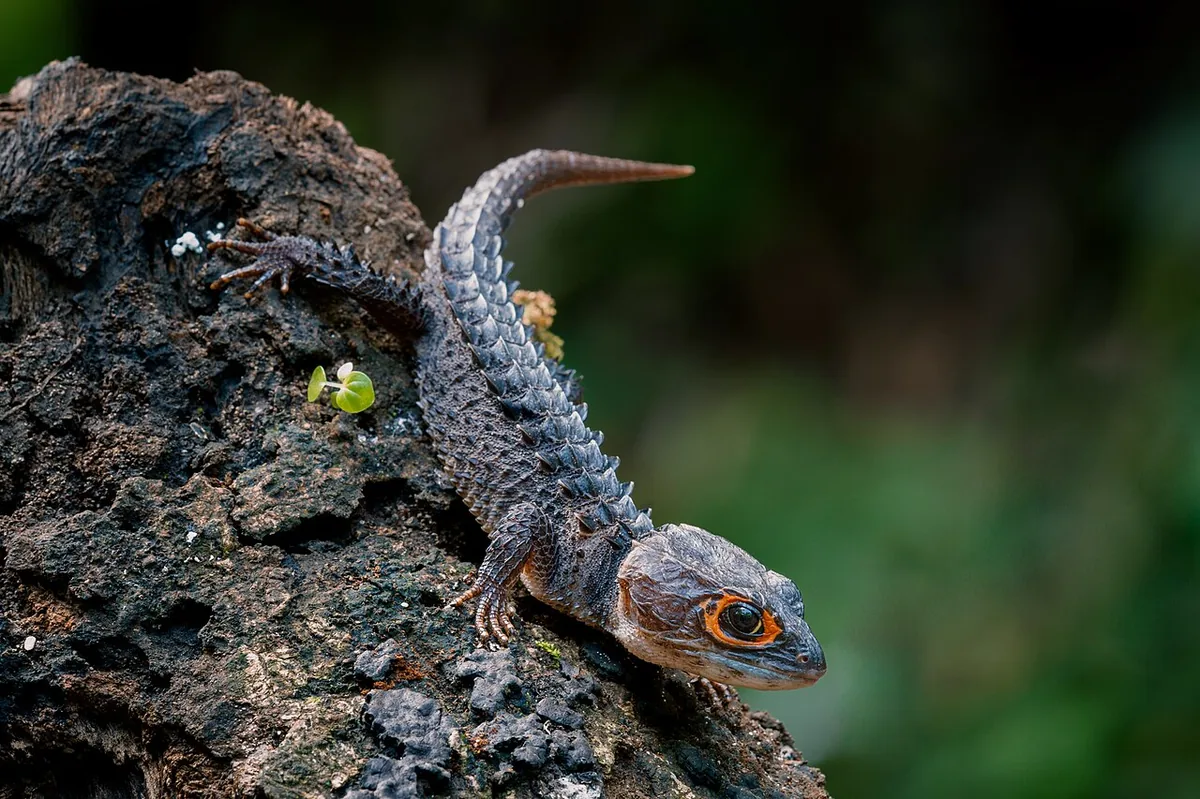
Red-eyed crocodile skinks come from cool, humid New Guinea forest floor, which puts them at odds with most beginner lizard advice. The published minimum on this site is 30 by 12 by 12 inches, with floor space over height.
What published sources give
| Figure | Size | Notes |
|---|---|---|
| Minimum | 30 x 12 x 12 in (20-gal long) | From this site's care guide |
| Orientation | Floor space over height | Forest floor species |
| Temperature | Ambient 72-76°F, basking ~85°F, never above 86°F | Cool species |
| Humidity | 70-90% | High, and maintained daily |
Checked September 20, 2026. Where sources differ the range is shown rather than averaged. These are the figures published as minimums; none of them is a maximum.
What changes as they grow
Juvenile
Small and extremely shy. Dense cover matters more than space at this stage.
Adult
30 by 12 by 12 inches as the published minimum. A bioactive setup with isopods suits them and provides continuous foraging.
Enclosure mistakes specific to this species
UVB through glass, or left in past its life
Glass and most transparent plastics filter UVB out, and output falls within 6 to 12 months while the bulb still looks lit. In lizards this shows up as metabolic bone disease, which is why MBD is usually a lighting failure rather than a diet failure.
Desert-lizard temperatures
The most dangerous error with this species. Beginner lizard advice assumes a basking desert animal, and sustained temperatures above 86°F are harmful to a cool forest-floor skink.
Letting humidity drop
They need 70 to 90 percent, maintained daily. Dry air is the most common cause of failed sheds and decline in this species.
Too little cover
They are shy and crepuscular. An enclosure without dense cover produces an animal you never see and that never settles.
Enclosure hazards that apply to almost every setup
Five hazards come up across nearly every species on this site: contact burns from unguarded heat, UVB that never reaches the animal, cutting ventilation to hold humidity, unsecured decor, and trusting a bulb's wattage instead of a thermometer. They are set out in full, with sources, on our enclosure hazards page, which is worth reading once against any setup including one that looks finished.
Signs the enclosure is wrong
Animals tell you about their housing through behaviour before they tell you through illness. None of these is a diagnosis; each is a reason to look at the enclosure and, where noted, to call a vet.
| What you see | What it can mean |
|---|---|
| Never emerging even at dusk | Often too little cover, or the enclosure running warm. |
| Failed or patchy sheds | Humidity too low. |
| Dropped tail | They autotomise readily and regrow poorly. Minimise handling. |
| Lethargy at temperatures that look fine for other lizards | This species wants it cooler. |
Common questions
How big an enclosure does a red-eyed crocodile skink need?
A minimum of 30 by 12 by 12 inches, equivalent to a 20-gallon long. Floor space matters more than height for a forest-floor species.
What temperature do crocodile skinks need?
Ambient 72 to 76°F with a basking area around 85°F, never above 86°F. They are cool forest-floor animals, and desert-lizard temperatures are actively dangerous.
Do crocodile skinks suit a bioactive setup?
Unusually well. Isopod and springtail colonies give a shy crepuscular animal something to forage on continuously, and the damp substrate a bioactive build needs matches their humidity requirement.