Green Iguana Care Guide
Reality check before reading further
Green iguanas are commonly sold as palm-sized hatchlings for $20-50. They grow into 5+ foot adults requiring genuinely massive housing, exact diet, and significant heating costs. Most pet iguanas die young or are surrendered to rescues. Florida and several other states are dealing with established feral populations from released pets.
If you cannot provide adult housing, a dedicated room with proper heat, UVB, climbing structures, and the budget to feed an adult herbivore, choose a different lizard. Bearded dragons or blue-tongued skinks fit most lifestyles much better.
Size
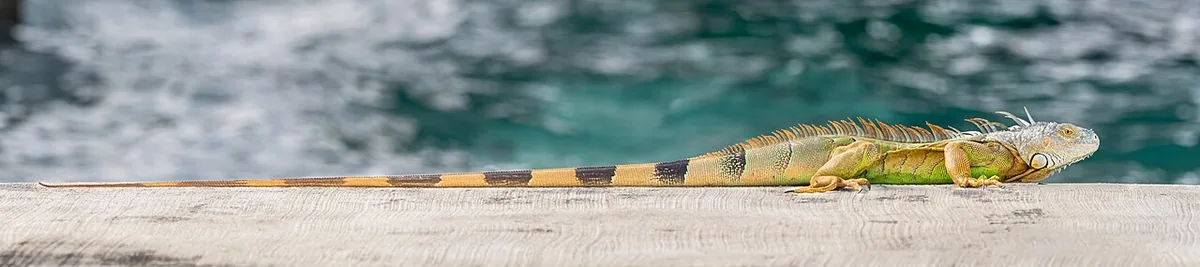
Adult males: 5-6 feet, 15-20 pounds, prominent dewlap and crest. Adult females: 4-5 feet, 8-12 pounds. Hatchlings: 6-8 inches, 70-100 grams.
Lifespan
15-20+ years with proper care. Most pet iguanas die before age 5 due to inadequate UVB, diet errors (especially animal protein), or housing failure.
Adult enclosure
Minimum: 8 ft × 4 ft × 6 ft tall (240 × 120 × 180 cm). This is typically a custom build, a converted closet, dedicated room corner, or large purpose-built enclosure. The 75-gallon "iguana starter tank" pet stores sell is housing for the hatchling, period.
Setup: dense network of climbing branches at various heights and angles, broad-leaved plants (live or artificial), basking platform near the top, large water container at the bottom, deep substrate.
Temperature
- Basking spot: 95-105°F (35-41°C)
- Ambient warm: 85-90°F
- Cool side: 75-80°F
- Night: 70-78°F
Multiple heat sources usually needed for a room-sized enclosure. Halogen flood for basking; ceramic heat emitters for ambient.
UVB
Required at high output. Multiple T5 HO UVB tubes (Arcadia 12% or Reptisun 10.0) spanning the entire enclosure top. Inadequate UVB rapidly causes metabolic bone disease in iguanas.
Diet, strict herbivore
Iguanas are obligate herbivores. Animal protein causes irreversible kidney damage.
Daily staples: Collard, dandelion, mustard, turnip greens, escarole. Mix daily; chop fine for juveniles.
Vegetables (regular): Squash (butternut, summer), green beans, bell pepper, snow peas, hibiscus flowers.
Fruit (limited): Berries, papaya, mango. Once or twice weekly.
NEVER feed: Animal protein of any kind (insects, meat, eggs, dog food). Lettuce as staple (no nutrition). Spinach as staple (oxalates). Commercial iguana pellets (high protein, opposite of what they need).
Supplementation: calcium dust on food at most feedings; multivitamin weekly.
Handling and aggression
Iguanas are not docile pets even with consistent handling. Mature males can become aggressive during breeding season, often unpredictably. Bites cause serious injury; tail whips can break skin and bruise. Females are generally more manageable.
This isn't a beardie. Don't expect a friendly, handleable adult.
Common health problems
- Metabolic Bone Disease (MBD): From inadequate UVB or wrong dietary calcium ratio. Devastating in iguanas.
- Kidney failure: From animal protein in diet. Almost universally fatal once symptoms appear.
- Mouth rot: From stress and poor husbandry.
- Egg binding in females: Common.
- Respiratory infection: From cold or chronic damp.
Common green iguana mistakes
- Buying without adult housing plan. The #1 problem.
- Animal protein in diet. Causes kidney failure. They're herbivores.
- Commercial pellet diets. Same problem, too high protein.
- Inadequate UVB. Rapid MBD.
- Underestimating aggression. Especially mature males.
- Releasing unwanted iguanas. Ecologically destructive. Surrender to a rescue.
Better choices for most keepers
- Bearded dragon: omnivore, manageable adult size, generally docile
- Uromastyx: herbivorous lizard at much more manageable size
- Blue-tongued skink: omnivore, calm temperament