Blue-Tongued Skink Care Guide
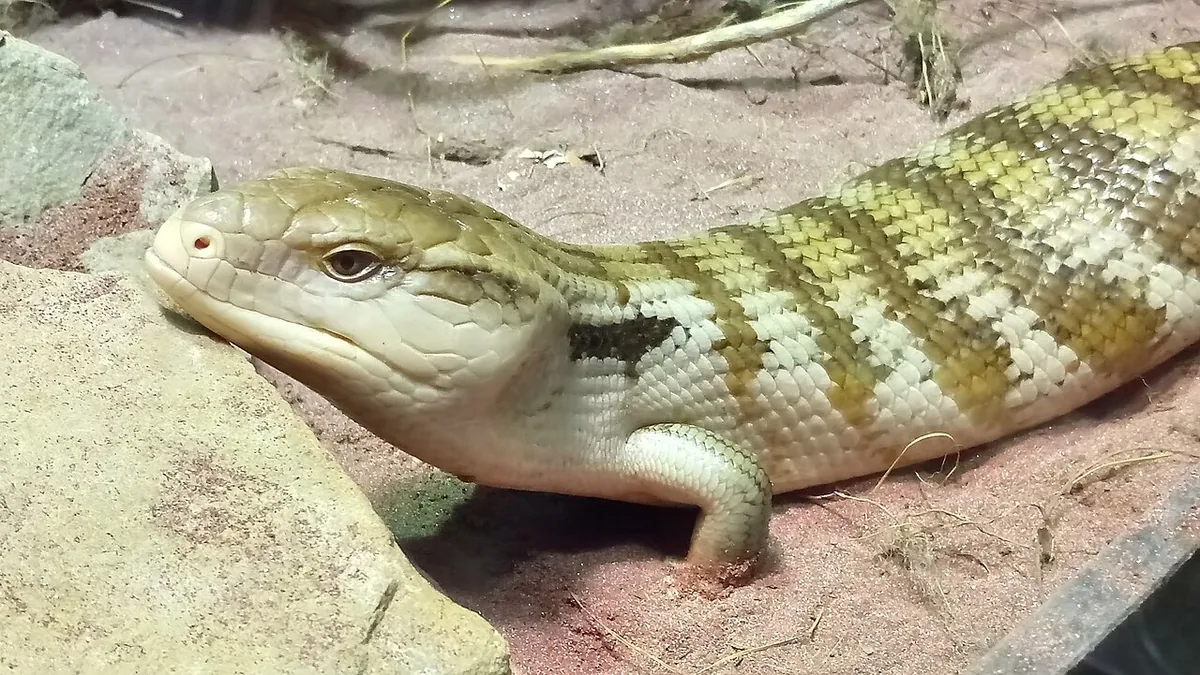
Is a blue-tongued skink right for you?
Blue-tongued skinks are excellent intermediate lizards. Generally calm, handleable, and substantial enough to be engaging. The diet is varied and requires more thought than a strict insectivore, but most household food items work.
They need real space, the "4-foot enclosure" is a real number, and beginners often try to keep them in 40-gallon tanks for too long.
Size
Adult Northern blue-tongues reach 18-24 inches total length and 450-600 grams. Other Tiliqua species vary (Centralian, Eastern, Western, Blotched, Shingleback, Indonesian species). Adults are stocky.
Lifespan
15-20+ years with proper care. Documented over 30 in some cases.
Enclosure
Adult minimum: 4 ft × 2 ft floor space (120 × 60 cm), at least 18 inches tall. PVC or sealed wood front-opening designs. Blue-tongues are terrestrial, floor space matters more than height.
Include hides on warm and cool sides, a humid hide for shedding, and substrate deep enough to dig (4-6 inches of cypress mulch, coco fiber, topsoil mix, or excavator clay).
Temperature
- Basking surface: 95-110°F (35-43°C)
- Ambient warm side: 85-90°F
- Cool side: 70-75°F
- Night: 65-75°F (no heat needed in most homes)
Use a halogen flood basking lamp on a dimming thermostat. Australian Tiliqua species often appreciate the high basking spot (100°F+); Indonesian species do well at slightly cooler basking.
UVB
Required. T5 HO Arcadia 12% Desert or Zoo Med Reptisun 10.0 T5 HO, mounted inside or above a screen top. Photoperiod 12-14 hours. Replace every 6-12 months.
Humidity
Northern and Eastern blue-tongues: 40-60% baseline, raise to 70%+ during shed. Indonesian species (T. gigas) need higher baseline humidity (60-80%). Match species to climate.
Diet
Blue-tongues are omnivores. Variety is critical: they're widely underfed in terms of food diversity, which leads to nutritional gaps even when overall calories are correct.
Animal protein (~50%): Lean meats (boiled chicken, turkey, lean ground beef occasionally), boiled eggs, insects (dubia roaches, hornworms, BSFL, snails), canned premium dog food (limited, high quality only). Cooked, not raw.
Vegetables (~40%): Collard greens, dandelion, mustard greens, endive, escarole, butternut squash, summer squash, green beans, bell pepper, opuntia cactus pads.
Fruit (~10%): Berries, papaya, mango, melon. Occasional, not staple.
Avoid: Iceberg lettuce, processed foods, chocolate, avocado, onions, garlic.
Calcium and multivitamin supplementation: dust food with calcium 1-2 times weekly; multivitamin once weekly.
Feeding schedule: Juveniles daily; sub-adults every other day; adults 2-3 times per week. Adjust to body condition, blue-tongues become obese easily.
Handling
Blue-tongues are generally very tolerant of handling once habituated. New animals may hiss, gape (showing the namesake blue tongue, a defensive display, not aggression), or attempt to flee. With consistent gentle handling, most settle into being calm interactive lizards.
Support the body; don't grab the tail. Tail loss can happen but tails regrow imperfectly.
Common health problems
- Obesity: Very common. Blue-tongues are food-motivated and overfeeding is easy.
- MBD: From inadequate UVB or calcium.
- Mites: Treat with appropriate products.
- Respiratory infection: From cold or chronically damp conditions.
- Impaction: From oversized prey or substrate ingestion.
Common blue-tongued skink mistakes
- Tank too small. 40-gallon breeders for adults are inadequate.
- Diet too narrow. "Dog food and crickets" doesn't cover the nutritional bases. Variety.
- Overfeeding. Especially adult animals fed daily, obesity follows.
- Inadequate UVB. Coil bulbs or filtered through glass = MBD.
- Cohabitation. Solitary species. Don't house together.
- Wrong species for climate. Indonesian blue-tongues struggle in arid homes; Northern blue-tongues struggle in chronically high humidity.