← Yellow-Bellied Slider care guide
Yellow-Bellied Slider Enclosure and Habitat
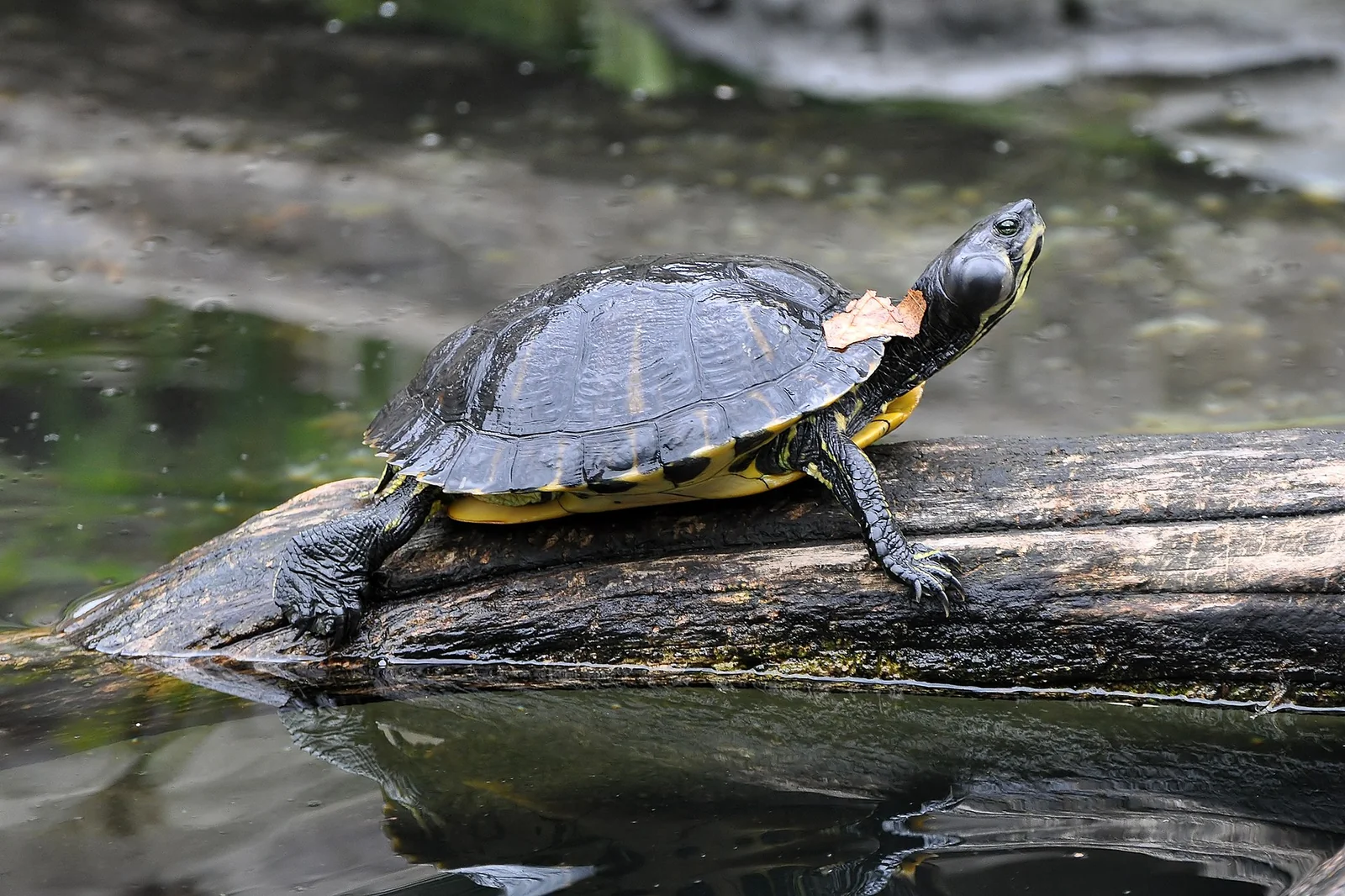
Yellow-bellied sliders are close relatives of red-eared sliders and are housed the same way. The published figure on this site is 75 gallons minimum for one adult, and the shell-length rule gets you to a similar place.
What published sources give
| Figure | Size | Notes |
|---|---|---|
| Adult minimum | 75 gallons for one adult | From this site's care guide |
| Sizing rule | ~10 gallons per inch of shell length | The common aquatic turtle method |
| Basking | Dry platform under heat and UVB | Required |
| Females | Grow larger than males | Plan for the larger outcome |
Checked September 20, 2026. Where sources differ the range is shown rather than averaged. These are the figures published as minimums; none of them is a maximum.
What changes as they grow
Hatchling and juvenile
Sized by the rule, which scales. Sliders grow steadily for years, so the first tank is temporary by definition.
Adult
75 gallons as the published minimum for one animal, more for a large female. Sexing young sliders is unreliable, so plan for the female outcome.
Enclosure mistakes specific to this species
Filtration sized for fish rather than turtles
Aquatic turtles produce far more waste than fish of the same size, and they eat in the water. Under-filtering shows up as shell and skin infections before it shows up as cloudy water.
A basking area that never fully dries
Aquatic turtles must be able to leave the water and dry off completely under heat and UVB. A platform that stays wet defeats the purpose and contributes directly to shell problems.
UVB mounted outside glass, or left in past its life
Glass filters UVB out, and bulbs lose output within 6 to 12 months while still looking lit. In shelled species this shows up as soft shell and metabolic bone disease, which is slow to appear and hard to reverse.
Assuming it stays small
Sliders of both kinds are among the most commonly surrendered and released reptiles, and the reason is almost always that the adult needed a volume of water the buyer never anticipated.
Enclosure hazards that apply to almost every setup
Five hazards come up across nearly every species on this site: contact burns from unguarded heat, UVB that never reaches the animal, cutting ventilation to hold humidity, unsecured decor, and trusting a bulb's wattage instead of a thermometer. They are set out in full, with sources, on our enclosure hazards page, which is worth reading once against any setup including one that looks finished.
Signs the enclosure is wrong
Animals tell you about their housing through behaviour before they tell you through illness. None of these is a diagnosis; each is a reason to look at the enclosure and, where noted, to call a vet.
| What you see | What it can mean |
|---|---|
| Swollen or closed eyelids | Commonly vitamin A deficiency. Needs diagnosis. |
| Soft or pyramided shell | Husbandry across diet, UVB and water quality. |
| Basking constantly or never | Both directions worth investigating. |
| Water fouling quickly between changes | Filtration undersized. |
Common questions
How big a tank does a yellow-bellied slider need?
A published minimum of 75 gallons for one adult, with the common aquatic turtle rule of around 10 gallons per inch of shell length giving a similar answer. Adult females grow larger and need more.
Is a yellow-bellied slider housed the same as a red-eared slider?
Effectively yes. They are subspecies of the same species and the enclosure requirements, filtration demands and basking needs are the same.
Why do sliders get surrendered so often?
Almost always because the adult needs a volume of water the buyer did not anticipate when they bought a coin-sized hatchling. The tank requirement is the decision point rather than a detail.