← Yellow-Bellied Slider care guide
What do yellow-bellied sliders eat?
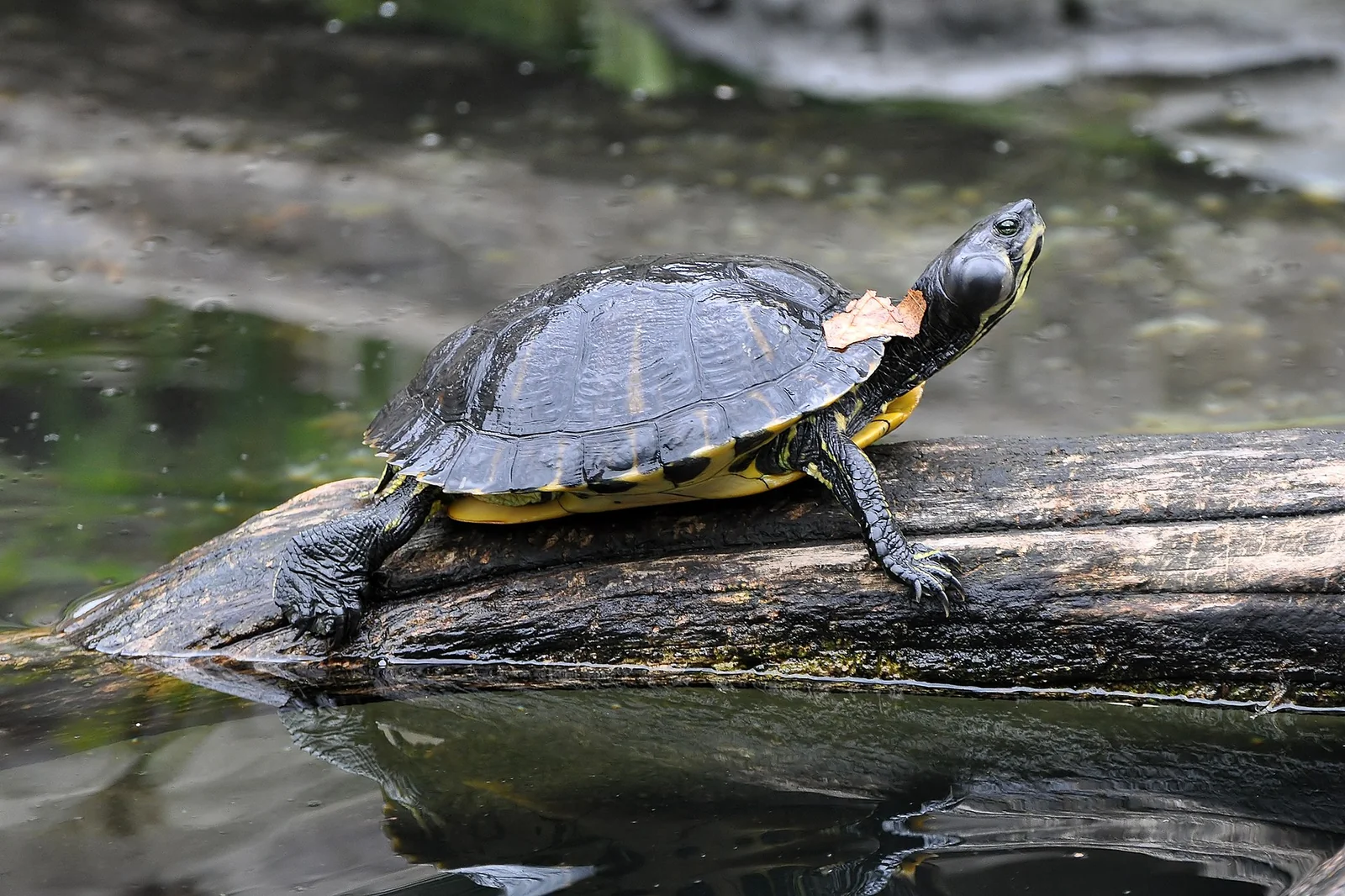
The short answer
Yellow-bellied sliders are close relatives of red-eared sliders and follow the same dietary pattern: substantial animal protein as juveniles, shifting to a mostly plant diet as adults. The common captive failure is identical too, which is an adult still being fed like a juvenile.
Feeding schedule by age
| Life stage | Diet balance | How often | Notes |
|---|---|---|---|
| Juvenile, under 1 year | Roughly half protein, half plants | Protein daily, greens daily | Pellets every other day |
| Sub-adult | Shifting toward plants | Protein 2-3x weekly | Greens daily |
| Adult | Plant-led | Protein 1-2x weekly | Pellets 2-3x weekly |
What to feed
| Food | Role | Why |
|---|---|---|
| Aquatic plants | Staple plant | Anacharis, duckweed |
| Collard and dandelion greens | Staple plant | Good calcium |
| Red leaf and romaine lettuce | Plant | Hydrating; avoid iceberg |
| Earthworms | Protein | Well accepted |
| Dubia roaches, crickets, silkworms | Protein | Rotate |
| Guppies, platies, mollies | Safe feeder fish | No thiaminase |
| Commercial turtle pellets | Supplement | Cap at about 25% |
| Cuttlebone | Calcium | Left available; replace every 1-2 months |
What never to feed
Items in this table are either outright toxic or cause predictable long-term harm. This is the part of the page worth reading twice.
| Do not feed | Why |
|---|---|
| Goldfish and rosy red minnows | Thiaminase destroys vitamin B1. |
| Avocado | Toxic. |
| Rhubarb | Toxic. |
| Citrus | Not tolerated. |
| A pellet-only diet | Incomplete and linked to shell problems. |
| Adult protein several times a week | Leads to pyramiding and kidney problems. |
Where good sources disagree
Care sheets do not all say the same thing, and pretending otherwise helps nobody. These are the real points of difference between the sources cited at the foot of this page, and what we think the safe reading is.
Whether yellow-bellied and red-eared sliders need identical diets.
They are subspecies of the same species and published care is effectively identical. Some keepers report slight differences in plant preference between individuals, which is a matter of taste rather than a nutritional distinction.
What most yellow-bellied slider feeding advice gets wrong
The adult diet is where sliders go wrong.
Almost every slider health problem traced to feeding comes from continuing a juvenile protein load into adulthood. Shell pyramiding and kidney disease follow. The correction is dull but effective: greens every day, protein once or twice a week, pellets as a minority item.
Begging is not hunger.
Sliders of all kinds beg persistently at the glass, and keepers reliably read it as need. It is learned behaviour associated with the approach of a person. Feed on a schedule and judge by body and shell condition instead.
Common questions
What do yellow-bellied sliders eat?
Aquatic plants, leafy greens, earthworms, insects and safe feeder fish, plus commercial pellets as a minority of the diet. Juveniles eat substantial animal protein; adults should be fed mostly plants with protein once or twice a week.
Is a yellow-bellied slider's diet the same as a red-eared slider's?
Effectively yes. They are subspecies of Trachemys scripta and published feeding guidance is the same: protein-led as juveniles, shifting to a plant-led diet as adults, with pellets kept to a minority of intake.
Can yellow-bellied sliders eat goldfish?
No. Goldfish and rosy red minnows contain thiaminase, which destroys vitamin B1 and causes a cumulative deficiency. Guppies, platies and mollies are the usual safe live alternatives if feeder fish are offered at all.