How Long Do Greek Tortoises Live?
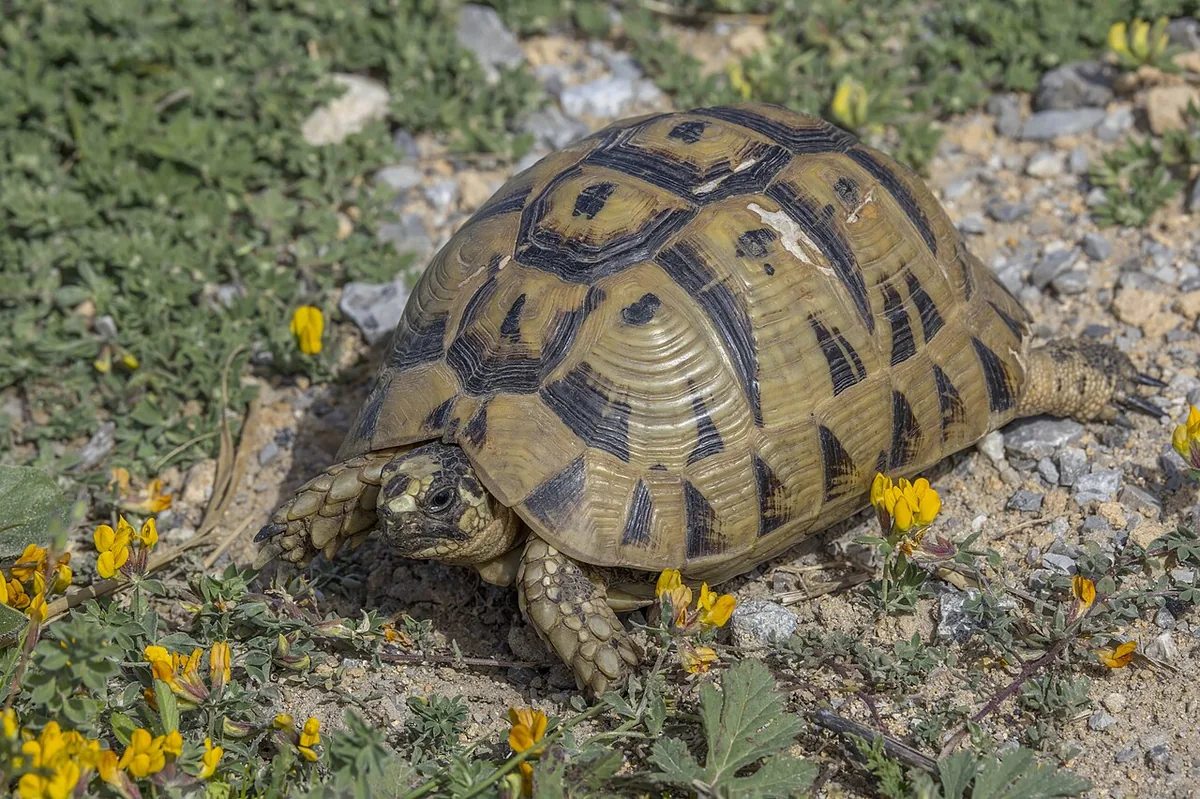
Greek tortoises commonly live 50 years or more, with individuals in the genus reported past 100. They are among the more practical tortoises to house long term, which matters for an animal likely to outlive its owner.
Published lifespan figures
| Figure | Value | Notes |
|---|---|---|
| Commonly published | 50+ years | Mediterranean Testudo |
| Frequently longer | Individuals exceeding 100 years reported | In the genus |
| Practical planning | Likely to outlive the buyer | Succession planning applies |
Checked September 20, 2026 against the sources at the foot of this page. Where sources differ the range is shown rather than averaged.
What actually shortens it
Published lifespans describe well-kept animals. The gap between the figure above and what a greek tortoise actually lives is almost entirely husbandry, and these are the levers that matter most.
Pyramiding
Raised, lumpy scute growth driven by excess protein, low humidity during growth and inadequate UVB. It is largely irreversible once formed, and it is a visible record of husbandry during the animal's first years.
UVB failure
Shelled species show calcium problems as soft shell and deformity, and it is usually a lighting failure rather than a diet one. Glass filters UVB out, and bulbs lose output within 6 to 12 months while still looking lit.
Permanently wet ground
Mediterranean tortoises come from dry habitat and do badly on ground that never drains. An outdoor pen needs drainage as much as fencing, and shell rot follows where it does not.
Common questions
How long do Greek tortoises live?
Commonly 50 years or more, with individuals in the Testudo genus reported beyond 100. Succession planning is a reasonable part of buying one.
What shortens a Greek tortoise's life?
Pyramiding and metabolic bone disease established during growth, and shell problems from permanently wet ground. They are dry-habitat animals and outdoor pens need real drainage.
Are Greek tortoises easier to keep long term than larger tortoises?
Considerably. Their small adult size makes decades of housing achievable in a way a sulcata's does not, which is a genuine welfare advantage over the animal's life.