How Big Do Greek Tortoises Get?
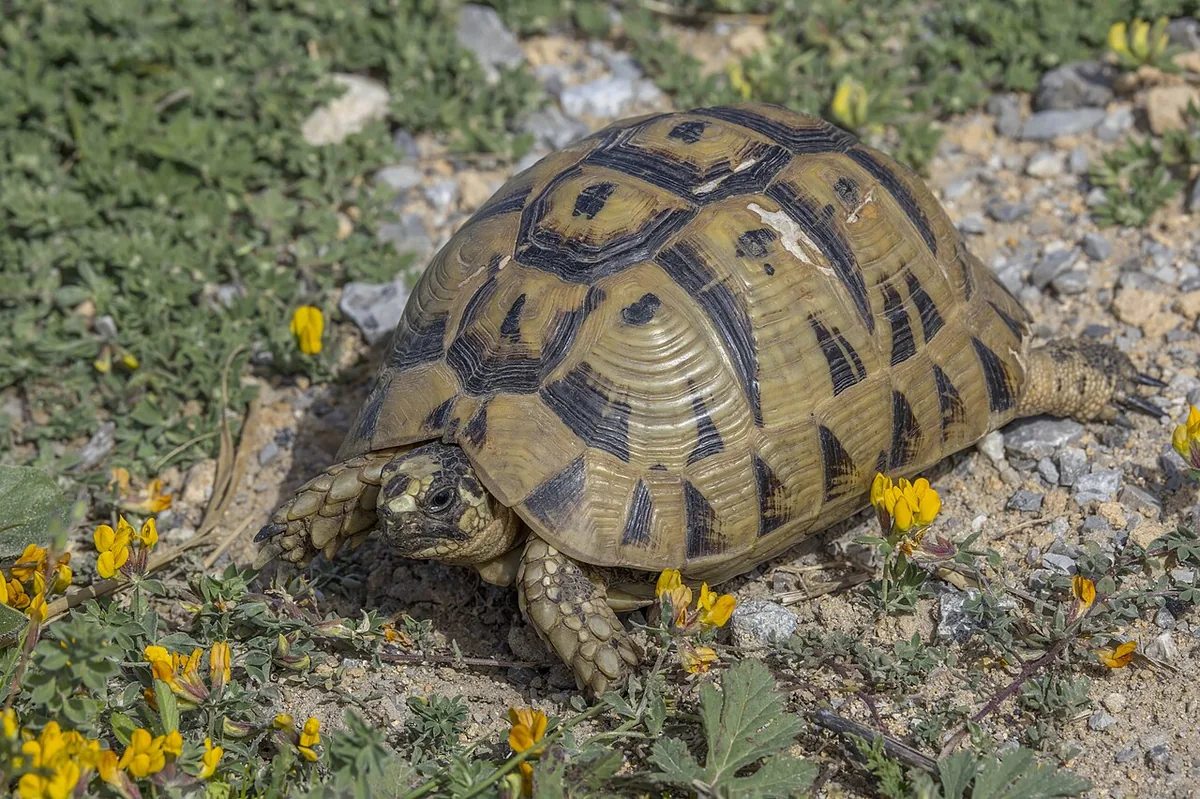
Greek tortoises stay small by tortoise standards, with a published indoor minimum enclosure of 4 by 2 feet reflecting a modest adult. That small size is the main reason they remain practical across a 50-year-plus life.
Published adult size figures
| Figure | Value | Notes |
|---|---|---|
| Adult | Small; comparable to other Testudo | Indoor 4 x 2 ft minimum published |
| Compared with sulcata | Very much smaller | A different scale of commitment |
| Outdoor | Preferred where climate allows | Grazing is part of the diet |
Checked September 20, 2026 against the sources at the foot of this page. Where sources differ the range is shown rather than averaged.
Getting there
Slow to a small adult size
Growth is unhurried and the endpoint is modest, which is the main practical advantage of the Mediterranean tortoises.
Humidity matters while growing
As with other Testudo, juveniles need a humid hide; dry growth contributes to pyramiding independently of diet.
What that size means in practice
Indoor keeping stays viable
Unlike the large grazers, Greek tortoises can be housed indoors long term with a published 4 by 2 foot minimum, though outdoor access is better for a grazing species.
A tortoise most people can actually keep
Small adult size is why the Mediterranean tortoises dominate responsible tortoise keeping rather than the giants.
Common questions
How big do Greek tortoises get?
They remain small by tortoise standards, comparable to other Mediterranean Testudo species. The published indoor minimum enclosure of 4 by 2 feet reflects that modest adult size.
Can Greek tortoises be kept indoors permanently?
It is viable, unlike with the large grazing tortoises, though outdoor access is better for a grazing species and is preferred where climate allows.
Are Greek tortoises a good size for a first tortoise?
Their small adult size is a genuine advantage, because it makes decades of correct housing achievable. The commitment is still 50 years or more.