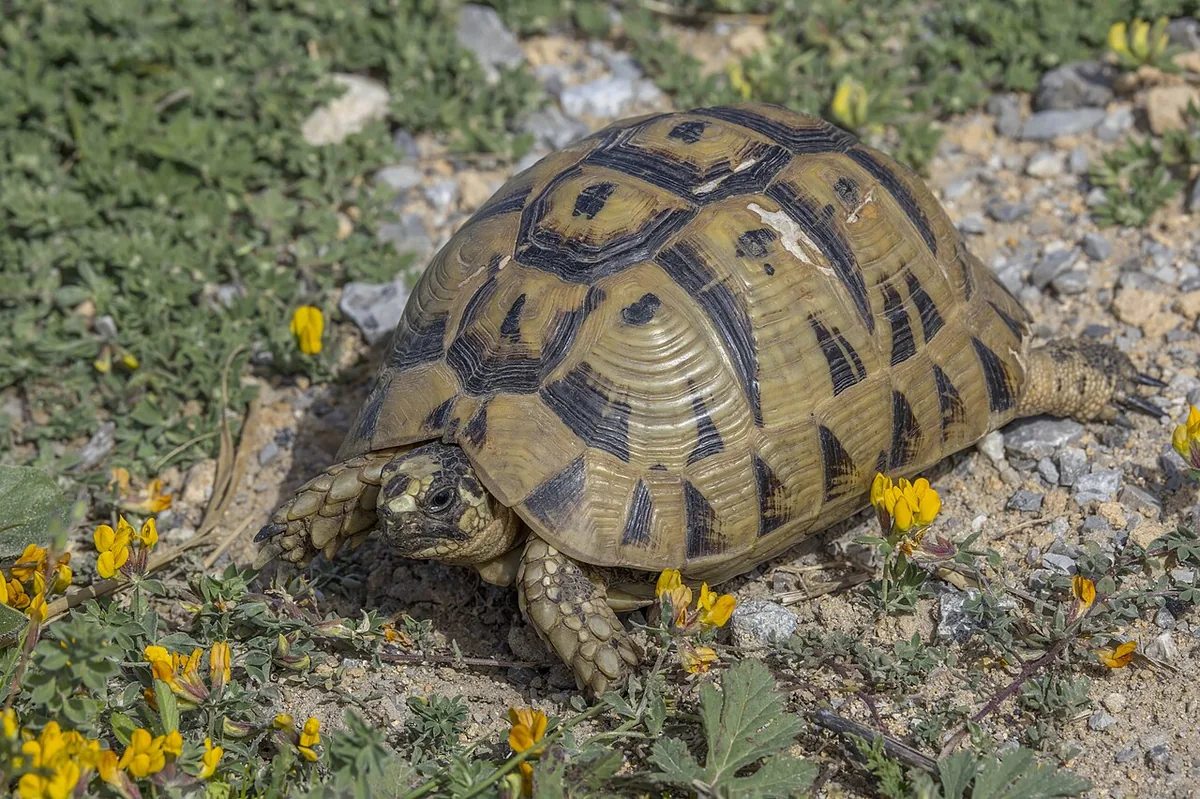
Greek Tortoise (Testudo graeca)
At a glance
| Adult size | 5-8 in |
| Lifespan | 50-100 years |
| Enclosure | Outdoor preferred · indoor 4×2 ft min |
| Temperature | Ambient 70-80°F · Basking 95-100°F |
| Humidity | 40-60% with humid hide for juveniles |
| UVB | T5 HO 10-12% |
| Diet | Grasses, weeds, leafy greens |
| Handling | Low tolerance, display animal |
Why this species
- Manageable adult size
- Brumates naturally in cool climates
- Excellent diet of weeds and grasses
- Multiple distinctive subspecies (Tunisian, Moroccan, etc.)
Why not
- 50-100 year lifespan demands succession planning
- Outdoor housing strongly preferred
- Juveniles need humid microclimate
- Wild-caught animals are still in trade, buy captive-bred
Frequently asked questions
How big do Greek tortoises get?
5-8 inches shell length. Similar size to Hermann's tortoises.
How long do Greek tortoises live?
50-100 years with proper care.
Are Greek tortoises different from Hermann's tortoises?
Subtly different. Greek tortoises lack the spurred thigh of Hermann's. Care requirements are very similar.
Do Greek tortoises brumate?
Yes, northern subspecies brumate naturally. Southern subspecies (e.g., T. g. nabeulensis) brumate less.
What's the difference between Greek tortoise subspecies?
Several subspecies exist with regional variations in size, color, and brumation patterns. Tunisian (T. g. nabeulensis) is the most commonly seen US pet.