Eastern Box Turtle Care Guide
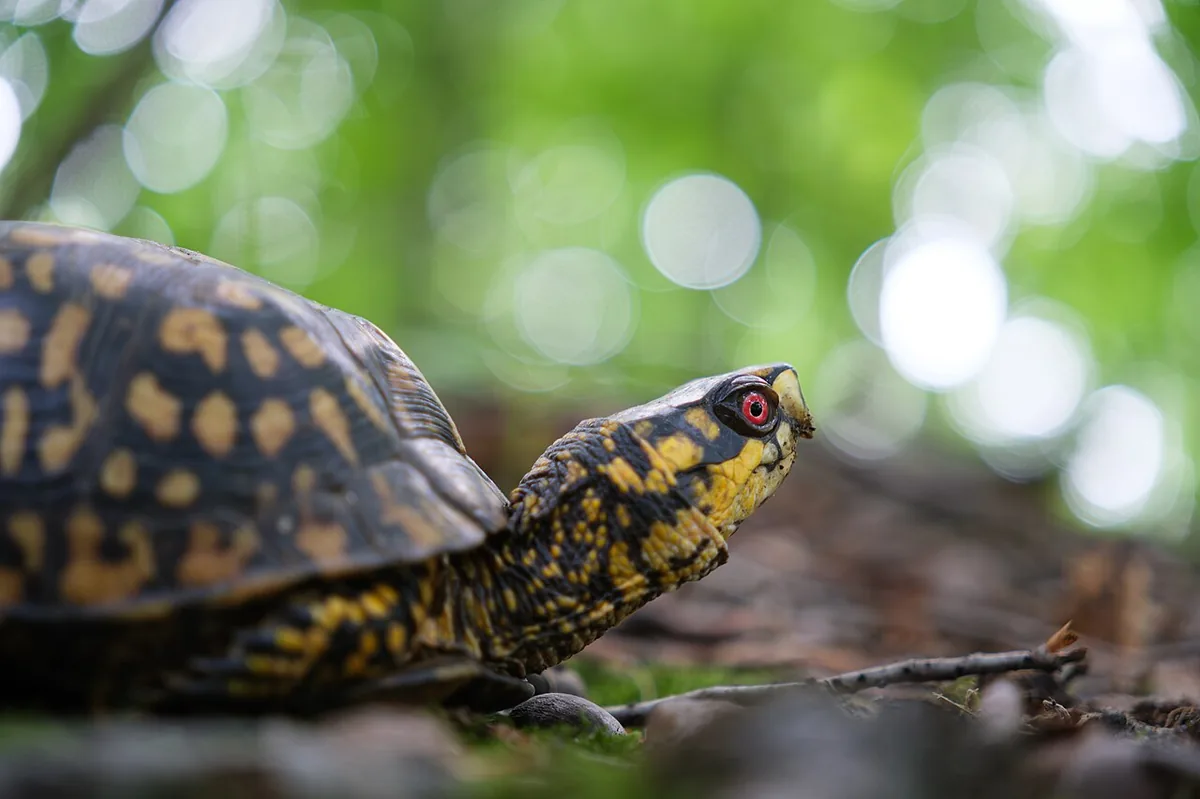
Is an Eastern box turtle right for you?
Box turtles are wonderful for keepers in the eastern US with outdoor space for a secure pen. They're long-lived, calm, omnivorous, and observable. Apartment dwellers should choose something else, these are not happy indoor-only animals.
A note on wild collection
Eastern box turtle populations have declined dramatically from wild collection. Never collect wild box turtles for the pet trade. If you find a box turtle in your yard, leave it where it is, it likely has a small home range it depends on. Buy only from captive-bred sources. Illegal to collect in most states.
Outdoor enclosure (preferred)
Pen requirements:
- Minimum 6 ft × 4 ft; larger preferred
- Walls at least 12 inches above ground, buried 6+ inches
- Predator-proof top (wire mesh) if outdoor cats, dogs, raccoons, or birds of prey are present
- Partial shade, partial sun
- Dense vegetation, leaf litter, and ground cover plants
- Shallow water dish
- Hide structures
Indoor enclosure
4 ft × 2 ft tortoise table minimum. Deep substrate (cypress mulch + topsoil, 4+ inches), multiple hides, water dish, basking lamp, UVB.
Temperature
- Basking: 85-90°F
- Ambient day: 70-85°F
- Night: 65-75°F
- Brumation (if supporting natural cycle): 45-55°F for 2-4 months
UVB
Required for indoor animals. T5 HO Arcadia 12% or Reptisun 10.0. Outdoor animals get natural sunlight.
Diet
Omnivorous, varied:
- Animal protein (~50%): Earthworms, slugs, snails, insects (crickets, BSFL, mealworms), pinkie mice occasionally, hard-boiled egg.
- Vegetables and greens: Collard, dandelion, mustard, squash, peppers, mushrooms.
- Fruits: Berries, melon, banana, apple. Box turtles love fruit; use moderately.
Feed adults 2-3 times per week.
Brumation
Native-climate box turtles naturally brumate in fall/winter. Captive box turtles benefit from natural brumation cycles when done correctly: cool, dark space at 45-55°F for 2-4 months. Healthy animal only, empty digestive tract before brumation.
Common health problems
- Respiratory infection: From cold or damp.
- Shell rot: From chronic moisture or trauma.
- Eye/ear infections: From vitamin A deficiency.
- Mycoplasma: A serious respiratory disease common in wild-caught animals.
- Parasites: Common in wild-caught.
Common box turtle mistakes
- Indoor-only housing. Box turtles need outdoor time when possible.
- Single-substrate enclosures. They need varied microhabitats, leaf litter, soil, hides.
- Wild-collected animals. Ethically and legally problematic in most cases; often health-compromised.
- Cohabitation in too-small space. Males can be aggressive.
- All-pellet or commercial diets. Varied real food is required.