Kenyan Sand Boa Enclosure and Habitat
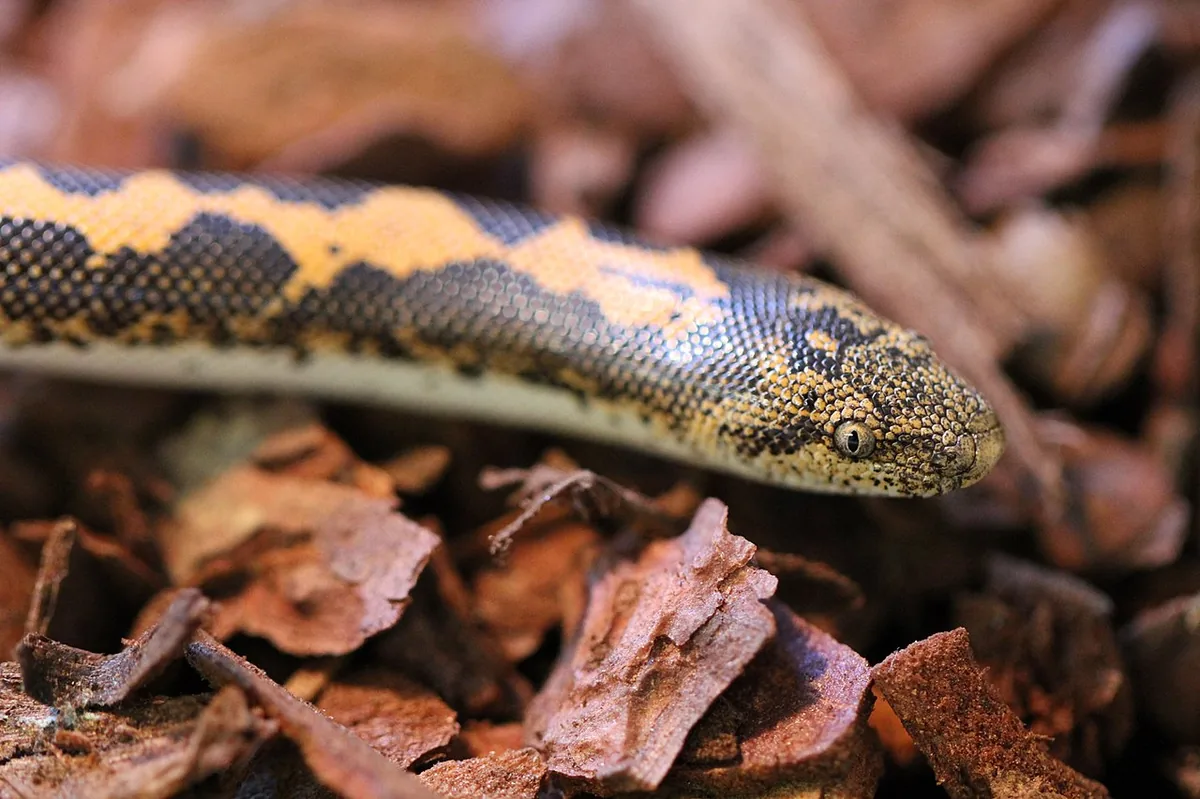
Kenyan sand boas spend most of their lives under the substrate with only the eyes showing. For this species the depth and type of substrate is more consequential than the enclosure's footprint.
What published sources give
| Figure | Size | Notes |
|---|---|---|
| Orientation | Floor area with deep substrate | They burrow rather than roam |
| Substrate | Deep enough to bury completely | The defining requirement for the species |
| Size | Small boa; modest enclosures are appropriate | Among the smallest boas kept |
Checked September 20, 2026. Where sources differ the range is shown rather than averaged. These are the figures published as minimums; none of them is a maximum.
What changes as they grow
Juvenile
Small enclosures with deep substrate. A juvenile sand boa in a large open enclosure has nowhere to do what it does.
Adult
Still a small snake. Depth of substrate, not floor area, is what improves the enclosure.
Enclosure mistakes specific to this species
Any heat source without a thermostat
Belly heat is the classic cause of thermal burns in snakes, because a snake coils against warmth and does not move away from it. Every mat, cable and emitter on a thermostat with the probe where the animal actually contacts the heat.
Shallow substrate
A sand boa that cannot bury is a sand boa with no way to feel secure. This is the single most consequential thing to get right, and it is cheap to fix.
Feeding on loose substrate
They ambush from below, which means they strike upward through the substrate and can take a mouthful of it with the prey. Offering food with tongs, or on a dish, largely removes the ingestion risk.
Heat mats without a thermostat under a burrowing snake
A burrowing species sits directly on the heat source and cannot judge when it is too hot. Thermostat, probe at the substrate level, every time.
Enclosure hazards that apply to almost every setup
Five hazards come up across nearly every species on this site: contact burns from unguarded heat, UVB that never reaches the animal, cutting ventilation to hold humidity, unsecured decor, and trusting a bulb's wattage instead of a thermometer. They are set out in full, with sources, on our enclosure hazards page, which is worth reading once against any setup including one that looks finished.
Signs the enclosure is wrong
Animals tell you about their housing through behaviour before they tell you through illness. None of these is a diagnosis; each is a reason to look at the enclosure and, where noted, to call a vet.
| What you see | What it can mean |
|---|---|
| Surface-roaming persistently | Often substrate too shallow, or too coarse to burrow in comfortably. |
| Skin stretched visibly between the scales | Overweight; this species overeats easily. |
| Belly burns | Unregulated under-tank heat with a burrowing animal. Veterinary attention. |
| Substrate visible in the mouth after feeding | Feed with tongs or from a dish instead. |
Common questions
What size enclosure does a Kenyan sand boa need?
They are among the smallest boas kept and modest enclosures are appropriate. Substrate depth matters more than floor area for a species that spends most of its time buried.
How deep should sand boa substrate be?
Deep enough for the snake to bury itself completely, which is the behaviour the species is built around. Shallow substrate removes the animal's main way of feeling secure.
Why does my sand boa stay buried?
Because that is how the species lives and hunts. Kenyan sand boas are ambush predators that sit under the substrate with only the eyes exposed. Being buried is normal rather than a sign of stress.