Kenyan Sand Boa Care Guide
Is a Kenyan sand boa right for you?
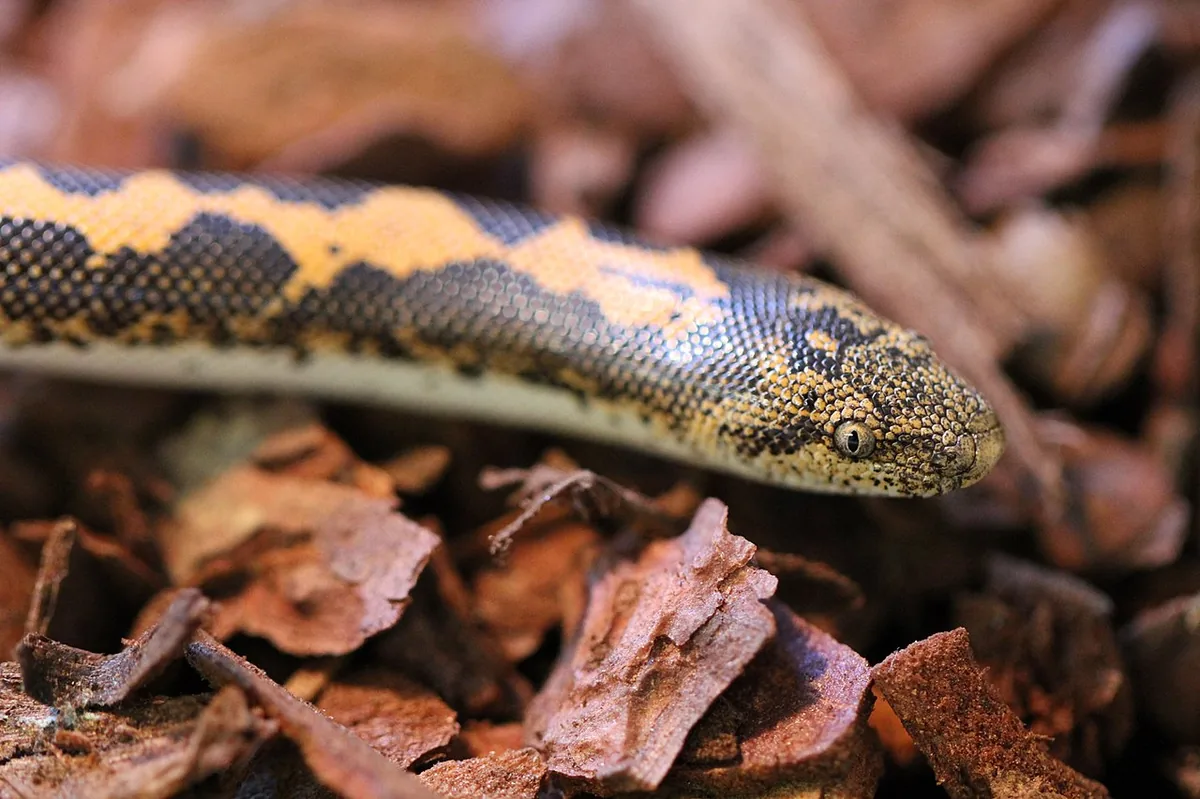
Sand boas are excellent for keepers who want a low-maintenance, small snake that spends most of its time hidden. They're not display animals, you'll see them at dusk and during feeding. For the right keeper, this is a charming, calm species.
If you want to watch your snake move around, choose a corn snake or kingsnake instead.
Size
Females: 24-32 inches, 600-1,200 grams. Males: 12-18 inches, 100-250 grams. The strongest sexual dimorphism among common pet snakes.
Enclosure
Adult minimum 36" × 18" floor space (90 × 45 cm). Height matters less, these are fossorial (burrowing) snakes. Most important element: 4-6 inches of substrate they can burrow into. Aspen shavings, dry coco fiber, or commercial sand mix.
Temperature
- Basking: 88-95°F (31-35°C) at the surface
- Ambient warm: 82-86°F
- Cool side: 75-80°F
- Night: 70-78°F
Use under-tank heating with thermostat OR overhead halogen. Sand boas often spend their time partially buried near the warm side.
Humidity
30-40% baseline. Sand boas are arid-environment animals; high humidity causes scale rot. Provide a small humid hide for shedding only.
Diet
Mice sized appropriately. Adult females eat small or medium mice every 10-14 days; adult males eat fuzzy or hopper mice every 7-10 days. Frozen-thawed only.
Sand boas are ambush predators, they prefer to feed buried with just the head exposed. Don't be alarmed if the snake disappears during feeding; it's normal.
Handling
Sand boas tolerate handling well once habituated. They're slow and gentle. Sessions 10-20 minutes. Don't handle within 48 hours of feeding.
Common sand boa mistakes
- Shallow substrate. They need to burrow. Provide 4+ inches.
- High humidity. Causes scale rot and respiratory issues.
- Top-opening glass tanks. Increases stress in a hide-loving species. Front-opening preferred.
- Cohabitation. Solitary species. Don't house together.