Garter Snake Enclosure and Habitat
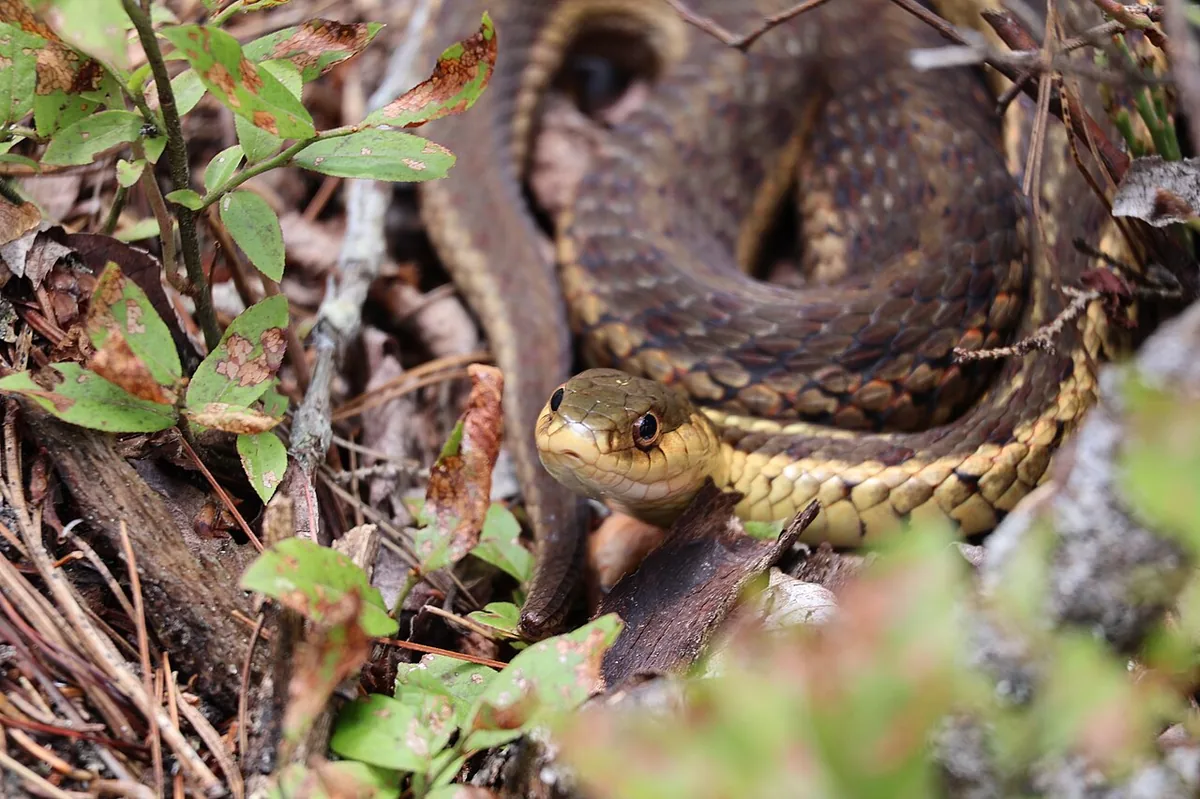
Garter snakes are more active than most pet colubrids and use their enclosure differently: they swim, they climb a little, and they are awake during the day, so a bare enclosure shows up quickly as restless behaviour.
What published sources give
| Figure | Size | Notes |
|---|---|---|
| Sizing approach | Floor space led, as for other active colubrids | They use horizontal space heavily |
| Water | A bowl large enough to soak in | They are semi-aquatic in habit |
| Occupancy | Communal keeping is practised, unlike most snakes | Requires more space and careful feeding |
Checked September 20, 2026. Where sources differ the range is shown rather than averaged. These are the figures published as minimums; none of them is a maximum.
What changes as they grow
Juvenile
Small and extremely good at escaping. Garter snakes are among the snakes most often lost through an imperfect lid.
Adult
Size for activity rather than length alone. An active diurnal snake in a minimal enclosure is visibly restless in a way a ball python is not.
Enclosure mistakes specific to this species
A lid that is not genuinely secure
Snakes test every seam, and a determined animal will lift an unweighted glass lid or push through a warped one. An escaped snake is a lost snake in most homes, and a thermally stranded one. Locking lids or a front-opening enclosure with a proper catch.
Sizing as if they were a ball python
Garter snakes are awake, active and exploratory during the day. An enclosure that suits a sedentary ambush species leaves them with nothing to do, and it shows.
A water bowl too small to use
Garters soak and will enter water readily. A bowl sized only for drinking misses a natural behaviour, though it needs to be stable and shallow enough to leave easily.
Feeding several together without separating
Communal keeping is possible in this species, which is unusual, but feeding time is when accidents happen. Separate for feeding or feed well apart.
Enclosure hazards that apply to almost every setup
Five hazards come up across nearly every species on this site: contact burns from unguarded heat, UVB that never reaches the animal, cutting ventilation to hold humidity, unsecured decor, and trusting a bulb's wattage instead of a thermometer. They are set out in full, with sources, on our enclosure hazards page, which is worth reading once against any setup including one that looks finished.
Signs the enclosure is wrong
Animals tell you about their housing through behaviour before they tell you through illness. None of these is a diagnosis; each is a reason to look at the enclosure and, where noted, to call a vet.
| What you see | What it can mean |
|---|---|
| Constant patrolling of the enclosure perimeter | Often too little space, cover or enrichment for an active species. |
| Escaping, repeatedly | Garters are small, fast and persistent. Check every seam. |
| Refusing to soak or use water | Worth checking bowl stability and water cleanliness. |
| Retained shed | Often humidity or a lack of soaking opportunity. |
Common questions
What size enclosure does a garter snake need?
Guidance is usually framed around floor space rather than a single figure, because garter snakes are unusually active and diurnal. They use horizontal space heavily, and a minimal enclosure produces visible restlessness.
Do garter snakes need water to swim in?
They benefit from a water bowl large enough to soak in, since they are semi-aquatic in habit and will enter water readily. It should be stable and shallow enough for the snake to leave easily.
Can garter snakes be kept together?
Communal keeping is practised with garter snakes, which is unusual among snakes. It needs more space and care at feeding time, when accidental injuries are most likely.