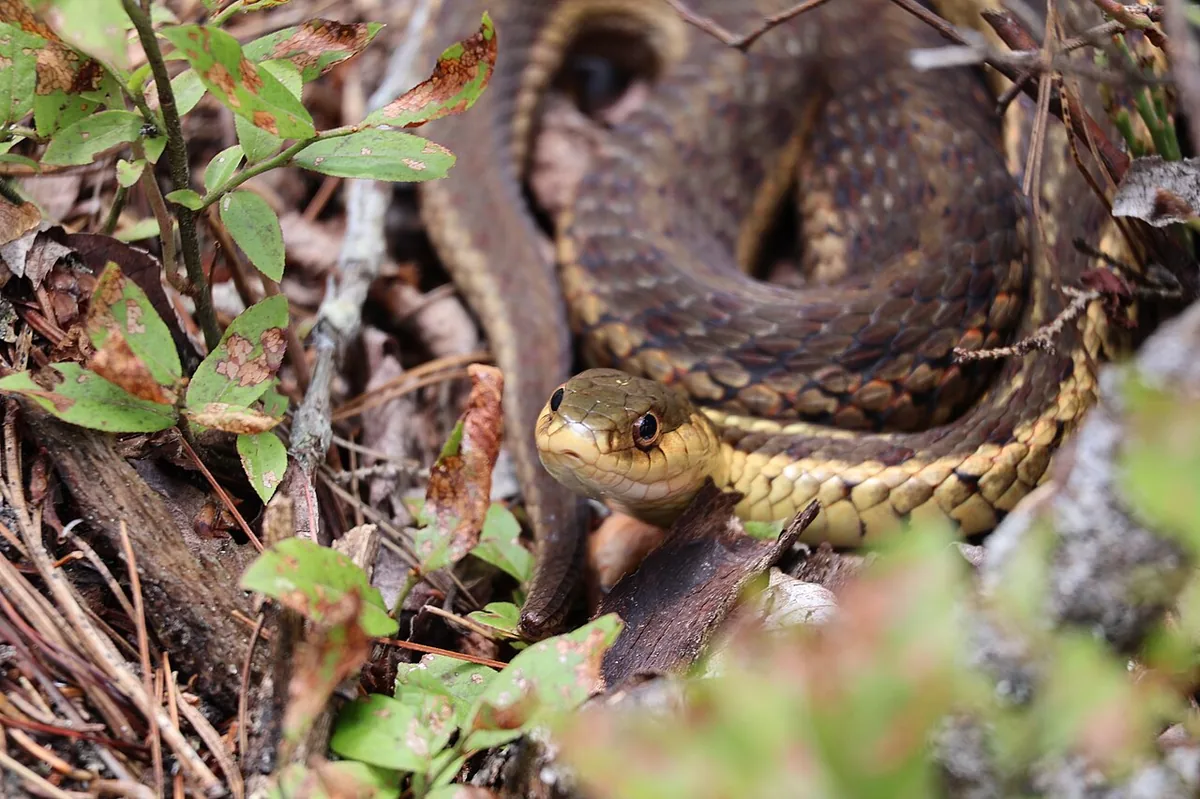
Garter snake (Thamnophis sirtalis)
Overview
Garter snakes are the most commonly observed snake in much of North America. As pets, captive-bred garters offer an unusual profile: active during the day (most pet snakes are crepuscular or nocturnal), heavily food-motivated, and surprisingly bold for their small size.
They're a real alternative to corn snakes for keepers who want activity and visibility, especially in a smaller enclosure footprint.
Enclosure
- Adult enclosure: 36×18×18 inches minimum
- Substrate: aspen shavings, cypress mulch, or paper substrate
- Hides: two, warm and cool side
- Water: large bowl, big enough to soak (garters are semi-aquatic)
- Climbing: branches and elevated areas appreciated
Temperature and humidity
- Warm side: 80-85°F
- Cool side: 70-75°F
- Nighttime: can drop to 65°F
- Humidity: 50-60%
- Lighting: low-output UVB recommended for diurnal species
Diet
The most distinctive part of garter snake keeping. They eat:
- Earthworms (best staple): nightcrawlers, dusted with calcium-D3
- Frozen-thawed fish: salmon, tilapia, smelt. Avoid goldfish and rosies (thiaminase content damages garters)
- Pinky mice (occasional variety): high in fat, use sparingly
- Some captive-bred garters take frozen-thawed mice as a staple: easier for keepers, but check the individual snake's preference
Feed adults every 5-7 days, juveniles every 2-4 days.
Handling
Garter snakes are generally calm but tend to musk when first handled, they release a smelly defensive secretion. With consistent handling this decreases. Most adults tolerate moderate handling. They're quick and active, so handling requires more attention than a corn snake or ball python.
Health concerns
- Thiamine deficiency from thiaminase-containing fish (goldfish, rosies, minnows), causes neurological symptoms. Avoid these prey.
- Respiratory infections from cool damp conditions
- Internal parasites common in wild-caught animals (don't buy wild-caught)
Lifespan
6-10 years in captivity. Some individuals reach 12+ years with excellent husbandry.
Who this species is right for
- Keepers who want a visibly active diurnal snake
- Keepers who can source fish or worms for feeding
- Keepers who don't want to deal with rodents
- NOT for keepers who want the longest-lived snake (corn snakes/ball pythons live 2-3x longer)