Carpet Python Enclosure and Habitat
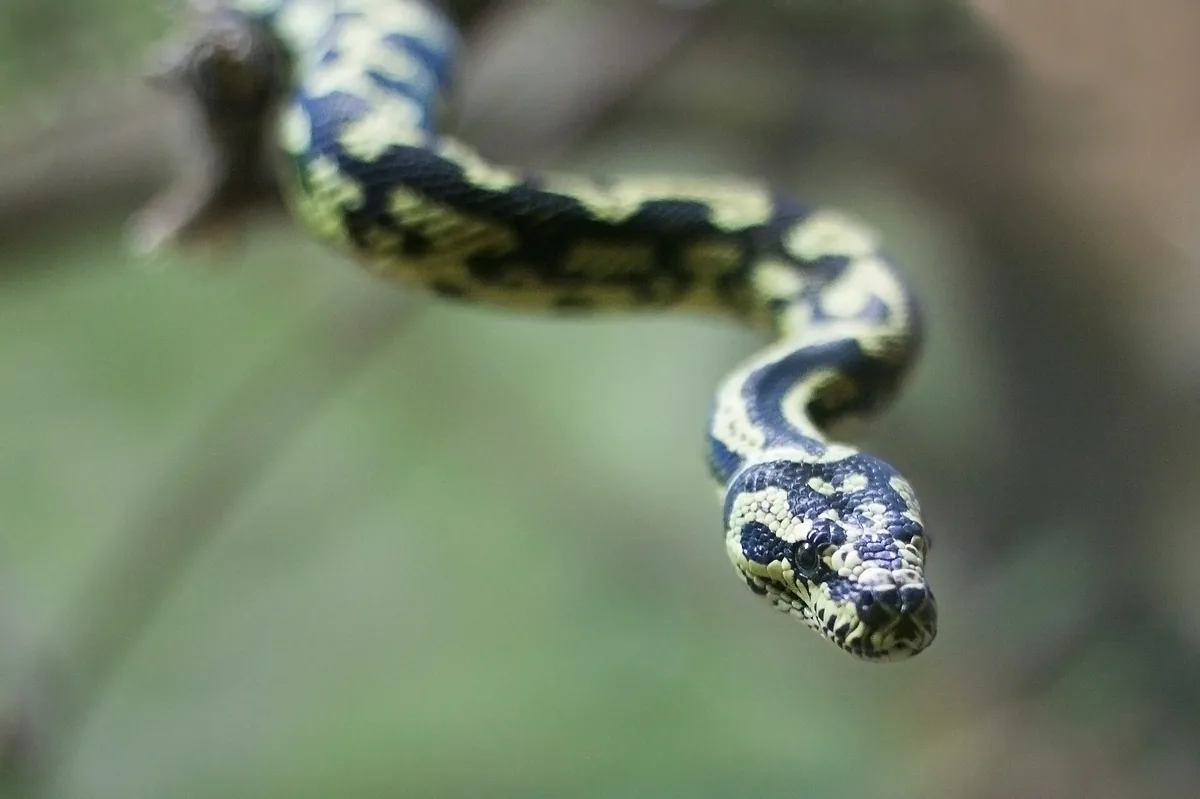
Carpet pythons are semi-arboreal and genuinely use height, so the enclosure needs branches rather than just floor. The complication is that adult size runs from about five feet to over eight depending on subspecies.
What published sources give
| Figure | Size | Notes |
|---|---|---|
| Adult | ~4 x 2 x 2.5 ft with climbing branches | From this site's care guide |
| Subspecies range | Jungle ~5-6 ft · coastal 8-9 ft | Changes the enclosure by several feet |
| Orientation | Semi-arboreal; height is used | Branches are functional, not decorative |
Checked September 20, 2026. Where sources differ the range is shown rather than averaged. These are the figures published as minimums; none of them is a maximum.
What changes as they grow
Hatchling and juvenile
Nippy and food-driven, which is normal for the species and passes. Enclosure-wise they are small and need cover at height as well as on the floor.
Adult
Depends on subspecies. Establish which one you have before buying the adult enclosure, because a coastal carpet needs substantially more than a jungle.
Enclosure mistakes specific to this species
Any heat source without a thermostat
Snakes coil against warmth and do not move away from it, which is why belly heat is the classic cause of thermal burns. Every mat, cable and emitter on a thermostat, probe where the animal contacts the heat.
Furnishing only the floor
Carpet pythons climb, and a tall enclosure with branches only at the bottom wastes the space. Sturdy horizontal branches at more than one height are the point of the extra height.
Using a generic carpet python enclosure figure
Adult size varies by roughly three feet across subspecies. A figure that suits a jungle carpet undersizes a coastal one.
Enclosure hazards that apply to almost every setup
Five hazards come up across nearly every species on this site: contact burns from unguarded heat, UVB that never reaches the animal, cutting ventilation to hold humidity, unsecured decor, and trusting a bulb's wattage instead of a thermometer. They are set out in full, with sources, on our enclosure hazards page, which is worth reading once against any setup including one that looks finished.
Signs the enclosure is wrong
Animals tell you about their housing through behaviour before they tell you through illness. None of these is a diagnosis; each is a reason to look at the enclosure and, where noted, to call a vet.
| What you see | What it can mean |
|---|---|
| Never using the branches | Check branch sturdiness and placement; carpet pythons will not use a perch that flexes. |
| Cannot stretch out fully | Undersized, which is easy if you sized for the wrong subspecies. |
| Persistent defensive striking in an adult | More often a handling-routine issue than an enclosure one, but check cover. |
| Burns | Unregulated heat, and arboreal snakes reach overhead sources. Veterinary attention. |
Common questions
What size enclosure does a carpet python need?
Roughly 4 feet by 2 by 2.5 for an average adult, with sturdy climbing branches. Because adult size ranges from about five feet in jungle carpets to eight or nine in coastal ones, size against your subspecies rather than the species.
Do carpet pythons need branches?
Yes. They are semi-arboreal and genuinely use vertical space. Branches need to be sturdy enough not to flex under a heavy-bodied snake, and placed at more than one height.
Does carpet python enclosure size depend on subspecies?
Substantially. A jungle carpet python commonly matures around five to six feet while a coastal can exceed eight, so the enclosure differs by several feet. Ask the breeder which subspecies you bought.