Boa Constrictor Enclosure and Habitat
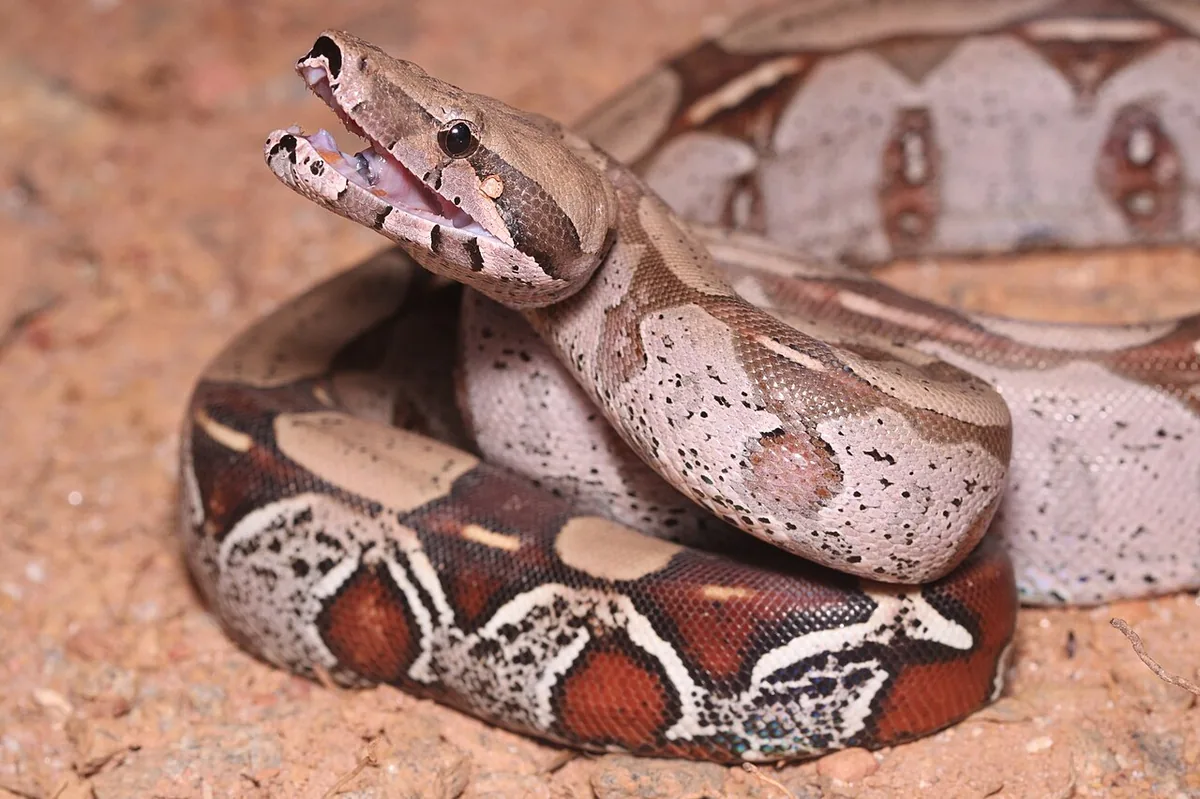
Boa constrictor sizing depends on how big your animal actually gets, and they vary. Published minimums start at 4 x 2 x 2 feet, with other guidance scaling the enclosure to the snake's length instead of fixing a number.
What published sources give
| Figure | Size | Notes |
|---|---|---|
| Adult minimum, commonly published | 4 x 2 x 2 ft | Given as a minimum rather than a target |
| Volume-based guidance | 75+ gallons, scaled to body length | An alternative framing seen in care sources |
| Adult length | Commonly up to about 6 ft | Larger individuals need proportionally more |
Checked September 20, 2026. Where sources differ the range is shown rather than averaged. These are the figures published as minimums; none of them is a maximum.
What changes as they grow
Juvenile
Smaller, well-furnished enclosures while growing. Boas grow steadily for years, so the first enclosure is explicitly temporary.
Adult
4 x 2 x 2 ft is the published floor, and a large adult will need more. Because guidance scales with body length, measure your animal rather than assuming an average.
Enclosure mistakes specific to this species
Any heat source without a thermostat
Belly heat is the classic cause of thermal burns in snakes, because a snake coils against warmth and does not move away from it. Every mat, cable and emitter on a thermostat with the probe where the animal actually contacts the heat.
Buying for the juvenile and hoping
A boa is a decades-long animal that keeps growing. Commercial enclosures top out well before the largest individuals do, and custom builds are common for adults. This is a cost to plan at purchase rather than discover later.
Underestimating strength
A large boa can shift or displace decor and test enclosure doors in a way a corn snake cannot. Fixtures need to be secured and catches need to be genuinely solid.
Enclosure hazards that apply to almost every setup
Five hazards come up across nearly every species on this site: contact burns from unguarded heat, UVB that never reaches the animal, cutting ventilation to hold humidity, unsecured decor, and trusting a bulb's wattage instead of a thermometer. They are set out in full, with sources, on our enclosure hazards page, which is worth reading once against any setup including one that looks finished.
Signs the enclosure is wrong
Animals tell you about their housing through behaviour before they tell you through illness. None of these is a diagnosis; each is a reason to look at the enclosure and, where noted, to call a vet.
| What you see | What it can mean |
|---|---|
| Unable to stretch out fully anywhere in the enclosure | The clearest signal the enclosure is undersized. |
| Persistent pushing at doors or seams | Escape attempts, and at this size a serious problem. |
| Burns along the belly or flank | Unregulated heat. Veterinary attention. |
| Laboured or open-mouth breathing | Respiratory disease; check ventilation and humidity, and see a vet. |
Common questions
What size enclosure does a boa constrictor need?
Published minimums start at 4 feet by 2 by 2 for an adult, and some sources instead scale the enclosure to the snake's body length or give a volume figure of 75 gallons or more. Because adult size varies, size against your animal rather than an average.
How big do boa constrictors get?
Commonly up to around 6 feet, with individual and subspecies variation. That range is why enclosure guidance is often expressed as a formula rather than a fixed figure.
Can a boa constrictor live in a glass tank?
Adults generally outgrow standard glass tanks, and PVC or custom-built enclosures are the usual solution because they hold heat and humidity better and can be made to the required size.