What do boa constrictors eat?
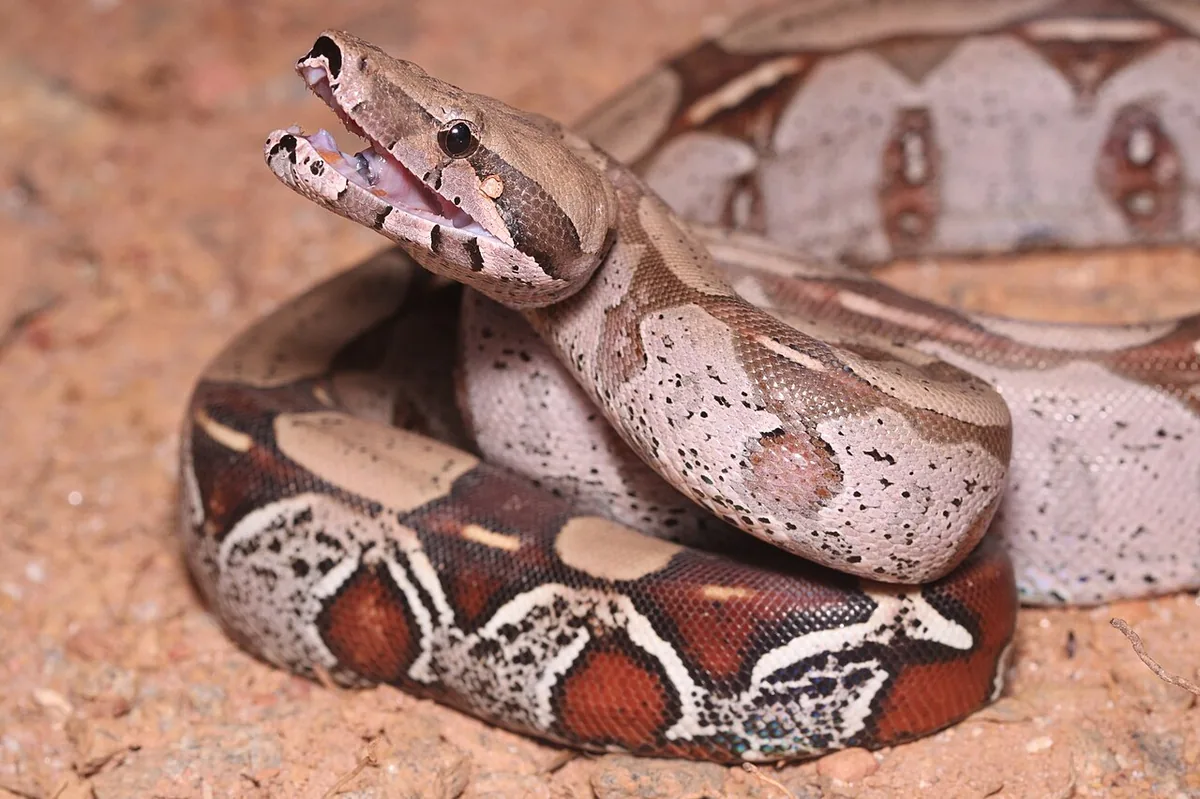
The short answer
Boa constrictors eat whole prey, and as adults they eat it surprisingly rarely. A seven-foot boa may only need a meal every four to six weeks. Most captive boas are overweight because keepers apply a growth-phase schedule to an adult animal that has stopped growing.
Feeding schedule by age
| Life stage | Diet balance | How often | Notes |
|---|---|---|---|
| Juvenile | Appropriately sized rodent | Every 7-14 days | Growing fast |
| Sub-adult | Larger rodent | Every 2-3 weeks | Slow the pace as growth slows |
| Adult | Rabbit or large rat, sized to girth | Every 4-6 weeks | Judge by body condition |
What to feed
| Food | Role | Why |
|---|---|---|
| Frozen-thawed rodents | Staple | Safer than live; thaw in the fridge, warm in warm not hot water |
| Rats | Staple | The usual prey for most of a boa's life |
| Rabbits | Large adults | For the biggest animals only |
What never to feed
Items in this table are either outright toxic or cause predictable long-term harm. This is the part of the page worth reading twice.
| Do not feed | Why |
|---|---|
| Live prey left unattended | Rodents bite and can seriously wound or kill a snake. |
| Prey wider than the snake's thickest point | Regurgitation and injury risk. |
| Wild-caught rodents | Parasite, disease and rodenticide risk. |
| Meat, eggs or other substitutes | Snakes need whole prey for complete nutrition. |
| Weekly feeding of an adult | The fastest route to an obese boa. |
| Live rabbits or large rodents | Serious injury risk to the snake. |
Where good sources disagree
Care sheets do not all say the same thing, and pretending otherwise helps nobody. These are the real points of difference between the sources cited at the foot of this page, and what we think the safe reading is.
How often a large adult should eat.
Recommendations for a seven-foot boa range from every four weeks to every six or beyond. The variation reflects differences in body condition and activity between individuals. All of them are far longer than the weekly interval many keepers default to.
What most boa constrictor feeding advice gets wrong
An adult boa eats far less than you think.
This is the single most useful thing to know about feeding the species. Growth uses calories; a fully grown boa is not growing. Keepers who maintain a juvenile schedule into adulthood produce heavy, sluggish animals with shortened lives. Weigh the snake, look at the body shape, and lengthen the interval rather than shrinking the meal.
Size prey to the body, not to the appetite.
A boa will readily take prey larger than it should have. The check is girth: the prey should be no thicker than the widest part of the snake, producing a modest lump rather than a pronounced distortion.
Common questions
What do boa constrictors eat?
Whole prey, typically rats for most of their lives and rabbits for the largest adults. They eat nothing else: no insects, no meat, no supplements. Frozen-thawed prey is standard and much safer than live for a snake of this size.
How often should I feed an adult boa constrictor?
Far less often than most keepers expect. A roughly seven-foot boa commonly does well on a meal every four to six weeks. Juveniles eat every one to two weeks while growing, and the interval lengthens steadily as growth slows.
Why is my boa constrictor overweight?
Almost always because it is still being fed on a growth-phase schedule after it has finished growing. Obesity is the defining captive welfare problem in this species. The fix is a longer interval between meals, not a smaller prey item.