Blood Python Enclosure and Habitat
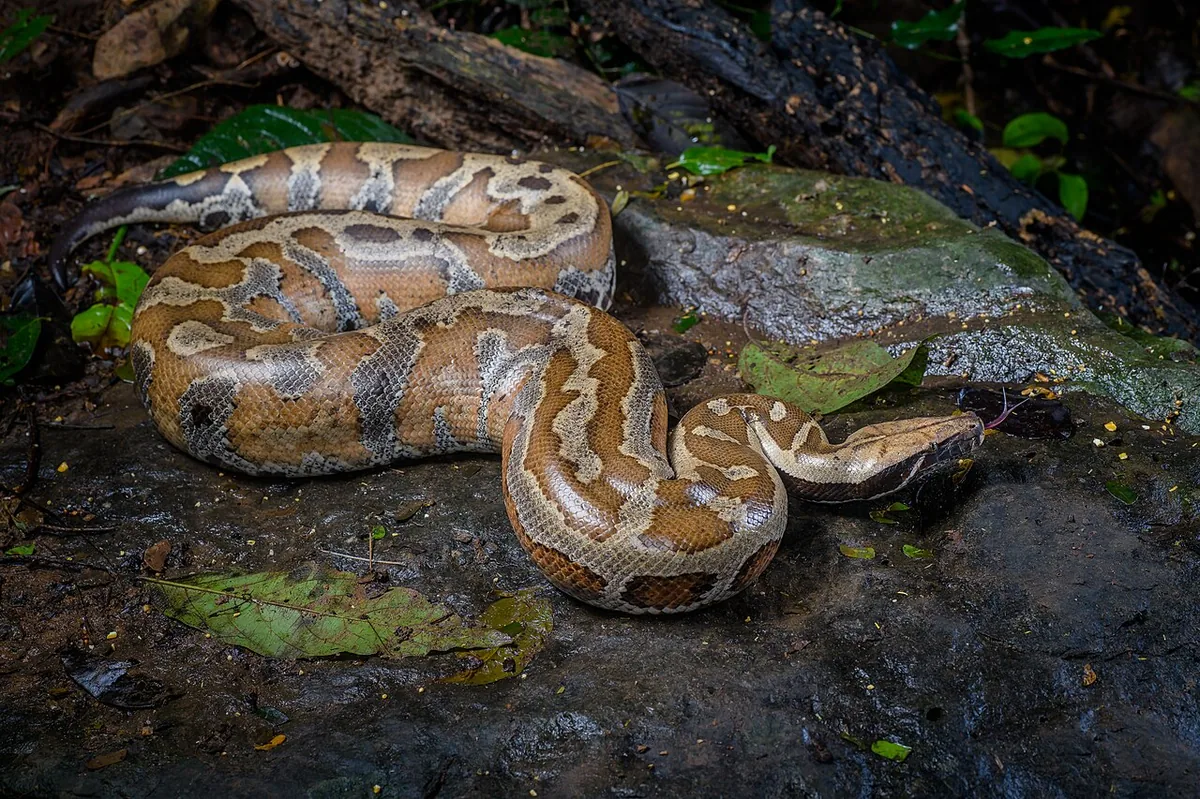
Blood pythons are short and extremely heavy, which breaks the usual habit of sizing an enclosure by snake length. A four-foot blood python outweighs a five-foot ball python substantially, and the furniture has to account for that.
What published sources give
| Figure | Size | Notes |
|---|---|---|
| Adult minimum | 4 x 2 x 2 ft | From this site's care guide |
| Humidity | 60-75% with genuine airflow | Both halves matter |
| Substrate | Coconut husk, cypress mulch or tropical soil | Holds moisture without going stale |
Checked September 20, 2026. Where sources differ the range is shown rather than averaged. These are the figures published as minimums; none of them is a maximum.
What changes as they grow
Juvenile
Grows heavy quickly. Hides sized for a hatchling are outgrown by width long before length becomes the issue.
Adult
4 x 2 x 2 ft as the floor. Size hides by girth: a blood python that cannot get its whole body inside a hide effectively has no hide.
Enclosure mistakes specific to this species
Any heat source without a thermostat
Snakes coil against warmth and do not move away from it, which is why belly heat is the classic cause of thermal burns. Every mat, cable and emitter on a thermostat, probe where the animal contacts the heat.
Hides sized by the snake's length
This is the blood python trap. A hide that a four-foot snake technically fits into lengthwise may be far too narrow for its body. A snake half in and half out of a hide is not hidden.
Chasing humidity by closing ventilation
Blood pythons are prone to respiratory infection when dry, so keepers seal the enclosure. Merck's husbandry guidance specifically warns that cutting ventilation to hold humidity frequently causes skin and respiratory disease. Soggy substrate also causes scale rot in this species.
Enclosure hazards that apply to almost every setup
Five hazards come up across nearly every species on this site: contact burns from unguarded heat, UVB that never reaches the animal, cutting ventilation to hold humidity, unsecured decor, and trusting a bulb's wattage instead of a thermometer. They are set out in full, with sources, on our enclosure hazards page, which is worth reading once against any setup including one that looks finished.
Signs the enclosure is wrong
Animals tell you about their housing through behaviour before they tell you through illness. None of these is a diagnosis; each is a reason to look at the enclosure and, where noted, to call a vet.
| What you see | What it can mean |
|---|---|
| Never fully inside a hide | Hide too small for the animal's girth. |
| Wheezing, or mucus at the mouth or nostrils | Respiratory infection, which this species is unusually prone to. Veterinary attention. |
| Blistering or discoloured belly scales | Scale rot from wet substrate. Veterinary attention. |
| Burns | Unregulated heat. Veterinary attention. |
Common questions
What size enclosure does a blood python need?
A minimum of 4 feet by 2 by 2 for an adult. The more useful point is that hides and furniture should be sized by the snake's girth rather than its length, because blood pythons are exceptionally heavy for their size.
Why does my blood python keep getting respiratory infections?
The species is unusually prone to them when kept too dry, and the common response of sealing the enclosure to raise humidity creates the opposite problem. Moderate humidity with real ventilation is the target.
What substrate suits a blood python?
Coconut husk, cypress mulch or tropical soil are commonly used because they hold moisture. The substrate should be damp rather than wet, since saturated bedding causes scale rot.