What do blood pythons eat?
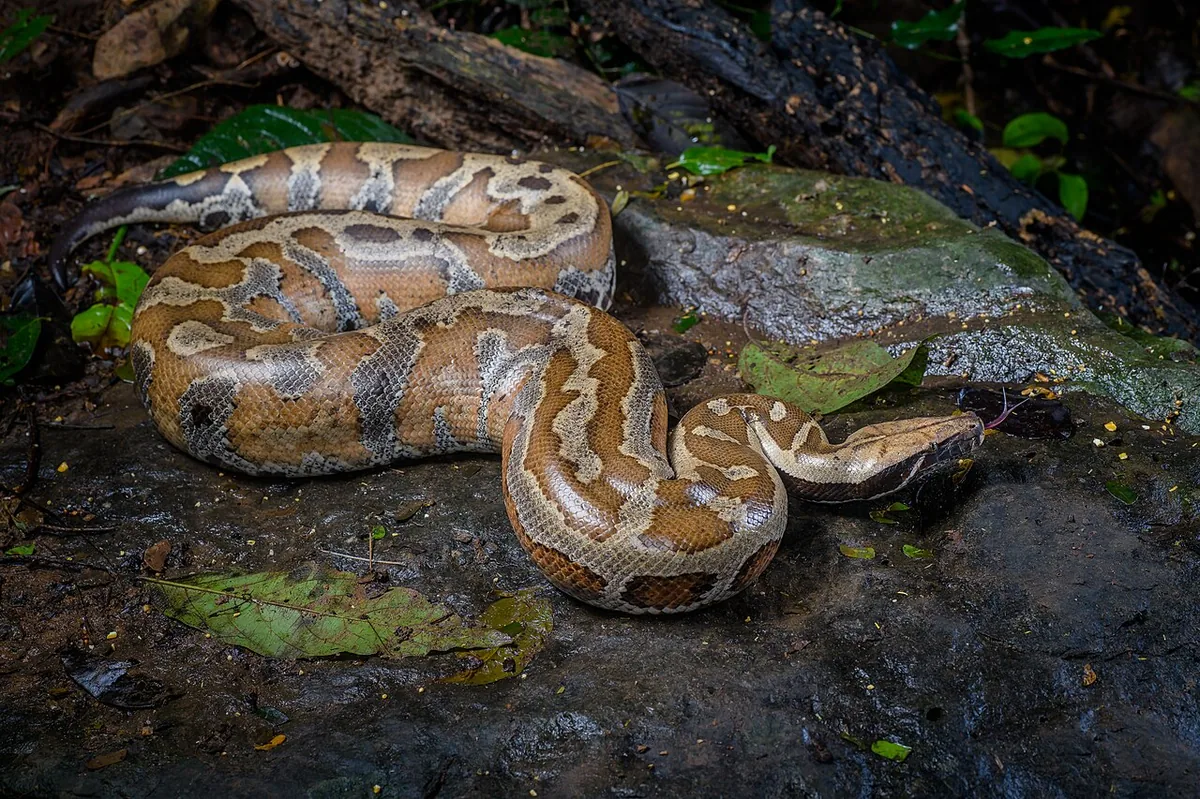
The short answer
Blood pythons eat whole rodents. Their build makes sizing counterintuitive: they are short and exceptionally heavy, so prey chosen by length looks wrong and prey chosen by girth looks small. They also have a powerful feeding response, which makes a deliberate feeding routine worth establishing early.
Feeding schedule by age
| Life stage | Diet balance | How often | Notes |
|---|---|---|---|
| Hatchling | Appropriately sized mouse | Every 7 days | Growing |
| Juvenile | Small rat | Every 7-10 days | Grows heavy quickly |
| Adult | Appropriately sized rat | Every 10-14 days | Judge by condition |
What to feed
| Food | Role | Why |
|---|---|---|
| Frozen-thawed rodents | Staple | Safer than live; thaw in the fridge, warm in warm not hot water |
| Rats | Staple | Standard adult prey |
| Mice | Juveniles | While small |
What never to feed
Items in this table are either outright toxic or cause predictable long-term harm. This is the part of the page worth reading twice.
| Do not feed | Why |
|---|---|
| Live prey left unattended | Rodents bite and can seriously wound or kill a snake. |
| Prey wider than the snake's thickest point | Regurgitation and injury risk. |
| Wild-caught rodents | Parasite, disease and rodenticide risk. |
| Meat, eggs or other substitutes | Snakes need whole prey for complete nutrition. |
| Sizing prey by the snake's length | Blood pythons are far heavier than their length suggests. |
| Reaching in without a hook | The feeding response is genuinely strong. |
Where good sources disagree
Care sheets do not all say the same thing, and pretending otherwise helps nobody. These are the real points of difference between the sources cited at the foot of this page, and what we think the safe reading is.
How much a heavy-bodied snake should eat.
Guidance varies, because a blood python's mass makes percentage-of-body-weight rules produce larger prey than the same rule applied to a slimmer snake. Most keepers settle on girth as the primary check, with weight as a secondary sanity test.
What most blood python feeding advice gets wrong
Mass, not length, sets the portion.
A four-foot blood python substantially outweighs a five-foot ball python. Keepers who size prey against length end up offering too much. Use girth as the primary guide, confirm against body weight, and expect the correct prey item to look modest next to the snake.
Common questions
What do blood pythons eat?
Appropriately sized whole rodents, usually rats for adults and mice for juveniles, offered frozen-thawed. They eat nothing else, and whole prey provides complete nutrition without supplementation.
How often should I feed a blood python?
Adults generally every ten to fourteen days and juveniles every seven to ten while growing. Because they are exceptionally heavy-bodied, judge portions by girth and body condition rather than by length.
Do blood pythons have a strong feeding response?
Yes. It is one of the practical reasons to use a hook and a consistent routine that distinguishes handling time from feeding time. This is about predictability rather than aggression, and well-established captive-bred animals are generally calm between meals.