Blood Python Care Guide
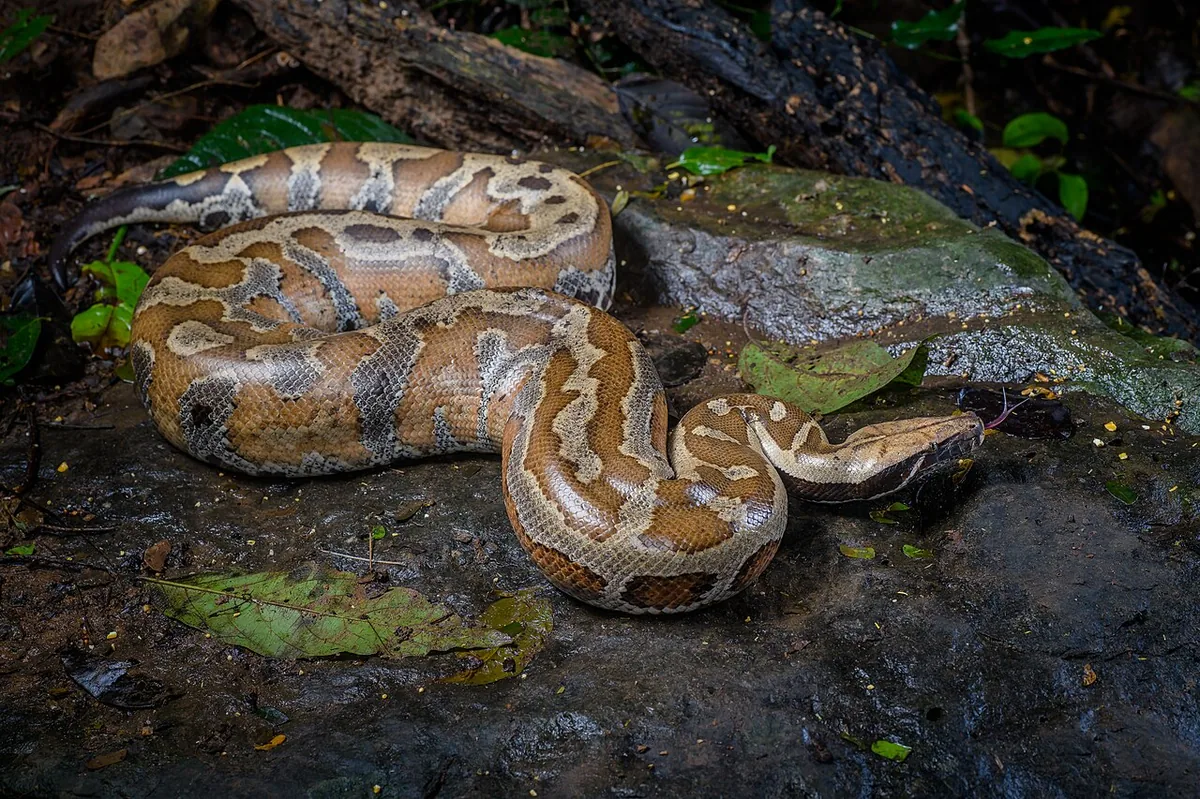
A short, exceptionally heavy-bodied python with a reputation it mostly no longer deserves. Captive-bred animals are typically calm. The real difficulty is humidity: too dry causes respiratory infection, too wet causes scale rot, and the gap between them is narrower than most beginner snakes allow.
Blood Python at a glance
| Adult size | Males 3-5 ft · females 4-6 ft, very heavy-bodied |
| Weight | Commonly 10-15+ lb as an adult |
| Lifespan | 20-25 years |
| Enclosure | 4 x 2 x 2 ft minimum for an adult |
| Temperature | Basking 84-88°F · cool side 75-78°F |
| Humidity | 60-75%, with genuine airflow |
| Substrate | Coconut husk, cypress mulch or tropical soil |
| UVB | Not required; low-level is beneficial. ~12 hours of light year-round |
| Diet | Appropriately sized rodents; strong feeding response |
| Experience | Intermediate |
What most blood python care sheets get wrong
These are the errors that show up most often in secondary care sheets and forum advice. Each one is a real welfare issue, not a preference.
The "aggressive blood python" is a story about imports, not about the species.
Blood pythons earned their reputation during a period when most animals entering the trade were wild-caught: imported, dehydrated, heavily parasitised, stressed and housed badly. An animal in that condition is defensive, and the reputation stuck to the species rather than to the circumstances. Captive-bred and well-established blood pythons are usually calm and become reliably handleable with consistent, unhurried routine. If you are judging this species by a care sheet written in the 1990s, you are judging it at its worst moment.
Adding humidity is not automatically the fix.
Because this species is prone to respiratory infection when kept dry, keepers reflexively push humidity up. Saturated substrate and stagnant air then produce scale rot and skin infection instead. What blood pythons actually need is moderate humidity plus real ventilation, which is a harder thing to build than a wet tank. If the substrate is visibly soggy, the humidity strategy is wrong even if the hygrometer reads correctly.
Short does not mean small.
A 4-foot blood python outweighs a 5-foot ball python substantially, and the difference is in girth and muscle. New keepers size the enclosure by length and get it wrong. Plan for the mass, plan for a hide the animal can actually fit inside, and expect to support the body properly when handling rather than letting it hang.
Why keep a blood python
- Genuinely striking: deep reds, oranges and browns on a build unlike any other pet python
- Short for their mass, so a 4-foot enclosure houses a very substantial snake
- Captive-bred animals are typically calm and handleable once established
- Long-lived, hardy once the humidity is right, and widely captive bred now
- Equatorial origin means a stable year-round routine rather than seasonal swings
Why you might not want one
- Respiratory infection risk is real and this species is more prone to it than most
- Heavy. An adult is a two-hands animal and can be genuinely difficult to move
- Strong feeding response: use a hook and a deliberate routine
- 20-25 year commitment
- Still sold as wild-caught imports in some channels, which is where the bad reputation comes from
Common questions
How big do blood pythons get?
Males typically reach 3 to 5 feet and females 4 to 6 feet, but length understates them. They are exceptionally heavy-bodied, and a mature female can weigh 15 pounds or more. Think of them as a short, very thick snake rather than comparing them by length to a ball python.
Are blood pythons aggressive?
Captive-bred blood pythons are generally calm and become handleable with consistent routine. The species' reputation for aggression dates to a period when most available animals were wild-caught imports that arrived stressed, dehydrated and parasitised. The behaviour reflected the condition those animals were in, not the species.
What humidity do blood pythons need?
Around 60 to 75 percent, paired with genuine airflow. They are notably prone to respiratory infection when kept too dry, but saturated substrate and stagnant air cause scale rot and skin problems instead. Moderate humidity with good ventilation is the target, not maximum humidity.
How long do blood pythons live?
Twenty to twenty-five years with good husbandry. That is a longer commitment than many first-time keepers expect, and because adults are heavy and long-lived, it is worth thinking about who would care for the animal if your circumstances changed.
Do blood pythons need UVB?
Not as a requirement; like most snakes they can meet their vitamin D needs through diet. Low-level UVB is increasingly regarded as beneficial. Because they come from equatorial Southeast Asia, a consistent lighting cycle of roughly 12 hours year-round suits them better than a seasonal one.
What size enclosure does a blood python need?
A minimum of 4 feet long by 2 feet deep by 2 feet tall for an adult, with more floor space being better. Size for mass rather than length: hides must be large enough for a very thick-bodied snake to fit inside completely, which is where most first setups fall short.