Veiled Chameleon Enclosure and Habitat
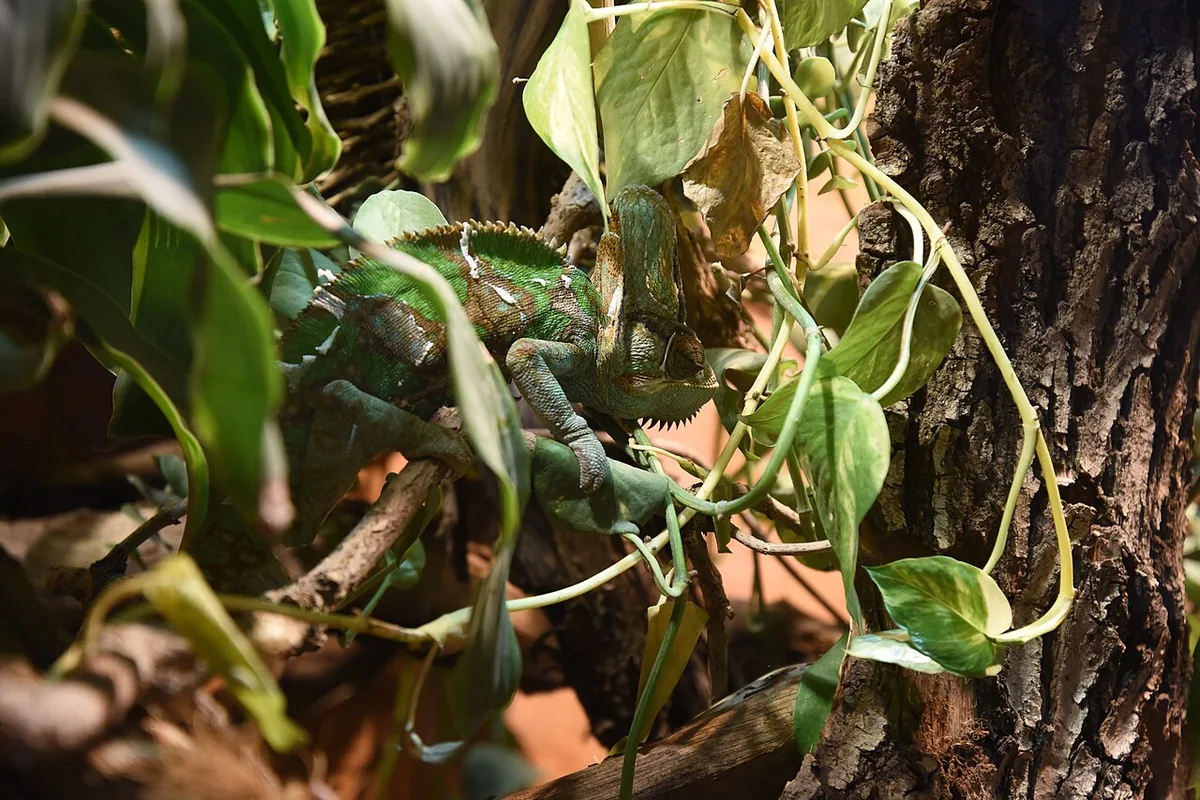
Veiled chameleons need a tall screen enclosure with live planting, and unusually among chameleons they eat the plants. Every species of plant in the enclosure is therefore a food-safety decision.
What published sources give
| Figure | Size | Notes |
|---|---|---|
| Minimum | 24 x 24 x 48 in screen, vertical | From this site's care guide |
| Orientation | Arboreal; vertical space used | Height over footprint |
| Planting | Live, and non-toxic | They eat plant matter, unlike most chameleons |
| Water | Dripper or misting | They will not use a bowl |
Checked September 20, 2026. Where sources differ the range is shown rather than averaged. These are the figures published as minimums; none of them is a maximum.
What changes as they grow
Juvenile
Smaller screen enclosures work while small, with planting and a dripper from the start.
Adult
24 by 24 by 48 inches screen. Females lay eggs without mating and need a lay bin, which is an enclosure requirement as much as a breeding one.
Enclosure mistakes specific to this species
Screen enclosures in a dry room
Screen sides give the ventilation chameleons need and lose humidity fast. In a dry home that combination dehydrates the animal, and the fix is misting and planting rather than closing the enclosure in.
Unguarded bulbs, especially for climbers
Contact burns from bulbs are among the most common reptile injuries, and burn guidance singles out arboreal species because they climb toward the heat. Guard every bulb and emitter the animal can reach.
Toxic plants in the enclosure
This is the veiled-specific one. Unlike other chameleons, veileds eat plant matter, so anything within reach is potentially food. Plant selection is a safety decision rather than a design one.
A water bowl as the water source
Chameleons drink moving droplets from leaves and generally ignore standing water. A dripper or misting system is core equipment, and dehydration suppresses appetite before it becomes visible.
No lay bin for a female
Veiled females produce eggs without a male. Without somewhere to lay, egg binding is a real and often fatal risk.
Enclosure hazards that apply to almost every setup
Five hazards come up across nearly every species on this site: contact burns from unguarded heat, UVB that never reaches the animal, cutting ventilation to hold humidity, unsecured decor, and trusting a bulb's wattage instead of a thermometer. They are set out in full, with sources, on our enclosure hazards page, which is worth reading once against any setup including one that looks finished.
Signs the enclosure is wrong
Animals tell you about their housing through behaviour before they tell you through illness. None of these is a diagnosis; each is a reason to look at the enclosure and, where noted, to call a vet.
| What you see | What it can mean |
|---|---|
| Sunken eyes or orange-tinted urates | Dehydration. Check the dripper and misting schedule. |
| A gravid female straining with nowhere to dig | Possible egg binding. Veterinary emergency. |
| Dark, stressed colouration when approached | Normal to a degree; persistent darkness is worth investigating. |
| Soft jaw or rubbery limbs | Metabolic bone disease. Veterinary attention. |
Common questions
How big an enclosure does a veiled chameleon need?
Around 24 by 24 by 48 inches in a screen enclosure, oriented vertically. They are arboreal and use height, and screen sides provide the ventilation chameleons need.
Which plants are safe in a veiled chameleon enclosure?
Only non-toxic species, because unlike most chameleons veileds eat plant matter. Anything within reach is potentially food, so plant selection is a safety decision rather than decoration.
Do veiled chameleons need a water bowl?
No, they will generally ignore one. They drink moving droplets from foliage, so a dripper or misting system is the actual water source and is core equipment rather than an accessory.