Veiled Chameleon Care Guide
Reality check
Captive veiled chameleon mortality is high, many die within the first year of acquisition, primarily from husbandry mistakes around hydration, UVB, ventilation, and stress. This species is regularly recommended to beginners and regularly fails for them.
The husbandry is exacting. Get the lighting wrong, the hydration wrong, the ventilation wrong, or the stress level wrong and the animal declines visibly. By the time symptoms appear, recovery is often impossible.
If you're new to reptiles, start with a different species. Bearded dragons, crested geckos, or leopard geckos forgive husbandry mistakes much more readily.
Size
Adult male veiled chameleons: 17-24 inches total length, dramatic casque on head. Adult females: 8-14 inches, smaller casque. Hatchlings: 3-4 inches.
Lifespan
Captive: 5-8 years for males, 4-6 years for females. Females have shorter expected lifespan due to reproductive demands (they produce infertile eggs even when not bred). With excellent husbandry both sexes can exceed these averages.
Enclosure
Minimum adult: 2 ft × 2 ft × 4 ft tall (60 × 60 × 120 cm) screen cage. Larger preferred, chameleons are active arboreal animals.
Screen vs glass: Traditional advice was always screen, for ventilation. Recent evidence supports glass or hybrid (PVC with mesh front) enclosures in dry climates where humidity must be maintained. In humid climates, screen is generally still preferred.
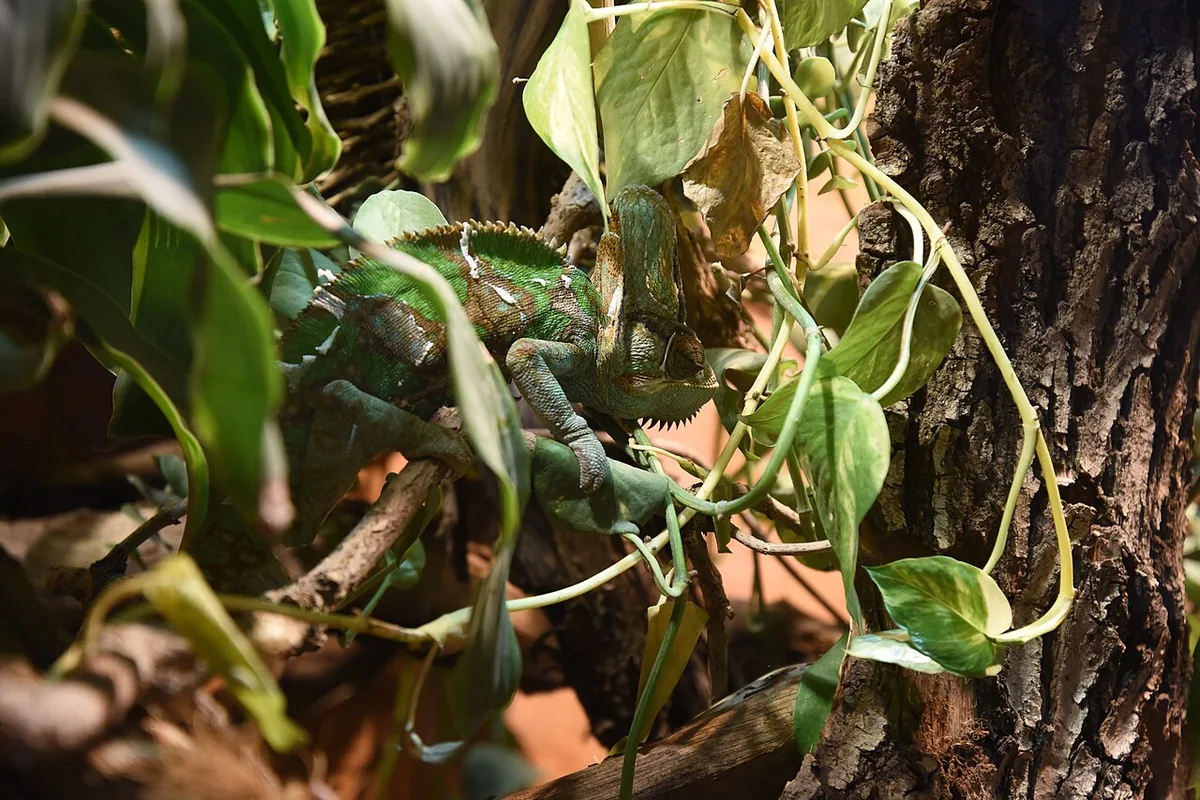
Furnishings: dense network of climbing branches at various angles and heights, broad-leaved plants (live or artificial, pothos works and is non-toxic), basking platform at top, drainage at bottom for misting runoff.
Temperature
- Basking spot: 90-95°F (32-35°C) measured where the chameleon rests
- Ambient day: 75-85°F (24-29°C)
- Cool side / low canopy: 70-75°F
- Night: 65-72°F (18-22°C), night temperature drop is important for chameleons
Use a halogen basking lamp on the top of the enclosure positioned so the chameleon must climb to bask but cannot directly touch the bulb (burn risk).
UVB
Required at high output. T5 HO Arcadia 12% Desert or Reptisun 10.0 T5 HO across the top of the enclosure. The chameleon should be able to climb close enough to reach Ferguson Zone 3-4 UV index during basking. Replace every 6-12 months.
UVB is critical for veiled chameleons. MBD is rapid in this species under inadequate UVB.
Hydration, the most common failure point
Chameleons do not drink from standing water. They drink from droplets, dew, rain, water sliding off leaves. A water bowl in the enclosure is functionally useless to them.
Hydration methods (use multiple):
- Misting: 3-5 times daily for several minutes each, until water drips from foliage. The chameleon drinks the droplets.
- Automatic misting system: MistKing, Pro Mist, or similar. Highly recommended for serious keepers.
- Dripper: Slow-drip water source over foliage so droplets are constantly available. Combined with misting.
- Live plants: Hold moisture and create dew naturally.
Signs of dehydration: sunken eyes, lethargy, yellow or orange urates (should be white). Dehydration is the most common cause of veiled chameleon kidney failure.
Diet
Strict insectivores. Variety is critical, chameleons fed a monotonous diet develop nutritional deficiencies.
Staple insects: Dubia roaches, crickets, BSFL (black soldier fly larvae). Variety: Hornworms (hydration boost), silkworms, the occasional waxworm (rare treat).
Gut-load insects 24-48 hours before feeding with leafy greens, squash, and commercial gut-load. Dust with calcium (no D3) at most feedings; multivitamin with D3 once weekly (more if UVB is inadequate, but UVB should be adequate).
Adults may also accept the occasional plant matter, leafy greens, hibiscus flowers. Most don't, but offer.
Feeding schedule:
- Juveniles: as much as they'll eat in 10-15 minutes, daily
- Sub-adults: every other day, 5-10 prey items per session
- Adults: 2-3 times per week, 5-10 prey items per session
Handling
Veiled chameleons generally do not enjoy handling. They are extremely stress-sensitive, chronic handling can cause measurable health decline. Handle only when necessary (vet visits, enclosure cleaning, moves). Even visual stress from other pets or constant household activity affects them.
Veiled chameleons are display animals, not interactive pets.
Common health problems
- Metabolic Bone Disease (MBD): From inadequate UVB. Fast onset in chameleons. Signs: weak grip, soft jaw, twitching, broken bones from minor stress.
- Kidney failure: From chronic dehydration. Often diagnosed late.
- Egg binding (dystocia) in females: Common, females produce eggs even without being bred. Provide a lay bin (5-gallon bucket of moistened sand/soil). If straining and unsuccessful, vet emergency.
- Mouth rot: From stress, poor diet, or injury.
- Respiratory infection: From inadequate ventilation or low temperatures.
- Stress-related decline: Multifactorial, improper husbandry, handling, visual stressors. Often presents as gradual color dulling, reduced appetite, weight loss.
Common veiled chameleon mistakes
- Believing it's a beginner reptile. It isn't. High mortality reflects this.
- Water bowl instead of misting/dripper. Chameleons don't drink from bowls. Hydration failure → kidney failure → death.
- Coil UVB bulbs or UVB through glass. Inadequate output → rapid MBD.
- Cage too small or too short. Stress and inability to thermoregulate.
- Too much handling. Chronic stress → immune suppression → decline.
- Skipping the female lay bin. Egg binding kills females annually in the hobby.
- Cohabitation. Veiled chameleons are intensely territorial and stressed by visual contact with other chameleons. Solo housing only.
- Inadequate plant cover. Chameleons need to feel hidden. Sparse enclosures cause chronic stress.
Related guides
- Bearded dragon care, better beginner alternative
- Crested gecko care, better arboreal beginner alternative
- All lizard guides