What do veiled chameleons eat?
The short answer
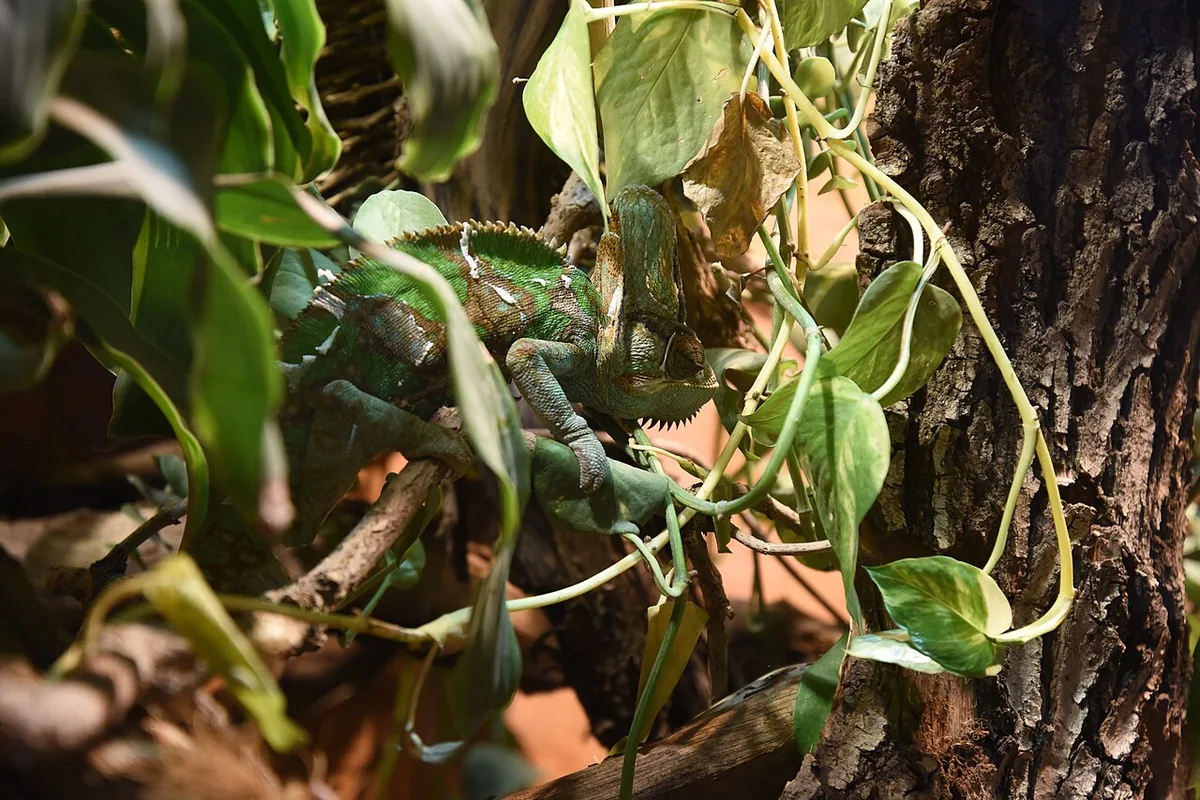
Veiled chameleons are insectivores that also eat plant matter, which makes them unusual in the family. That has a practical consequence most keepers meet the hard way: they will eat the live plants in their enclosure, so every plant in there has to be non-toxic.
Feeding schedule by age
| Life stage | Diet balance | How often | Notes |
|---|---|---|---|
| Juvenile | Small insects | Daily | Rapid growth |
| Adult | Insects plus accepted greens | Every other day | Plants supplement, not replace |
| Adult female | Insects plus increased calcium | Every other day | Egg production is a real demand |
What to feed
| Food | Role | Why |
|---|---|---|
| Hibiscus leaves and flowers | Plant component | Safe and well accepted |
| Collard and mustard greens | Plant component | Offered alongside insects |
| Pothos and ficus (non-toxic species) | Enclosure plants | They will be eaten; choose accordingly |
| Dripper or misting system | Requirement | Their drinking method |
| Dubia roaches | Staple | Good protein and ratio, low chitin |
| Crickets | Staple | Cheap and active; gut-load first |
| Black soldier fly larvae | Staple | Naturally calcium-rich |
| Hornworms, silkworms | Rotation | Hydrating and low fat |
| Waxworms, superworms | Treat only | High fat |
| Gut-loaded insects | Requirement | Feed the insects 24-48h before offering |
| Calcium dusting | Requirement | Insects are calcium-poor and phosphorus-rich |
What never to feed
Items in this table are either outright toxic or cause predictable long-term harm. This is the part of the page worth reading twice.
| Do not feed | Why |
|---|---|
| Toxic enclosure plants | Unlike most chameleons, veileds will eat the furniture. |
| A standing water bowl as the water source | They drink droplets. |
| Ignoring calcium in females | Egg-laying without mating makes calcium demand continuous. |
| Fruit and vegetables as a food group | Not usable by an insectivore. |
| Wild-caught insects | Pesticide, parasite and toxicity risk. |
| Fireflies / lightning bugs | Toxic to reptiles. |
| Prey larger than the space between the eyes | Standard feeder-size rule; impaction risk. |
| Relying on one feeder species | Variety covers what a single insect cannot. |
Where good sources disagree
Care sheets do not all say the same thing, and pretending otherwise helps nobody. These are the real points of difference between the sources cited at the foot of this page, and what we think the safe reading is.
How much of the diet should be plant matter.
Sources agree veiled chameleons take plant material and disagree on how much to actively provide. Nobody suggests plants should displace insects as the staple. The uncontested practical point is the enclosure planting: everything within reach must be safe to eat.
What most veiled chameleon feeding advice gets wrong
They will eat your enclosure plants, so choose them as food.
This is the practical consequence of being the chameleon that eats greenery. Any live plant in a veiled chameleon enclosure should be selected from the non-toxic list, because it is not decoration, it is part of the menu. Keepers who plant a vivarium for looks discover this after the fact.
Females lay eggs whether or not there is a male.
Veiled chameleon females produce eggs without mating, and the calcium demand is continuous rather than occasional. Insufficient calcium in a laying female leads to egg binding and metabolic bone disease. This is a feeding issue as much as a breeding one.
Hydration first when appetite drops.
As with other chameleons, a veiled that goes off food is often dehydrated. Check the dripper and misting schedule before changing the feeder rotation.
Common questions
What do veiled chameleons eat?
Primarily live insects such as crickets, dubia roaches, silkworms and hornworms, gut-loaded and appropriately supplemented. Unusually among chameleons they also eat plant matter, including hibiscus leaves and leafy greens, so plant material supplements the insect diet.
Do veiled chameleons eat plants?
Yes, which sets them apart from most chameleons. The practical consequence is that every live plant in the enclosure must be non-toxic, because a veiled chameleon will treat it as food rather than furniture.
Why do female veiled chameleons need extra calcium?
Because they produce eggs whether or not a male is present, making calcium demand continuous. Insufficient calcium in a laying female can lead to egg binding and metabolic bone disease, both of which are serious and often fatal.