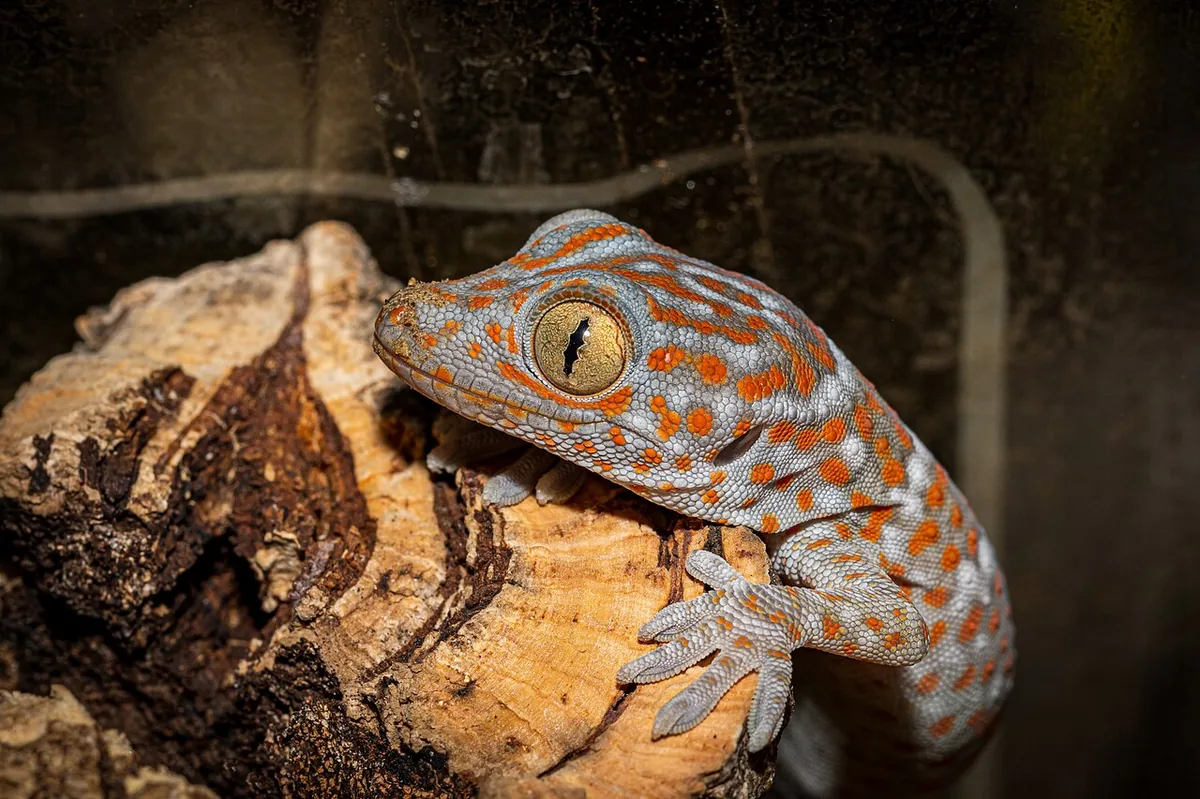
Tokay gecko (Gekko gecko)
Overview
Tokay geckos are one of the most visually striking lizards in the hobby, the blue base color with bright spots is unmistakable. They're large enough to be substantial display animals, hardy when properly housed, and visibly active at dusk and through the night.
The trade-offs are real. They're defensive, bites are powerful and they latch on. They vocalize loudly. They are not interactive pets. Many keepers love them anyway because the display experience is unmatched.
Enclosure
- Adult enclosure: 24×18×36 inches (vertical orientation)
- Substrate: coconut fiber, bioactive substrate, or paper towel
- Vertical surfaces: cork bark slabs, vertical branches, climbing structures
- Plants: live or artificial, tokays appreciate cover
- Water: shallow dish; they primarily drink water droplets from misting
Temperature and humidity
- Ambient daytime: 80-86°F
- Basking spot: 88-90°F
- Nighttime: 72-78°F
- Humidity: 60-80%, mist daily
- UVB: low-to-moderate output (T5 HO 6%)
Diet
- Staple: dubia roaches, crickets, large insects
- Variety: hornworms, silkworms, occasional pinky mice (adults only, sparingly)
- Feeding schedule: 3 times per week for adults
- Dust: calcium-D3 most feedings, multivitamin weekly
Handling
Strongly not recommended. Tokay gecko bites are powerful, the jaw structure is built for vise-grip force, and they typically latch on rather than release. Bites can break skin and require waiting for the gecko to release on its own (often several minutes; cold water can encourage release).
When you must handle (enclosure cleaning, vet visits), wear gloves and minimize contact. Most keepers maintain tokays as look-only animals.
Health concerns
- Parasites in wild-caught animals, fecal exam at acquisition strongly recommended
- Metabolic bone disease from inadequate UVB or calcium
- Respiratory infections from poor ventilation in over-humid enclosures
Lifespan
10-15 years in captivity.
Who this species is right for
- Experienced keepers who want a stunning display gecko
- Keepers who can tolerate nightly vocalizations
- Keepers with dedicated reptile space (not bedroom)
- NOT for keepers who want to interact with their pet
- NOT for first-time reptile keepers