Red Niger Uromastyx Care Guide
Is a Red Niger Uromastyx right for you?
They suit a committed keeper who can hit precise conditions and wants a diurnal, active, plant-eating lizard that tolerates handling once settled. The animal itself is hardy. The husbandry is not forgiving of two things: a basking spot that runs too cool, and any humidity creep. Get the heat and the dryness right and the rest is straightforward. They live well over a decade, so this is not a short-term pet.
Mike's son Max keeps one, and his honest take is that a Red Niger is a better fit than a bearded dragon for a keeper who would rather chop greens than raise feeder insects. If daily bug feeding sounds like a chore, that is a point in this lizard's favor.
What I learned keeping one
My first mistake was borrowing bearded dragon numbers. I ran the basking spot around 105°F because that is what my old beardie needed, and my Uromastyx was sluggish and picky at meals for weeks. Once I raised the basking surface into the mid-120s and confirmed it with a probe, the animal changed: alert, out basking every morning, and eating properly. The lesson stuck. This genus runs its whole body hotter than the desert lizards most of us start with, and half measures on heat show up fast as poor appetite and slow digestion.
How big does a Red Niger Uromastyx get?
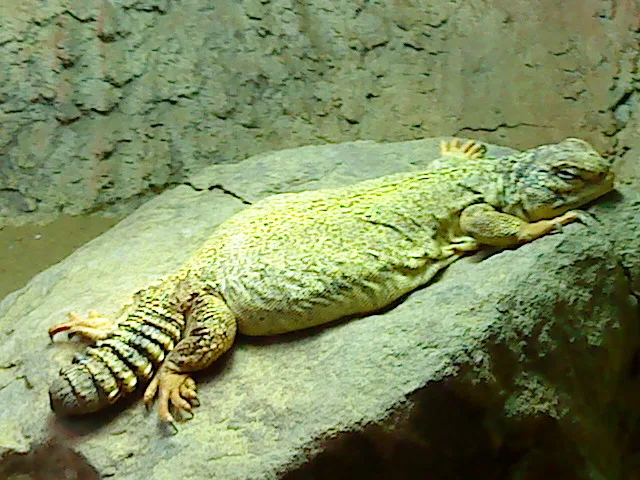
Adults reach roughly 11-14 inches (28-36 cm) in total length, and weigh around 250 grams or more. Males run a little larger and carry the vivid red or orange color the species is known for; females stay paler and more freckled. Most of that length is body and a thick spiny tail. Compared with the larger Uromastyx species, geyri is a slender, manageable size.
How long do Red Niger Uromastyx live?
With correct heat, UVB, diet, and hydration, they commonly live 12-15 years in captivity, and well-kept animals are reported to reach 20 years or more. Those higher figures come from experienced keepers rather than a formal study, so treat the top of the range as a best case. The common causes of a shortened life are all preventable: metabolic bone disease, gout, and kidney failure.
What size enclosure does a Uromastyx need?
A single adult needs a minimum of 4 feet long by 2 feet wide by 2 feet tall (about 120 × 60 × 60 cm), and bigger is genuinely better. These are active desert foragers and diggers that need real floor space and, more importantly, a long enough enclosure to build a steep hot-to-cool gradient. A small tank cannot hold a 125°F basking spot at one end and an 85°F retreat at the other.
Front-opening wood or PVC enclosures are ideal because they hold heat and let you access the animal from the side rather than looming over it. A screen section is needed so UVB and heat reach the basking platform. All-glass aquariums trap humidity and work against you with a dry-desert species.
Heating and basking temperatures
This is the make-or-break section. Uromastyx are among the hottest-basking lizards in the hobby, and copying gentler desert species is the most common way keepers get them wrong.
- Basking surface: 120-130°F (49-55°C), measured at the surface where the lizard sits, not the air above it. Use a probe thermometer or an infrared temp gun.
- Warm ambient: around 90-100°F (32-38°C).
- Cool end: near 85°F (29°C), dropping across the length of the enclosure so the animal can shed heat.
- Night: a fall to room temperature, roughly 65-70°F, is fine. No night heat is needed unless the room drops below the mid-60s. (Night-drop figures are widely used by keepers rather than pinned to a single vet source.)
- Bulb and control: a white halogen flood over a raised basking platform gives a tight, sun-like hot spot. Dial in the wattage and distance to hit the target, then verify with thermometers. Do not use red night bulbs.
Humidity should sit at 20-30%. Sustained higher humidity is a direct path to respiratory illness and scale rot in this species.
Does a Red Niger Uromastyx need UVB?
Yes, and strong UVB at that. In the wild these are high-altitude, open-desert animals bathed in intense sun, and UVB drives the vitamin D3 they need to metabolize calcium. Without it they develop metabolic bone disease, which the Merck Veterinary Manual ties directly to inadequate UVB.
- Bulb: a linear T5 high-output tube in a reflective fixture, either the Arcadia 12% Desert or the Zoo Med ReptiSun 10.0, spanning roughly half the enclosure on the warm side.
- Target: a UV Index of 4-6 at the basking spot. If you can borrow or buy a Solarmeter 6.5, confirm it rather than guessing.
- Distance: roughly 8-13 inches from the animal's back if the bulb is over mesh; farther if it sits under the screen. Follow the bulb maker's distance chart.
- Replace: every 12 months. UVB output fades well before the tube stops giving off visible light.
What do Red Niger Uromastyx eat?
Uromastyx are true herbivores, and this is the sharpest break from bearded dragon care. The diet is dark leafy greens and vegetables as the bulk, with seeds and legumes as a limited plant-protein accent. They need no insects at all.
- Staple greens (daily): collard, mustard, turnip, and dandelion greens, escarole, endive, watercress, and a spring mix.
- Vegetables (smaller amounts): squash, bell pepper, and grated carrot.
- Plant protein (accent): seeds such as millet several times a week; lentils or split peas one to three times a week. Legumes are high in phosphorus, so keep them modest.
- Fruit: under 10% of the diet. Too much sugar drives obesity.
- Supplements: dust with calcium and a reptile multivitamin per the product directions. Because they get strong UVB, avoid overloading vitamin D3, since excess D3 is itself a kidney and gout risk.
Why no insects? Feeding bugs or any animal protein to an adult Uromastyx pushes total protein too high. The Merck Veterinary Manual notes that primary visceral gout is generally caused by excess dietary protein, and keepers link insect feeding to gout, kidney failure, and early death. Some old retailer care sheets still say "occasional insects." That advice is outdated, and I would not follow it.
Plant protein is a different story. Seeds, lentils, and split peas have not been tied to gout the way animal protein has, so they are fine in moderation. The concern with legumes is quantity and phosphorus, not that they are dangerous.
Do desert lizards still need water?
Yes. Uromastyx pull most of their moisture from fresh greens, but chronic low-grade dehydration is one of the quietest killers in this genus. It sits behind impaction, gout, and kidney disease. Offer a small shallow water dish, keep the greens fresh and slightly moist, and lightly mist the food or a cage corner now and then. Do not raise the ambient humidity to hydrate the animal, because damp air causes respiratory infection.
What substrate is safe, and does sand cause impaction?
Red Nigers dig, so a substrate they can burrow in fits their behavior. A washed play-sand and organic-soil mix, several inches deep, is the common choice. Avoid calcium sand and walnut shell, which are the substrates actually linked to trouble.
The older blanket rule was "never use loose substrate." Current thinking, reflected by ReptiFiles and echoed by exotic vets, is that impaction is driven mainly by dehydration and cool temperatures, a cold or dry lizard cannot pass what it swallows, rather than by clean sand itself. The sensible middle ground: keep the animal hot and hydrated, feed off a dish or slate to limit incidental sand, and use plain paper towel for very small, sick, or injured animals.
Common health problems
- Gout and hyperuricemia: swollen, painful joints or organ deposits, poor appetite, lameness. Driven by excess protein (above all insects), dehydration, and over-supplemented D3. Often irreversible, so prevention is the whole game.
- Impaction: straining, no stool, lethargy, a swollen belly. Usually a dehydration and low-temperature problem first, with substrate a secondary factor.
- Metabolic bone disease (MBD): soft or swollen jaw, bent or fractured limbs, tremors. Caused by weak UVB, poor calcium, or temperatures too low to drive metabolism.
- Chronic kidney disease: lethargy, weight loss, sunken eyes. Tied to long-term dehydration, high protein, and excess vitamin D.
- Respiratory infection and scale rot: open-mouth breathing, mucus, discolored scales. A too-damp or too-cool enclosure is the cause. Keep it dry.
Any of these warrants a reptile vet rather than home treatment. Use the ARAV vet finder linked in the footer to locate an exotics practice.
Common Red Niger Uromastyx mistakes
- Basking spot too cool. Using bearded dragon numbers (95-105°F) leaves them unable to digest properly. Aim for 120-130°F at the surface.
- Feeding insects. The single most damaging myth for this genus. It causes gout and kidney failure. Feed plants only.
- Humidity too high. A glass tank, misting the animal, or damp substrate leads to respiratory infection and scale rot. Keep it bone dry.
- Weak or expired UVB. Under-powered bulbs, wrong distance, or a tube past 12 months lead to MBD.
- Assuming a desert lizard needs no water. Chronic dehydration underlies impaction, gout, and kidney disease.
- An enclosure too small to build a gradient. A 40-gallon starter tank cannot hold both a 125°F hot spot and an 85°F retreat.
- Over-supplementing D3 on top of strong UVB. Too much D3 is its own kidney and gout risk.
Related guides
- Uromastyx care (genus overview), the broader guide covering other Uromastyx species
- Bearded dragon care, the omnivore this lizard is often compared to
- All lizard guides
Frequently asked questions
How hot does a Red Niger Uromastyx basking spot need to be?
Hotter than almost any other pet lizard. Aim for a basking surface of 120-130°F (49-55°C), with a warm side around 90-100°F and a cool end near 85°F. These are Saharan animals that only digest food and process UVB at high body temperatures. An undersized basking spot is a leading cause of impaction and slow decline in this species.
Can a Uromastyx eat crickets or mealworms?
No. Uromastyx geyri is a true herbivore. The Merck Veterinary Manual links excess dietary protein to gout, and keepers repeatedly report insects causing kidney and liver failure and early death. Feed an all-plant diet of dark leafy greens with limited seeds and legumes. Ignore older or retailer advice suggesting occasional insects; the veterinary evidence is against it.
What should I feed a Red Niger Uromastyx?
A plant-only diet dominated by dark leafy greens: collard, mustard, turnip, and dandelion greens, escarole, endive, and spring mix. Add small amounts of squash, bell pepper, and grated carrot. Offer seeds like millet as a regular accent and lentils or split peas a couple of times a week. Keep fruit under 10 percent. Dust with calcium and a multivitamin.
Do Uromastyx need water if they are desert animals?
Yes. They get most of their moisture from fresh greens, but chronic low-grade dehydration is one of the most common hidden causes of impaction, gout, and kidney disease. Offer a small shallow water dish and keep greens moist. Do not try to hydrate them by raising cage humidity, which causes respiratory infections. Keep the air dry and the food fresh.
How long do Red Niger Uromastyx live?
With correct husbandry, commonly 12 to 15 years in captivity, and well-kept animals are reported to reach 20 years or more. That longevity is a genuine commitment. The biggest limits on lifespan are the preventable husbandry diseases: metabolic bone disease from weak UVB, and gout or kidney failure from too much protein and chronic dehydration.