Green Iguana Enclosure and Habitat
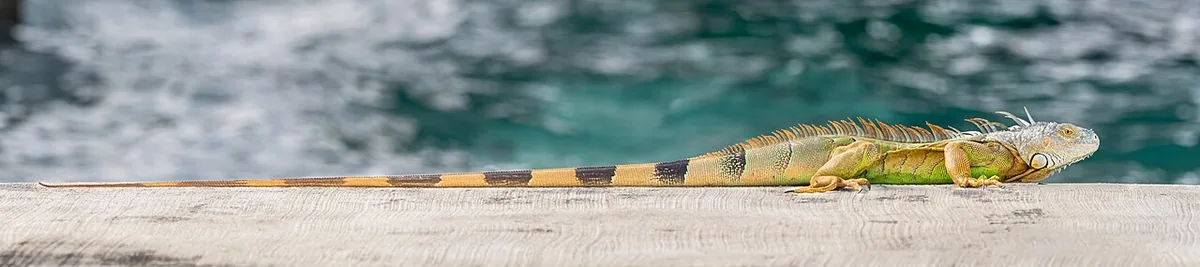
Green iguana enclosure guidance is stated in feet rather than gallons: at least 8 feet of space in one direction, with larger animals often needing upwards of 12. This is a room-sized animal, and that is the decision point.
What published sources give
| Figure | Size | Notes |
|---|---|---|
| Minimum | At least 8 ft in one direction | Published guidance |
| Large adults | Upwards of 12 ft | For bigger lizards |
| Orientation | Arboreal; height and climbing both used | Not a floor-dwelling species |
| UVB | Required | MBD is very common in this species |
Checked September 20, 2026. Where sources differ the range is shown rather than averaged. These are the figures published as minimums; none of them is a maximum.
What changes as they grow
Juvenile
Small and cheap, which is how most iguanas are sold. The enclosure requirement arrives within a couple of years.
Adult
8 feet minimum in one direction, often 12 or more. Many adult iguanas end up in a converted room rather than an enclosure, which is a legitimate solution.
Enclosure mistakes specific to this species
An enclosure too short for a real thermal gradient
A basking lizard regulates by moving between temperatures. In a short enclosure the whole space trends toward one temperature, which removes the animal's ability to thermoregulate however correct the basking spot reads.
UVB through glass, or left in past its life
Glass and most transparent plastics filter UVB out, and output falls within 6 to 12 months while the bulb still looks lit. In lizards this shows up as metabolic bone disease, which is why MBD is usually a lighting failure rather than a diet failure.
Unguarded bulbs, especially for climbers
Contact burns from bulbs are among the most common reptile injuries, and burn guidance singles out arboreal species because they climb toward the heat. Guard every bulb and emitter the animal can reach.
Buying on the hatchling's size
Green iguanas are among the most commonly surrendered reptiles, and the enclosure is the main reason. A hatchling fits in a hand; the adult needs a space most homes do not have spare.
Enclosure hazards that apply to almost every setup
Five hazards come up across nearly every species on this site: contact burns from unguarded heat, UVB that never reaches the animal, cutting ventilation to hold humidity, unsecured decor, and trusting a bulb's wattage instead of a thermometer. They are set out in full, with sources, on our enclosure hazards page, which is worth reading once against any setup including one that looks finished.
Signs the enclosure is wrong
Animals tell you about their housing through behaviour before they tell you through illness. None of these is a diagnosis; each is a reason to look at the enclosure and, where noted, to call a vet.
| What you see | What it can mean |
|---|---|
| Nose and snout abrasion | Rubbing at transparent walls. Very common and an enclosure problem. |
| Soft jaw, rubbery limbs, tremors | Metabolic bone disease, common in this species. Veterinary attention. |
| Persistent aggression in a mature animal | Partly seasonal, but confinement makes it worse. |
| Never climbing | Check climbing structure and temperatures at height. |
Common questions
How big an enclosure does a green iguana need?
Published guidance asks for at least 8 feet of space in one direction, with larger adults often needing 12 feet or more. Many keepers end up converting a room rather than using an enclosure.
Why are green iguanas surrendered so often?
Almost always the enclosure. They are sold as small, inexpensive hatchlings and become large arboreal lizards needing room-sized space, along with demanding UVB and heating requirements.
Do green iguanas need to climb?
Yes. They are arboreal and use height, so climbing structure and basking at height are part of the enclosure rather than enrichment.