What do green iguanas eat?
The short answer
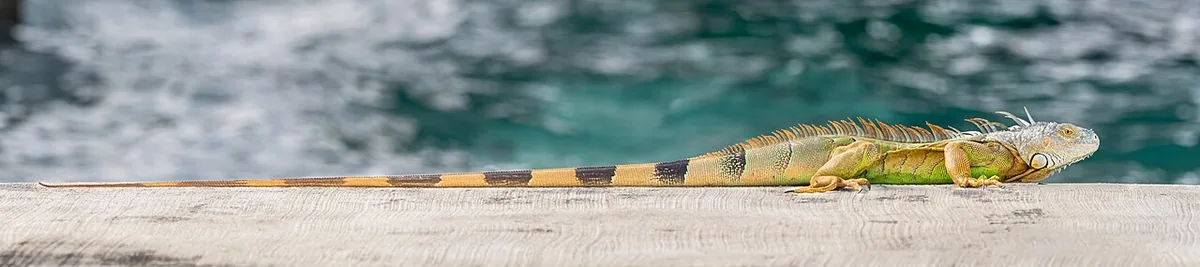
Green iguanas are strict herbivores. Their diet is calcium-rich leafy greens with vegetables and a little fruit, and animal protein has no place in it at any age. The historical practice of feeding iguanas insects, dog food or meat is one of the most damaging pieces of outdated reptile advice still circulating.
Feeding schedule by age
| Life stage | Diet balance | How often | Notes |
|---|---|---|---|
| Hatchling / juvenile | Finely chopped greens | Daily | Calcium daily during growth |
| Adult | Greens-led with vegetables | Daily | Large volume is normal |
| All ages | Animal protein | Never | Associated with renal disease |
What to feed
| Food | Role | Why |
|---|---|---|
| Collard, mustard and turnip greens | Staple | Strong calcium-to-phosphorus ratio |
| Dandelion greens | Staple | High calcium |
| Endive, escarole | Staple | Good bulk and hydration |
| Squash, green beans, bell pepper | Vegetables | Rotate for variety |
| Hibiscus and nasturtium flowers | Enrichment | Safe and well accepted |
| Small amounts of fruit | Occasional | Papaya, mango, berries |
| Calcium powder | Supplement | Regularly on food |
What never to feed
Items in this table are either outright toxic or cause predictable long-term harm. This is the part of the page worth reading twice.
| Do not feed | Why |
|---|---|
| Any animal protein | Insects, meat, dog food, cat food. Associated with renal disease. |
| Avocado | Toxic. |
| Rhubarb | Toxic. |
| Spinach, chard, beet greens as staples | High oxalate; binds calcium. |
| Iceberg lettuce | No meaningful nutrition. |
| Protein-fortified commercial diets | Unnecessary and counterproductive for a herbivore. |
Where good sources disagree
Care sheets do not all say the same thing, and pretending otherwise helps nobody. These are the real points of difference between the sources cited at the foot of this page, and what we think the safe reading is.
Whether juveniles need protein to grow.
Older care literature claimed young iguanas benefit from animal protein for growth. Current herbivore guidance rejects this, and the renal consequences are well recognised. Growth is supported by adequate calcium, UVB and a varied high-quality plant diet rather than by protein supplementation.
What most green iguana feeding advice gets wrong
The dog-food era did enormous damage and has not fully ended.
For years iguanas were routinely fed dog food, cat food and insects on the theory that growing lizards need protein. The result was a generation of captive iguanas with renal disease. The advice still surfaces in old books and second-hand care sheets. Green iguanas are herbivores, and the protein question has a one-word answer.
Volume is normal; density is the trap.
A big iguana eats a big pile of greens, and that is correct for an animal processing low-density plant material. The error is not quantity but substitution, where a keeper swaps bulk greens for something richer to save space or effort.
Calcium without UVB is wasted effort.
Green iguanas are among the species most commonly presented with metabolic bone disease, and it is usually a lighting failure rather than a diet failure. Dusting food with calcium does nothing if the animal cannot synthesise vitamin D3.
Common questions
What do green iguanas eat?
Calcium-rich leafy greens such as collard, mustard, turnip and dandelion greens, plus vegetables including squash, green beans and bell pepper, with small amounts of fruit. They are strict herbivores and should never be fed animal protein.
Can green iguanas eat insects or meat?
No. Green iguanas are strict herbivores, and animal protein is associated with renal disease, a leading cause of death in captive iguanas. Older advice recommending dog food, cat food or insects for growing iguanas is outdated and harmful.
Can iguanas eat spinach?
Only occasionally. Spinach, chard and beet greens are high in oxalates, which bind calcium and make it unavailable to the animal. In a species already prone to metabolic bone disease, these should not be staple greens.
Why do green iguanas get metabolic bone disease?
Most often from inadequate UVB rather than from insufficient dietary calcium. Without UVB the iguana cannot synthesise vitamin D3 and cannot use the calcium it eats. Oxalate-heavy greens and low-calcium diets compound the problem.