How Long Do Fire Skinks Live?
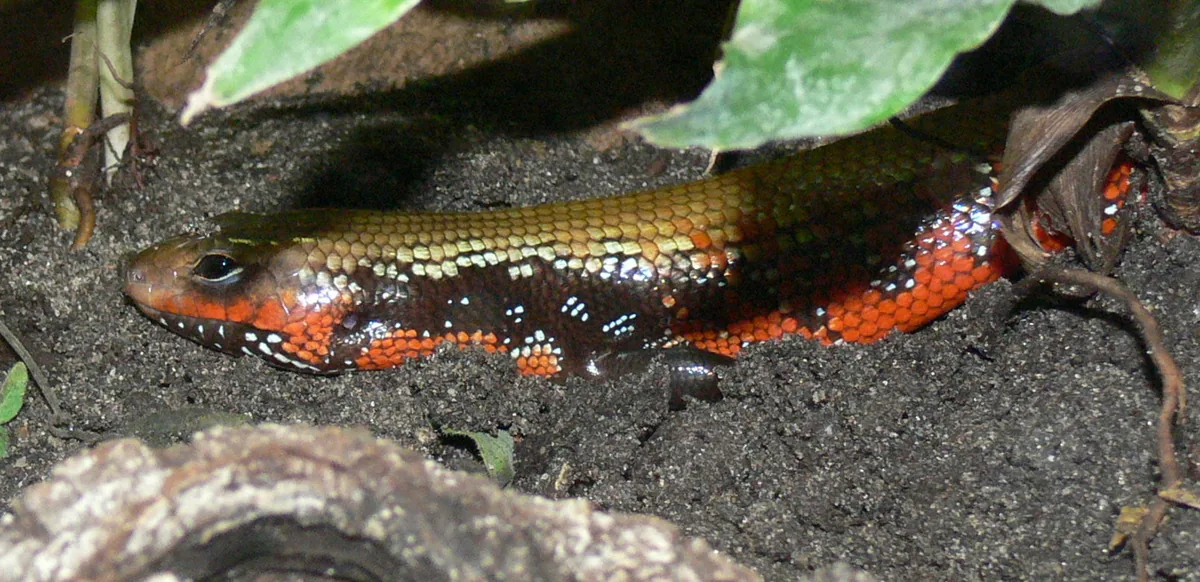
Fire skinks commonly live 15 to 20 years, which is long for a skink. They are hardy once established, and the animals that do not establish are usually wild-caught imports.
Published lifespan figures
| Figure | Value | Notes |
|---|---|---|
| Commonly published | 15-20 years | Long-lived for a skink |
| Hardy | Yes, once established | Wild-caught animals less so |
| Wild-caught | Common in the trade | Affects early survival |
Checked September 20, 2026 against the sources at the foot of this page. Where sources differ the range is shown rather than averaged.
What actually shortens it
Published lifespans describe well-kept animals. The gap between the figure above and what a fire skink actually lives is almost entirely husbandry, and these are the levers that matter most.
Metabolic bone disease
Fire skinks spend much of the day buried, which leads keepers to assume they do not need UVB. They surface to bask and they do use it, and a species that is only briefly exposed needs the basking area lit properly rather than dimly.
Impaction
Fire skinks feed with their heads in the substrate and take a mouthful of bedding along with the insect. Because they are also burrowers, the answer is not a bare floor but a substrate whose particles are safe to swallow.
A dry enclosure
Fire skinks come from humid West African forest and need substantial humidity and deep moist substrate. Kept dry they develop retained shed and respiratory problems.
Common questions
How long do fire skinks live?
Commonly 15 to 20 years in captivity, which makes them a long commitment for an animal often sold as an inexpensive display lizard.
What shortens a fire skink's life?
A dry enclosure, since they come from humid West African forest. Metabolic bone disease and impaction are the other two, as with most terrestrial lizards.
Are fire skinks hardy?
Once established, yes. The animals that struggle are usually wild-caught imports carrying parasite loads, so captive-bred is worth seeking out.