Bearded Dragon Enclosure and Habitat
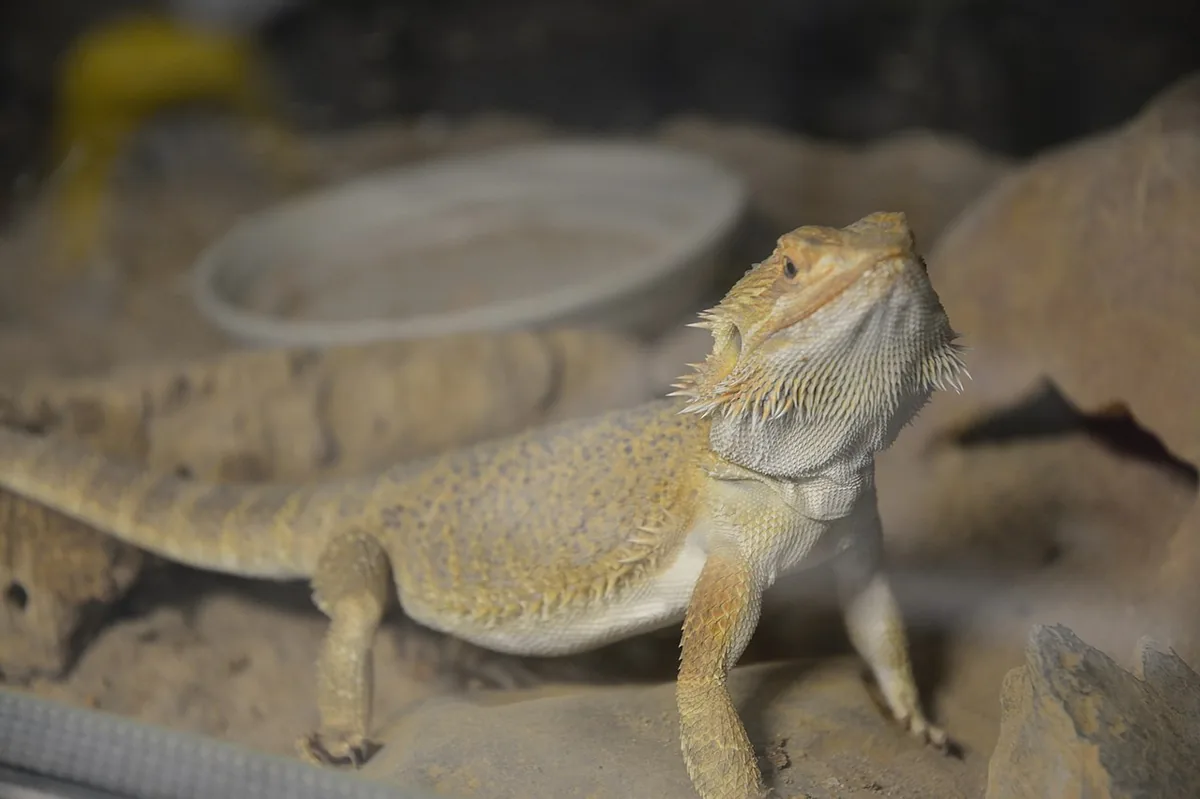
The figure you will see most often for an adult bearded dragon is 4 x 2 x 2 feet, roughly a 120-gallon equivalent, and it is a minimum rather than a target. What follows is what published sources actually say, where they differ, and the enclosure problems that send bearded dragons to the vet.
What published sources give
| Figure | Size | Notes |
|---|---|---|
| Adult minimum, commonly published | 4 x 2 x 2 ft (~120 gal equivalent) | The most widely repeated modern figure |
| Pet-store starter kits | Typically far smaller | Designed to be affordable and stackable, not to meet welfare needs |
| Direction of travel | Minimums have increased | Older care sheets give figures often around half current recommendations |
Checked September 20, 2026. Where sources differ the range is shown rather than averaged. These are the figures published as minimums; none of them is a maximum.
What changes as they grow
Hatchling and juvenile
Published advice splits. Some sources recommend starting in the adult enclosure with heavy clutter so the animal never needs moving; others start smaller. Both camps agree the danger is a large, bare enclosure, because an exposed hatchling stresses and stops eating. If you use the adult enclosure early, fill it.
Adult
4 x 2 x 2 ft as the floor. Floor area matters more than height for a terrestrial basker, and extra length is more useful than extra depth because it lengthens the thermal gradient.
Enclosure mistakes specific to this species
Buying the kit the hatchling comes in
Starter kits are sized for a baby and for shelf space in a shop. Most adult bearded dragons outgrow them quickly, and the upgrade is often deferred because the animal 'seems fine'. Buy for the adult, or budget the upgrade at purchase.
UVB mounted outside a glass or plastic lid
Bearded dragons are among the species most often presented with metabolic bone disease, and it is usually a lighting failure rather than a diet failure. Glass filters UVB out. Mount the bulb inside the enclosure, at the distance the manufacturer specifies, and replace it every 6 to 12 months.
Not enough length for a thermal gradient
A basking species needs somewhere genuinely cool to retreat to. In a short enclosure the whole space trends to one temperature, which removes the animal's ability to regulate at all.
Enclosure hazards that apply to almost every setup
Five hazards come up across nearly every species on this site: contact burns from unguarded heat, UVB that never reaches the animal, cutting ventilation to hold humidity, unsecured decor, and trusting a bulb's wattage instead of a thermometer. They are set out in full, with sources, on our enclosure hazards page, which is worth reading once against any setup including one that looks finished.
Signs the enclosure is wrong
Animals tell you about their housing through behaviour before they tell you through illness. None of these is a diagnosis; each is a reason to look at the enclosure and, where noted, to call a vet.
| What you see | What it can mean |
|---|---|
| Glass surfing and frantic scratching at the walls | Commonly associated with an enclosure that is too small, too bare, or lacking a visual barrier. |
| A dragon that basks constantly and never moves off | Often means there is no genuine cool end to move to. |
| Darkened beard, flattened posture, persistent hiding | Stress signals worth reading alongside enclosure size and sightlines. |
| Soft jaw, rubbery limbs, tremors | Metabolic bone disease. Usually UVB rather than diet. Veterinary attention. |
Common questions
What size enclosure does a bearded dragon need?
The most commonly published modern figure for an adult is 4 feet long by 2 feet wide by 2 feet tall, roughly a 120-gallon equivalent. That is a minimum rather than a target, and floor area matters more than height for a terrestrial basking species.
Can a baby bearded dragon live in an adult enclosure?
Sources differ. Some recommend starting in the adult enclosure heavily cluttered with hides and decor so the animal never needs moving; others start smaller. What both agree on is that a large, bare enclosure stresses a hatchling, so if you use the full-size enclosure early, fill it with cover.
Is a 40-gallon tank big enough for a bearded dragon?
Not for an adult. It falls well short of the commonly published 4 x 2 x 2 foot minimum. It may serve temporarily for a juvenile, but planning for the adult enclosure from the outset avoids the upgrade being postponed indefinitely.
Why is my bearded dragon scratching at the glass?
Glass surfing is commonly associated with an enclosure that is too small, too bare, or has no visual barrier at ground level. It is worth treating as feedback about the enclosure rather than as a quirk, alongside checking temperatures and sightlines.