Tomato Frog Care Guide
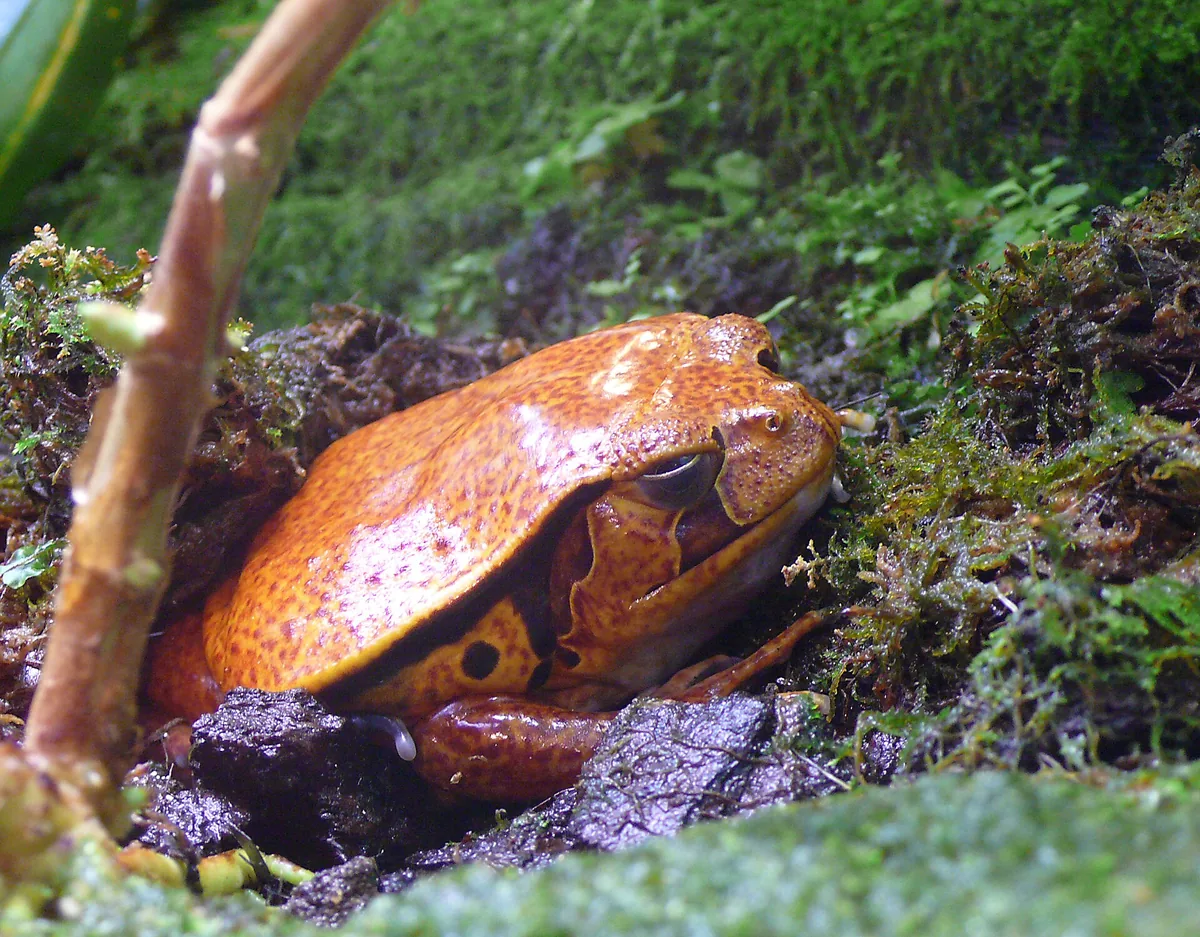
A round, brilliantly coloured burrowing frog that is genuinely easy to keep and genuinely not for handling. Straightforward housing, simple insect diet, and a defensive skin secretion that makes it a display animal. Note which species you are actually buying.
Tomato Frog at a glance
| Adult size | Females ~4 in · males 2-3 in |
| Lifespan | 6-8 years |
| Enclosure | 10-20 gallon for a single adult; floor space over height |
| Temperature | 72-79°F day · 68-72°F night |
| Humidity | 60-80%, substrate evenly damp, never soggy |
| Substrate | At least 2 in of damp coco fibre or soil, plus leaf litter |
| UVB | Low-level beneficial, not strictly required |
| Diet | Crickets, roaches and worms sized to the gap between the eyes |
| Handling | Minimal. Irritant skin secretion; wash hands after any contact |
| Experience | Beginner-friendly to keep, not to handle |
What most tomato frog care sheets get wrong
These are the errors that show up most often in secondary care sheets and forum advice. Each one is a real welfare issue, not a preference.
The famous tomato frog and the one you can buy are different species.
Dyscophus antongilii is the species in most photographs and documentaries, and it sits on CITES Appendix I with export banned. The frog actually sold in shops is nearly always Dyscophus guineti, the false tomato frog, which is not CITES-listed. Care sheets routinely mix the two, using antongilii photos above guineti husbandry. Ask the seller which species you are buying, because it changes the legality and provenance of the animal even though the care is similar.
Protecting one species pushed the pressure onto its lookalike.
Because D. guineti closely resembles the protected D. antongilii and carries no equivalent trade restriction, it is heavily collected as a substitute. Researchers have argued that the Appendix I listing, while well intended, undermined the status of the unlisted species. If you want one of these frogs, ask specifically about captive-bred stock rather than treating wild-collected as the default.
Beginner-friendly does not mean handleable.
Tomato frogs are frequently recommended as a first amphibian, and for housing and feeding that is fair. It misleads people about handling. A frightened tomato frog inflates, squeaks and produces a sticky secretion that irritates human skin and eyes and can provoke an allergic response. Wash your hands after any contact, and treat the animal as something to watch rather than hold.
Why keep a tomato frog
- Startling colour for a beginner-level amphibian
- Simple housing: no specialised lighting rig, no water section to filter
- Burrowing and ambush behaviour is genuinely interesting to watch
- Hardy once humidity and temperature are stable
- Small footprint. A single adult is comfortable in a modest enclosure
Why you might not want one
- Look-but-do-not-touch. The defensive secretion irritates skin and eyes
- Sedentary and often buried, so there are days you will barely see it
- Live insects are a standing requirement
- Much of the trade is still wild-collected, with the conservation issue that implies
Common questions
How big do tomato frogs get?
Females reach roughly 4 inches in body length, while males stay much smaller at 2 to 3 inches. The difference between the sexes is large enough that buyers are sometimes surprised by the adult size of their animal. Females are also typically the more intensely coloured of the two.
Are tomato frogs poisonous?
They are not poisonous to eat in the way dart frogs were historically described, but when frightened they secrete a sticky defensive substance that irritates human skin and eyes and can trigger an allergic reaction in some people. Handling should be minimal and hands washed thoroughly afterwards.
Can you hold a tomato frog?
You should avoid it. Beyond the irritant secretion, amphibian skin is highly permeable and absorbs oils, salts and residues from human hands, and handling is stressful for the animal. Move them with a container when you need to, and treat them as a display species.
What do tomato frogs eat?
Live insects: crickets are the staple, with roaches and worms adding variety. Prey should be no larger than the distance between the frog's eyes. They are ambush predators that sit partly buried and take food that moves past, so live prey rather than prepared diets is the requirement.
What temperature and humidity do tomato frogs need?
Around 72 to 79°F during the day, dropping to roughly 68 to 72°F at night, with humidity between 60 and 80 percent. The substrate should be evenly damp but never waterlogged, and deep enough, at least two inches, for the frog to burrow into.
Is the tomato frog I can buy the endangered one?
Almost certainly not. The protected species, Dyscophus antongilii, is listed on CITES Appendix I and its export is banned. Pet shops nearly always stock Dyscophus guineti, the false tomato frog, which is not CITES-listed. The two look similar enough that care sheets and photographs frequently confuse them.