What do tomato frogs eat?
The short answer
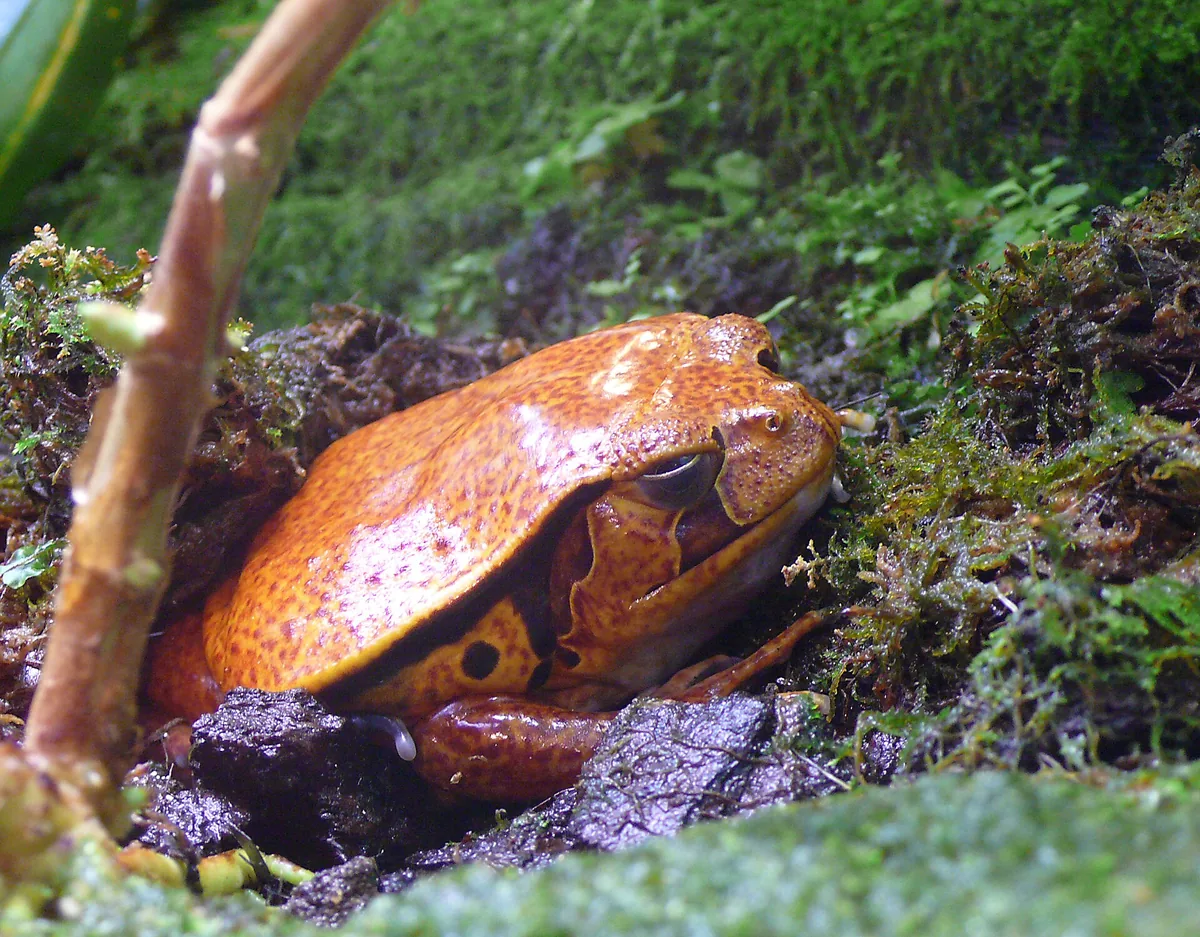
Tomato frogs are burrowing ambush predators. They sit partly buried in damp substrate and take prey that moves past, which means live insects sized to the gap between their eyes. They are straightforward to feed and, like most sit-and-wait amphibians, easy to overfeed.
Feeding schedule by age
| Life stage | Diet balance | How often | Notes |
|---|---|---|---|
| Juvenile | Small crickets | Daily to every other day | Growing |
| Adult male | Appropriately sized insects | 2-3 times weekly | Smaller than females |
| Adult female | Appropriately sized insects | 2-3 times weekly | Larger; eats more per meal |
What to feed
| Food | Role | Why |
|---|---|---|
| Crickets | Staple | The usual base of the diet |
| Dubia roaches | Staple | Good protein |
| Earthworms | Rotation | Well accepted |
| Mealworms | Occasional | Harder shelled; rotate rather than rely |
| Waxworms | Treat only | High fat |
| Gut-loaded insects | Requirement | Feed the insects 24-48h before offering |
| Calcium dusting | Requirement | Insects are calcium-poor as bought |
What never to feed
Items in this table are either outright toxic or cause predictable long-term harm. This is the part of the page worth reading twice.
| Do not feed | Why |
|---|---|
| Prey wider than the gap between the eyes | Standard size rule for this species. |
| Feeding to appetite | Sit-and-wait feeders overeat readily. |
| Rodents | Not needed and fattening. |
| Wild-caught insects | Pesticide, parasite and toxicity risk. |
| Handling with dry or unwashed hands | Permeable skin absorbs oils, salts and residues. |
Where good sources disagree
Care sheets do not all say the same thing, and pretending otherwise helps nobody. These are the real points of difference between the sources cited at the foot of this page, and what we think the safe reading is.
How often adults should eat.
Guidance ranges from twice to three times weekly for adults, with some keepers offering smaller amounts more often. Females, being substantially larger, generally take more per meal. Nobody recommends daily large meals for an adult.
What most tomato frog feeding advice gets wrong
They ambush, so they sit still.
Tomato frogs spend most of their time partly buried, waiting. New keepers interpret the stillness as lethargy or illness. Provided weight is stable and the frog responds to passing prey, sitting buried is the species behaving exactly as designed.
Do not hand-feed.
Tomato frogs produce a sticky defensive secretion when handled or frightened that irritates skin and eyes. Beyond that, amphibian skin absorbs residues from human hands. Tong feeding or simply releasing prey into the enclosure avoids both problems.
Common questions
What do tomato frogs eat?
Live insects: crickets are the staple, with dubia roaches and earthworms adding variety. Prey should be no wider than the gap between the frog's eyes. They are ambush predators and respond to prey that moves rather than to prepared foods.
How often should I feed a tomato frog?
Adults roughly two to three times a week, juveniles daily to every other day. Females are substantially larger than males and take more per meal. As sit-and-wait feeders they overeat readily, so avoid feeding to appetite.
Why does my tomato frog stay buried?
Because that is how the species hunts. Tomato frogs are burrowing ambush predators that sit partly buried in damp substrate waiting for prey to pass. Provided weight is stable, staying buried is normal rather than a sign of illness.