← Red-Eyed Tree Frog care guide
Red-Eyed Tree Frog Enclosure and Habitat
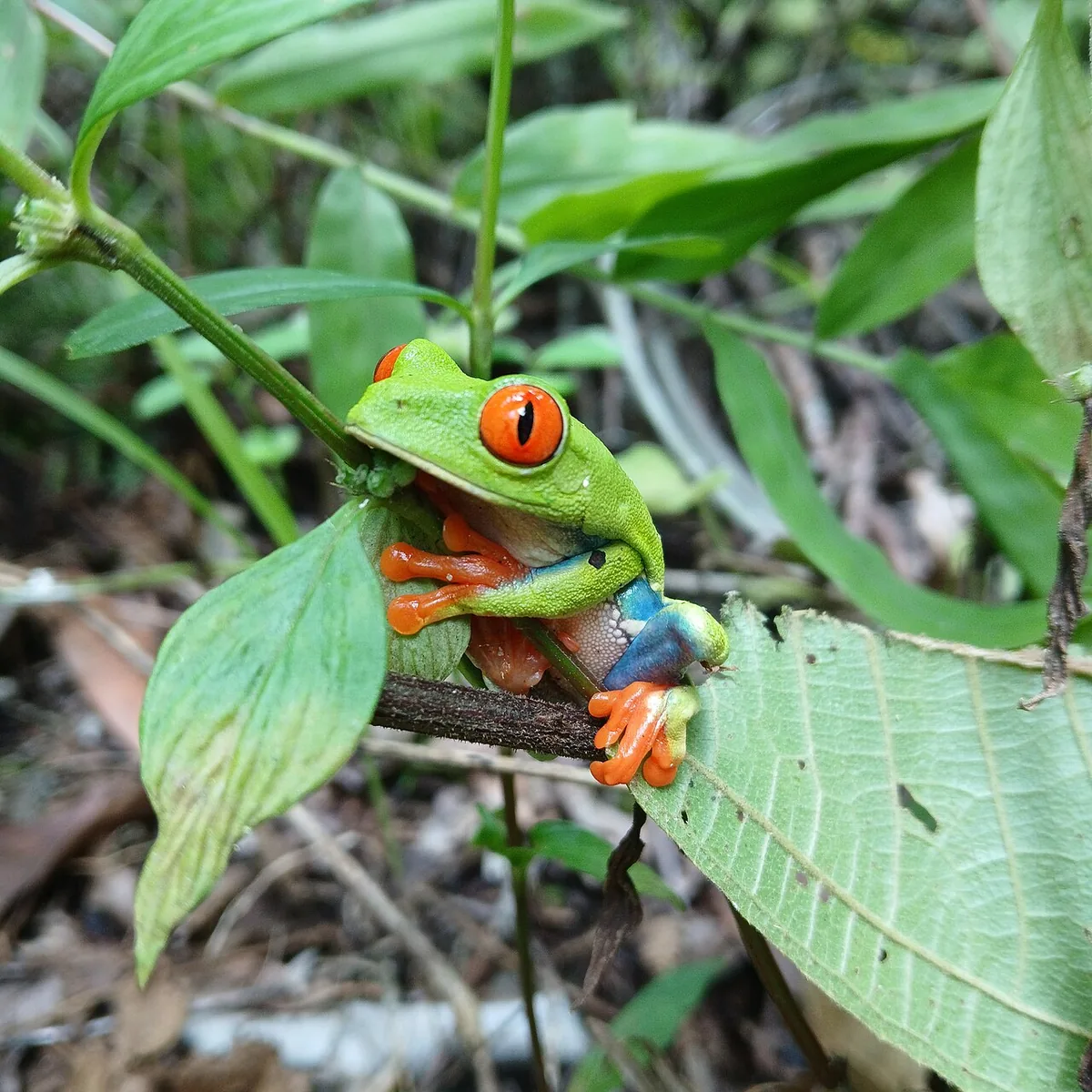
Red-eyed tree frogs are arboreal and nocturnal, and they sleep pressed to the underside of broad leaves during the day. The enclosure has to provide that, which makes planting a functional requirement rather than decoration.
What published sources give
| Figure | Size | Notes |
|---|---|---|
| Adult | 18 x 18 x 24 in vertical with live plants | From this site's care guide |
| Orientation | Vertical; they live above the floor | Arboreal |
| Planting | Broad-leaved plants for daytime sleeping | Functional, not decorative |
| Humidity | High, maintained by misting | Without sealing off ventilation |
Checked September 20, 2026. Where sources differ the range is shown rather than averaged. These are the figures published as minimums; none of them is a maximum.
What changes as they grow
Froglet
Small and delicate. Dense planting helps them feel secure and find prey.
Adult
18 by 18 by 24 inches vertical with live plants. Broad leaves at several heights are what the frog actually uses.
Enclosure mistakes specific to this species
Untreated tap water, or residue on anything that goes in
Amphibian skin is highly permeable and absorbs what it touches. Chlorine and chloramine in tap water, soap residue on decor, and hand lotion on a keeper's fingers all reach the bloodstream in a way they never would with a reptile. Dechlorinate everything and rinse anything new.
A lid that does not latch
Frogs are better escapers than most people expect, and a dried-out amphibian dies quickly. Lids need to latch rather than rest, particularly on climbing species.
No broad leaves to sleep on
Red-eyed tree frogs spend the day pressed flat against the underside of a leaf. Without suitable foliage they sleep on glass, which is exposed and stressful for them.
Sealing the enclosure to hold humidity
The usual shortcut, and Merck's husbandry guidance warns that cutting ventilation to maintain humidity frequently causes skin and respiratory disease. Mist more rather than ventilate less.
Feeding during the day
Not strictly an enclosure fault, but it interacts: a nocturnal frog in a brightly lit enclosure with daytime food does not eat well.
Enclosure hazards that apply to almost every setup
Five hazards come up across nearly every species on this site: contact burns from unguarded heat, UVB that never reaches the animal, cutting ventilation to hold humidity, unsecured decor, and trusting a bulb's wattage instead of a thermometer. They are set out in full, with sources, on our enclosure hazards page, which is worth reading once against any setup including one that looks finished.
Signs the enclosure is wrong
Animals tell you about their housing through behaviour before they tell you through illness. None of these is a diagnosis; each is a reason to look at the enclosure and, where noted, to call a vet.
| What you see | What it can mean |
|---|---|
| Sleeping on the glass rather than foliage | Not enough broad-leaved cover. |
| Dry or tacky skin | Humidity too low. |
| Reduced appetite | Check humidity and whether food is offered after lights out. |
| Escapes | Small, fast and good at finding gaps. |
Common questions
How big a vivarium does a red-eyed tree frog need?
Around 18 by 18 by 24 inches, oriented vertically and planted with live plants. They are arboreal and use height, so a tall enclosure furnished with foliage is what the species needs.
Why do red-eyed tree frogs need live plants?
They sleep during the day pressed flat against the underside of broad leaves. Without suitable foliage they end up sleeping on the glass, which is exposed and stressful. The planting is functional.
How do you keep humidity up without sealing the enclosure?
Misting, moisture-retentive substrate and live planting. Merck's husbandry guidance specifically warns against reducing ventilation to maintain humidity, because it frequently causes skin and respiratory disease.