← Red-Eyed Tree Frog care guide
What do red-eyed tree frogs eat?
The short answer
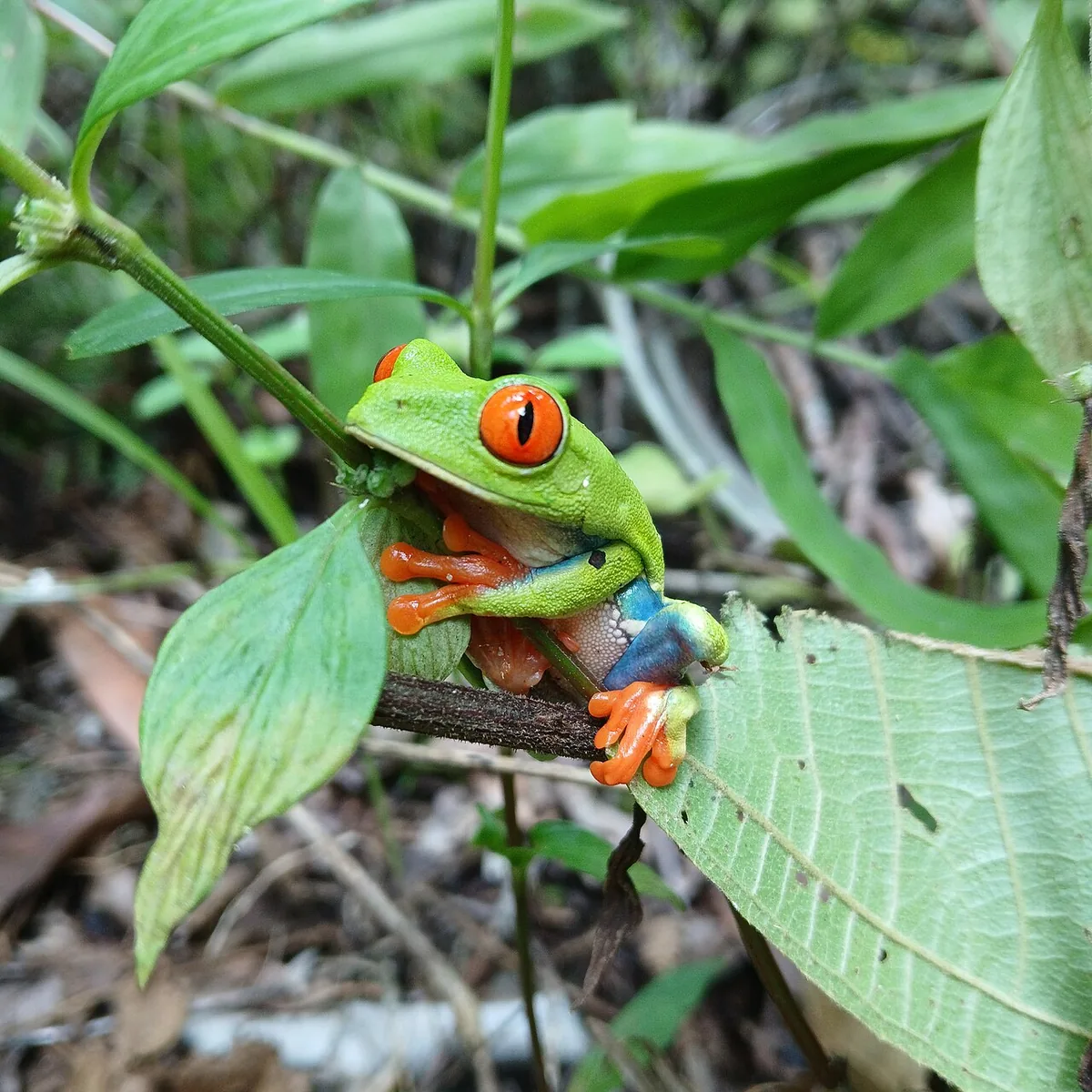
Red-eyed tree frogs are strictly nocturnal arboreal insectivores. They eat small insects, and the single most useful adjustment most keepers make is offering food after lights out. A frog that ignores food during the day is behaving normally rather than refusing to eat.
Feeding schedule by age
| Life stage | Diet balance | How often | Notes |
|---|---|---|---|
| Juvenile | Small crickets, fruit flies | Daily | Growing |
| Adult | Appropriately sized crickets | Every 2-3 days | Offer after lights out |
| All ages | Misting | Daily | Hydration supports feeding |
What to feed
| Food | Role | Why |
|---|---|---|
| Small crickets | Staple | The usual base |
| Dubia roach nymphs | Staple | Good protein |
| Flightless fruit flies | Juveniles | Correct size for froglets |
| Waxworms | Treat only | High fat |
| Gut-loaded insects | Requirement | Feed the insects 24-48h before offering |
| Calcium dusting | Requirement | Insects are calcium-poor as bought |
What never to feed
Items in this table are either outright toxic or cause predictable long-term harm. This is the part of the page worth reading twice.
| Do not feed | Why |
|---|---|
| Feeding during daylight | They are nocturnal; daytime food is usually ignored. |
| Prey wider than the gap between the eyes | Standard size rule. |
| Wild-caught insects | Pesticide, parasite and toxicity risk. |
| Handling with dry or unwashed hands | Permeable skin absorbs oils, salts and residues. |
| Low humidity | Suppresses appetite in this species. |
Where good sources disagree
Care sheets do not all say the same thing, and pretending otherwise helps nobody. These are the real points of difference between the sources cited at the foot of this page, and what we think the safe reading is.
Whether to leave crickets in overnight.
Some keepers release a measured number of crickets to roam foliage overnight; others tong-feed to control intake precisely. Free-roaming crickets suit the frog's hunting behaviour; the caution is that uneaten crickets can nibble a sleeping frog, so numbers should be modest.
What most red-eyed tree frog feeding advice gets wrong
Feed after lights out.
This is the single adjustment that resolves most apparent feeding problems with this species. Red-eyed tree frogs are strictly nocturnal and simply will not engage with food during the day. Keepers who feed in the evening and check in the morning usually discover the frog was eating all along.
Hydration and appetite are linked.
These are humid-forest frogs with highly permeable skin. An enclosure that runs dry produces a frog that eats poorly, well before any other sign appears. Check misting and humidity before changing the feeder rotation.
Common questions
What do red-eyed tree frogs eat?
Small live insects: appropriately sized crickets and dubia roach nymphs are the staples, with flightless fruit flies for froglets. Prey should be no wider than the gap between the frog's eyes, gut-loaded and dusted with calcium.
Why won't my red-eyed tree frog eat?
Most often because food is being offered during the day. They are strictly nocturnal and generally ignore daytime feeding. Offer insects after lights out. Low humidity is the other common cause of reduced appetite in this species.
How often should I feed a red-eyed tree frog?
Adults every two to three days, juveniles daily while growing. Offer food in the evening, and keep prey small: these are delicate frogs and oversized insects are both a size and a stress problem.