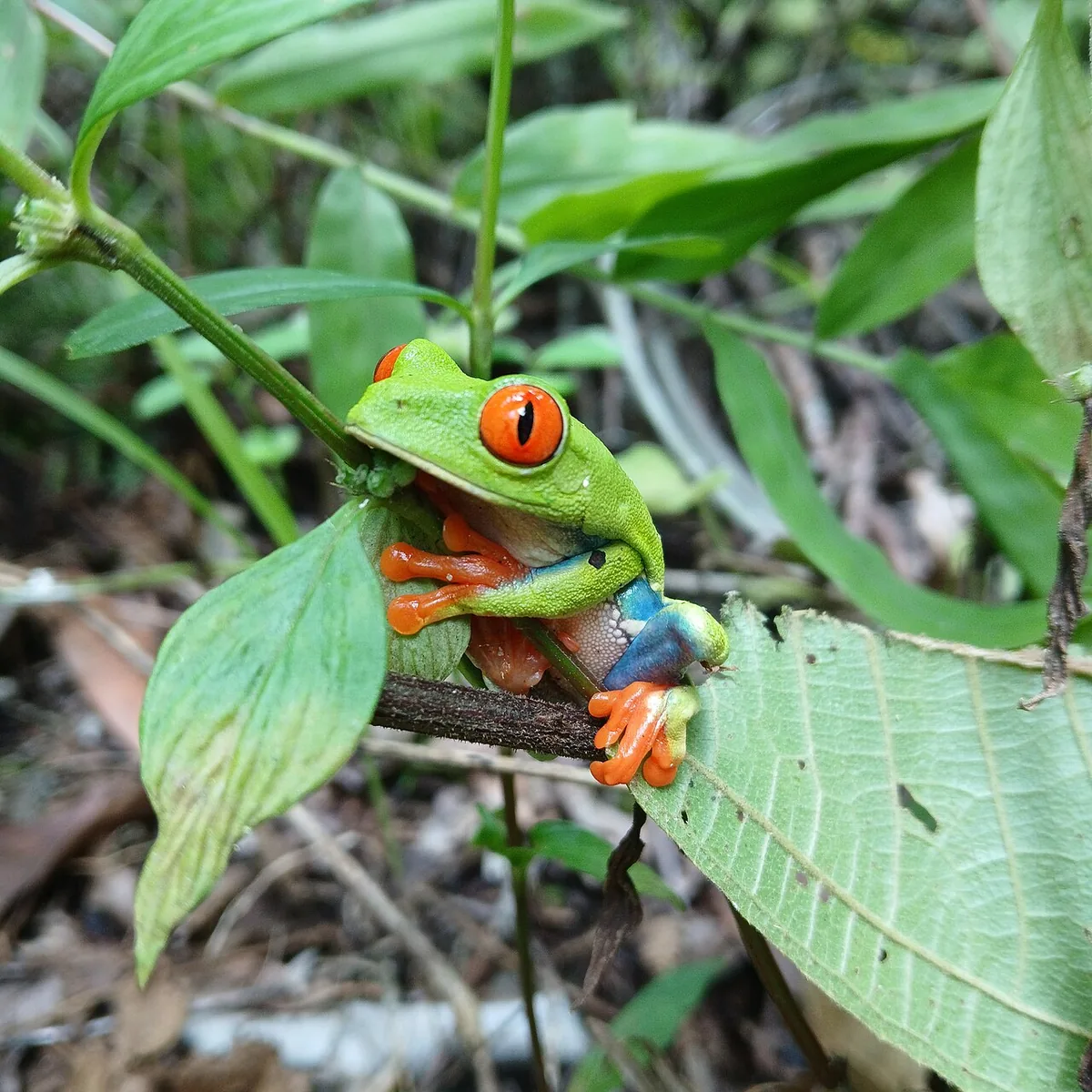
Red-Eyed Tree Frog (Agalychnis callidryas)
At a glance
| Adult size | Males 2 in · Females 2.5-3 in |
| Lifespan | 5-10 years |
| Enclosure | 18×18×24 in vertical with live plants |
| Temperature | 72-82°F day · 65-72°F night |
| Humidity | 70-90% (high, with daily misting) |
| UVB | Low-output recommended (Arcadia ShadeDweller) |
| Diet | Small crickets, dubia roaches |
| Handling | Strongly discouraged, fragile skin |
Why this species
- Iconic appearance, one of the most photographed frogs in the world
- Nocturnal display, visible at dusk and through the night
- Communal, can house 2-3 together in adequate space
- Live planted enclosures (bioactive) work well
Why not
- Strongly nocturnal, daytime sleep posture is camouflaged and undramatic
- High humidity demand, requires misting system or commitment
- Display only, handling damages permeable skin
- Fragile compared to fire-bellied toads or White's tree frogs
Frequently asked questions
How big do red-eyed tree frogs get?
Males reach about 2 inches in body length. Females are larger, 2.5-3 inches. Both have proportionally long legs.
How long do red-eyed tree frogs live?
5-10 years with proper care. Some captive individuals reach 12+ years.
Are red-eyed tree frogs good pets?
Yes for experienced keepers who want a display animal. No for beginners or anyone who wants to handle their pet, these are fragile, nocturnal, humidity-demanding.
Do red-eyed tree frogs need UVB?
Modern care recommends low-output UVB (Arcadia ShadeDweller or T5 HO 6%) for long-term health. Older care guides suggested it was unnecessary; current consensus differs.
Can red-eyed tree frogs live together?
Yes, 2-3 same-size adults in an 18×18×24 enclosure with adequate cover. Don't mix sizes (larger frogs eat smaller); don't mix amphibian species.