Poison Dart Frog Enclosure and Habitat
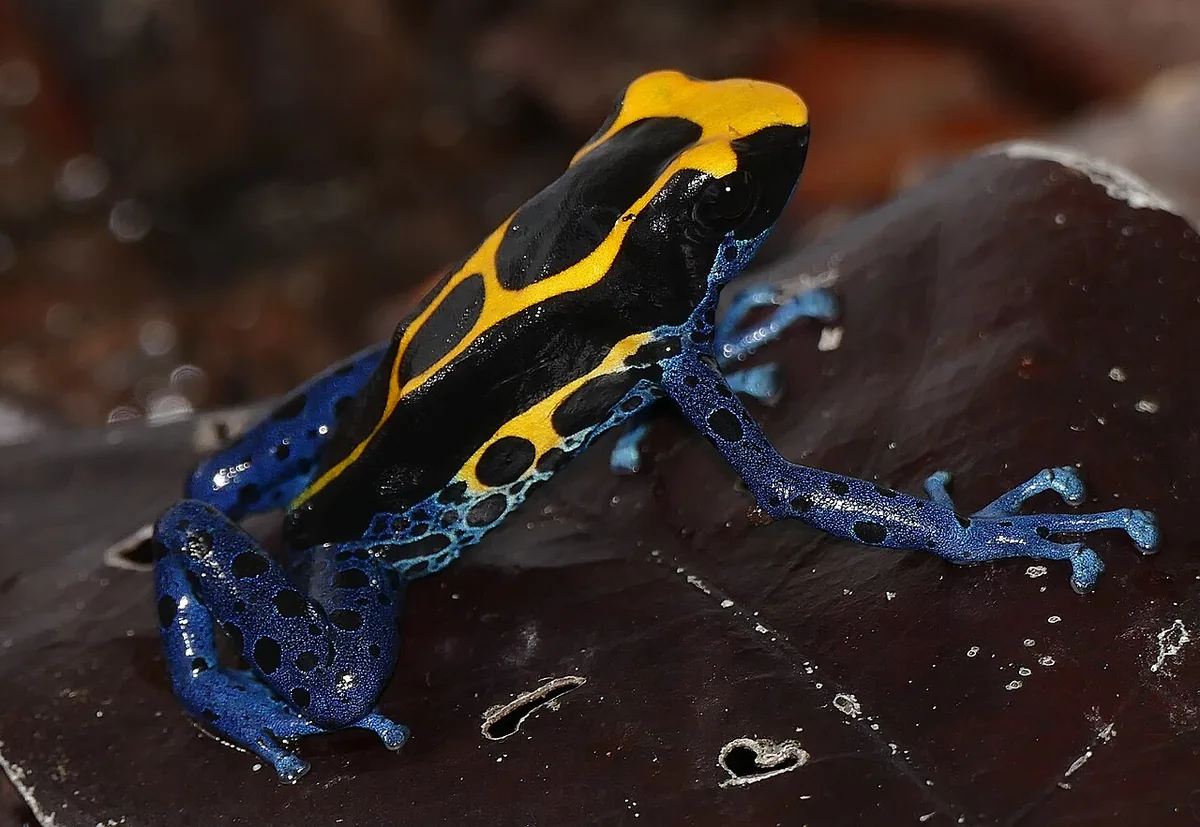
Dart frogs live in planted vivariums rather than tanks, and the construction matters as much as the dimensions. The published figure on this site is 18 by 18 by 18 inches for one to three frogs.
What published sources give
| Figure | Size | Notes |
|---|---|---|
| 1-3 frogs | 18 x 18 x 18 in planted vivarium | From this site's care guide |
| Single frog | 10 gallon planted vivarium | A lower figure seen in sources |
| Construction | Drainage layer, leaf litter, live plants, sealed top | The vivarium is the habitat |
| Temperature | 65-80°F; above 85°F can be fatal | Heat is the hazard, not cold |
Checked September 20, 2026. Where sources differ the range is shown rather than averaged. These are the figures published as minimums; none of them is a maximum.
What changes as they grow
Froglet
Small and easily lost in a large planted vivarium. Dense leaf litter helps them find food and feel secure.
Adult
18 by 18 by 18 inches for one to three. A well-planted vivarium of that size does more for the animals than a larger bare one.
Enclosure mistakes specific to this species
Untreated tap water, or residue on anything that goes in
Amphibian skin is highly permeable and absorbs what it touches. Chlorine and chloramine in tap water, soap residue on decor, and hand lotion on a keeper's fingers all reach the bloodstream in a way they never would with a reptile. Dechlorinate everything and rinse anything new.
Adding a heat source
The instinct carried over from reptiles, and the one that kills dart frogs. They are cool-forest animals, and sustained temperatures in the mid-80s can be fatal within hours. In most homes the correct equipment list contains no heater at all.
No drainage layer
A planted vivarium without drainage waterlogs, the substrate goes anaerobic and the plants fail. Drainage is structural rather than optional.
An open top
Humidity needs to stay high, and dart frogs are small enough to exploit gaps. A solid or sealed top is standard.
Enclosure hazards that apply to almost every setup
Five hazards come up across nearly every species on this site: contact burns from unguarded heat, UVB that never reaches the animal, cutting ventilation to hold humidity, unsecured decor, and trusting a bulb's wattage instead of a thermometer. They are set out in full, with sources, on our enclosure hazards page, which is worth reading once against any setup including one that looks finished.
Signs the enclosure is wrong
Animals tell you about their housing through behaviour before they tell you through illness. None of these is a diagnosis; each is a reason to look at the enclosure and, where noted, to call a vet.
| What you see | What it can mean |
|---|---|
| Frogs sitting exposed and inactive | Often temperature; check it is not running warm. |
| Waterlogged, sour-smelling substrate | Drainage layer failing or absent. |
| Froglets disappearing or losing condition | Often a food-finding problem in a large vivarium. |
| Plants dying back | Usually light or drainage, and both affect the frogs. |
Common questions
How big a vivarium do dart frogs need?
Published figures give 18 by 18 by 18 inches for one to three frogs, with a 10-gallon planted vivarium cited for a single animal. Construction matters as much as size: drainage layer, leaf litter, live plants and a sealed top.
Do dart frogs need a heater?
In most homes, no. They are cool-forest animals that do best in the low to mid 70s°F, and sustained temperatures above 85°F can be fatal within hours. Cooling in summer is the more realistic concern.
Why do dart frog vivariums need a drainage layer?
Without one the substrate waterlogs and goes anaerobic, the plants fail and the environment degrades. In a planted vivarium the drainage layer is structural rather than decorative.