Poison Dart Frog Care Guide
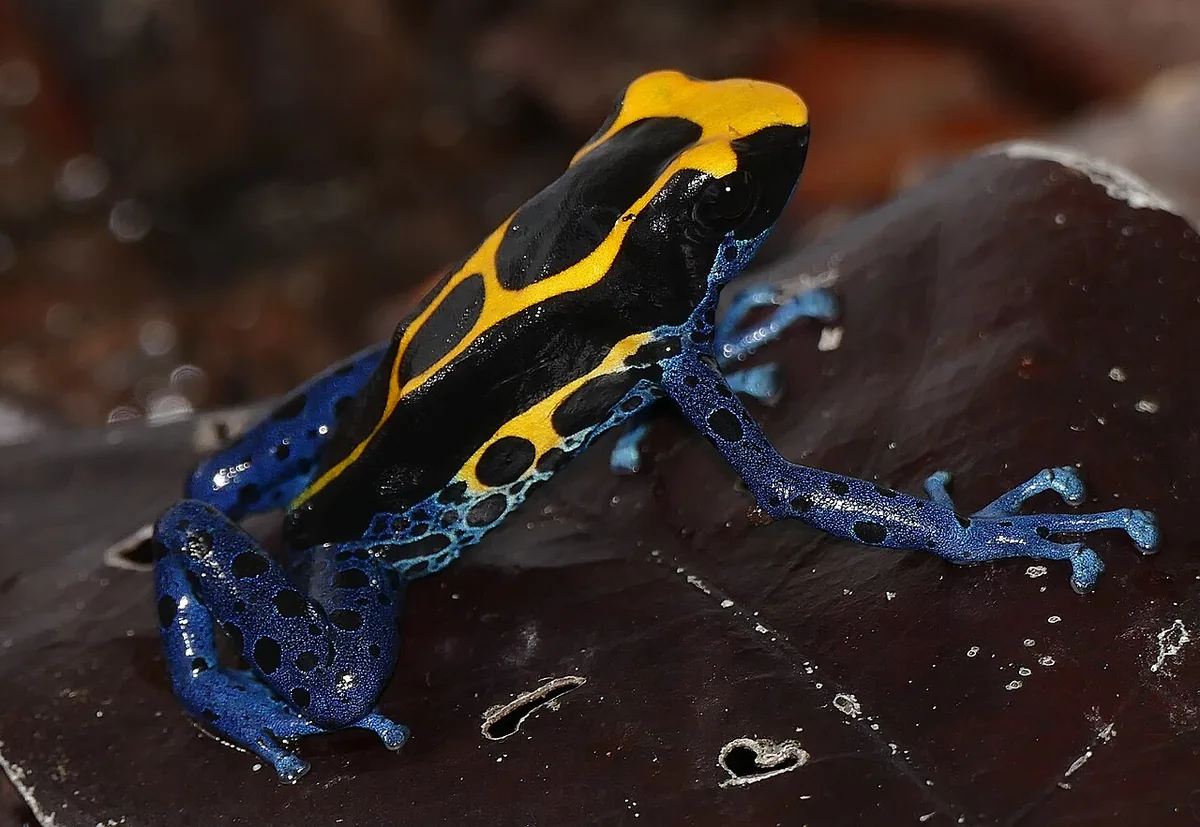
Small, brilliantly colored, active in daylight, and long-lived. Captive-bred dart frogs are not toxic. They are a vivarium animal rather than a handling animal, and heat is the one mistake that kills them quickly.
Poison Dart Frog at a glance
| Adult size | 1-2.5 in depending on species |
| Lifespan | 8-15 years typical, 20+ documented |
| Enclosure | 18 x 18 x 18 in planted vivarium for 1-3 |
| Temperature | 65-80°F, best in the low-to-mid 70s. Above 85°F is dangerous |
| Humidity | 70-100%, kept above 80% |
| UVB | Low-output beneficial, widely used in planted setups |
| Diet | Flightless fruit flies, springtails, isopods |
| Handling | None. Absorbent skin, so handling harms the frog |
| Toxicity | Captive-bred animals are not toxic |
What most poison dart frog care sheets get wrong
These are the errors that show up most often in secondary care sheets and forum advice. Each one is a real welfare issue, not a preference.
Captive-bred dart frogs are not poisonous.
This is the single most repeated error about the species. Dart frog alkaloid toxicity is diet-derived, sequestered from wild arthropods such as mites and ants. Frogs raised in captivity on fruit flies and springtails never acquire it, and wild-caught animals gradually lose their toxicity on a captive diet. Handling is still discouraged, but for the frog's sake, not yours.
Heat kills them faster than cold.
Keepers coming from reptiles reflexively add a heat lamp. Dart frogs are cool-forest animals. A sustained room temperature in the mid-80s can kill a healthy frog within hours. In most homes the correct equipment list contains no heater at all, and in summer the real problem to solve is cooling.
The name is misleading about their origin story.
Only a few species in the family were ever used to poison blow darts, primarily Phyllobates terribilis and close relatives. The vast majority of frogs sold under the "dart frog" label were never used that way and are not dangerously toxic even in the wild.
Why keep a poison dart frog
- Diurnal and genuinely active, unlike most pet amphibians
- Color that no other captive amphibian matches
- Small footprint, a beautiful planted 18-inch cube is a complete setup
- Long-lived for their size, often over a decade
- Captive breeding is mature. Well-established lines have been bred in the US and Europe for 40+ years
Why you might not want one
- Zero handling. This is an animal you watch, not hold
- Heat-intolerant. A hot apartment in summer is a real risk to their life
- Feeder culture is a standing chore: you maintain fruit fly cultures continuously
- A planted vivarium with drainage is more setup work than a basic tank
Common questions
Are captive-bred poison dart frogs poisonous?
No. Their toxicity comes entirely from a wild diet of specific arthropods, which they sequester into skin secretions. Frogs bred in captivity and fed fruit flies and springtails never develop toxins at all. Even wild-caught frogs lose their toxicity after a couple of years on a captive diet.
What is the best poison dart frog for a beginner?
Dendrobates tinctorius, Dendrobates auratus, and Dendrobates leucomelas are the usual recommendations. They are hardy, adapt well to captivity, are bold enough that you actually see them, and are widely captive bred, so you are not supporting wild collection.
What temperature do dart frogs need?
They do best in the low to mid 70s°F and tolerate roughly 65 to 80°F. Sustained temperatures above 85°F can be fatal within hours. In most homes they need no supplemental heat, and summer cooling is the more realistic concern.
How long do poison dart frogs live?
Eight to fifteen years is typical in a well-maintained planted vivarium, and individuals over 20 years are documented. For an animal that fits on a US quarter, that is a long commitment and worth planning for before buying.
Can you hold a poison dart frog?
You should not. Their skin is highly permeable and absorbs oils, salts, and residues from human hands, and the handling itself is stressful. Captive-bred frogs are not a danger to you. The restriction exists to protect the frog.
How big of a tank do dart frogs need?
A single frog can live in a 10-gallon planted vivarium, but an 18 by 18 by 18 inch terrarium housing one to three frogs is the more common and better recommendation. Leaf litter, live plants, a drainage layer, and a sealed top to hold humidity all matter more than raw volume.