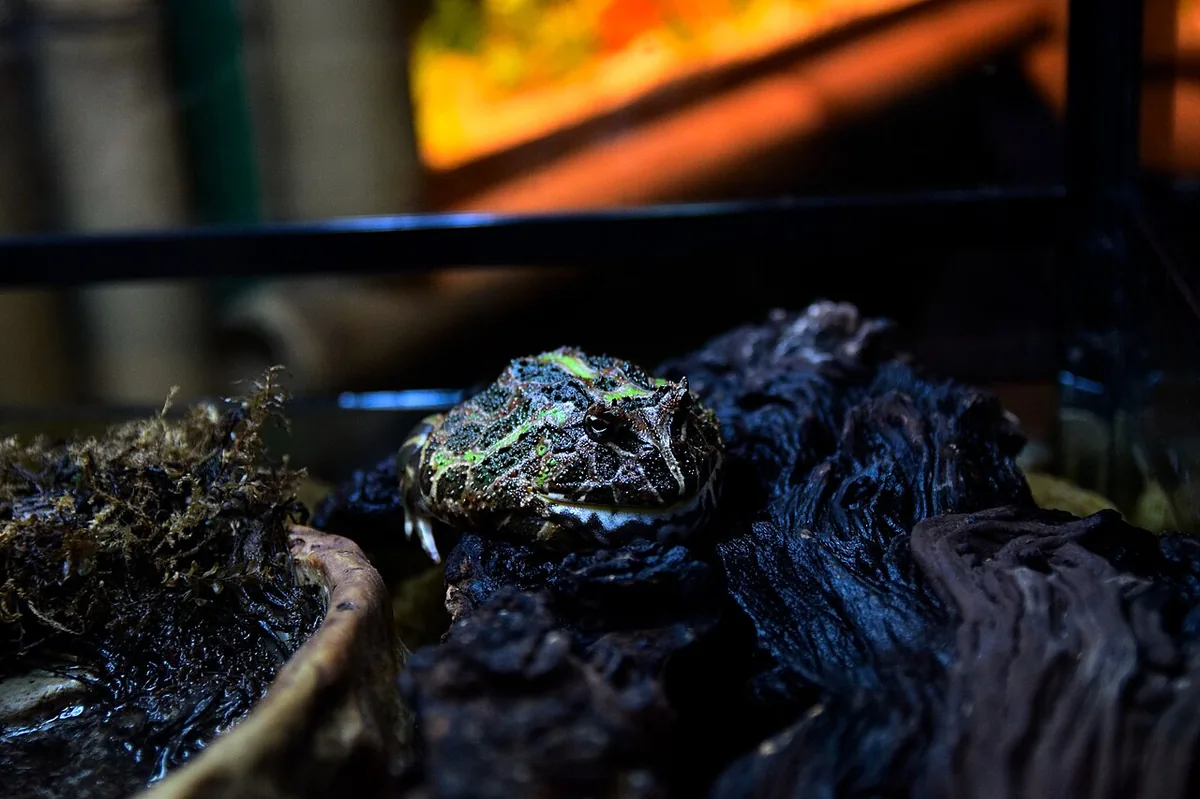
Pacman frog (Ceratophrys ornata)
Overview
The pacman frog (more accurately, several species of Ceratophrys sold under that nickname for their resemblance to the arcade character) is a sit-and-wait ambush predator from South America. In the wild they spend the dry season buried in soil and emerge during wet seasons to feed and breed. In captivity they reproduce this perfectly: buried 90% of the time, emerging when they smell food, striking with surprising speed.
They are not interactive pets in the way bearded dragons or ball pythons are. They are display animals, interesting to feed, interesting to watch on the rare occasion they move, generally invisible the rest of the time.
Enclosure
- Adult size: 18×18×12 inches (front-opening terrarium ideal)
- Juvenile: a 10-gallon tank or smaller during the first few months, too much space stresses juveniles
- Orientation: floor space matters more than height (they don't climb)
- Substrate: 3-4 inches deep of coconut fiber, sphagnum moss, or a mix. Must be moist enough to maintain humidity but not waterlogged.
- Water dish: shallow, large enough for the frog to soak. They drink and absorb water through their skin via their ventral surface ("seat patch").
- Cover: a hide or two for security, even though they bury themselves in substrate.
- Lighting: low-output UVB is recommended modern care (Arcadia ShadeDweller or similar). Not strictly mandatory but supports better long-term health.
Temperature and humidity
- Ambient temperature: 75-82°F daytime, can drop to 72°F at night
- Avoid: hot spots, basking lamps. Pacman frogs are not basking animals.
- Heating: if your room is below 72°F, use a low-wattage heat panel on the side of the enclosure (not under, they burrow against bottom heat and burn). Connect to a thermostat.
- Humidity: 60-80%. Mist the substrate as needed to maintain.
- Water source: dechlorinated only. Tap water with chlorine or chloramine damages amphibian skin.
Diet
Pacman frogs eat almost anything they can swallow. Their natural diet is opportunistic, insects, small vertebrates, occasional small mammals. In captivity:
- Juveniles (1-6 months): crickets and small dubia roaches every 1-2 days
- Subadults (6-18 months): larger insects every 2-3 days
- Adults (18+ months): nightcrawlers (best staple), dubia roaches, hornworms, the occasional pinky mouse (sparingly, high fat)
Dust insects with calcium-D3 supplement at most feedings. Never feed pacman frogs commercial reptile pellets soaked in water, these have caused obstructions and deaths.
Feeding response: the frog strikes everything that moves near its face. Use long feeding tongs. Don't hand-feed, they bite hard, accidentally or otherwise.
Handling
Don't, except when necessary. Pacman frog skin is permeable and easily damaged by oils, soaps, residues, and stress. Handling is for enclosure maintenance or vet visits only.
When you must handle: wash hands thoroughly with no soap residue, wet hands with dechlorinated water, support the frog with both hands. Keep handling under a minute. Return to enclosure promptly.
Health concerns
- Impaction from oversized prey or substrate ingestion during strikes. Use a substrate that passes safely (coconut fiber over loose gravel).
- Obesity from overfeeding. Adults need food every 5-7 days, not daily.
- Skin infections from dirty substrate or chlorinated water. Spot-clean weekly, full substrate change every 4-6 weeks.
- Metabolic bone disease if calcium supplementation is skipped or D3 is absent (some keepers skip both UVB and dietary D3; you need at least one source).
Lifespan
7-10 years with proper care. Some individuals reach 12-15 years. Most captive deaths under 5 years trace to husbandry failures (substrate impaction, obesity, infection from poor water quality).
Who this species is right for
- Keepers who want a display-only amphibian
- Keepers in apartments, small footprint, no lighting infrastructure required
- Keepers comfortable with insect feeding
- Keepers who enjoy a low-interaction pet
- NOT for keepers who want to hold or handle their pet
- NOT for keepers who want a visibly active animal