Axolotl Care Guide
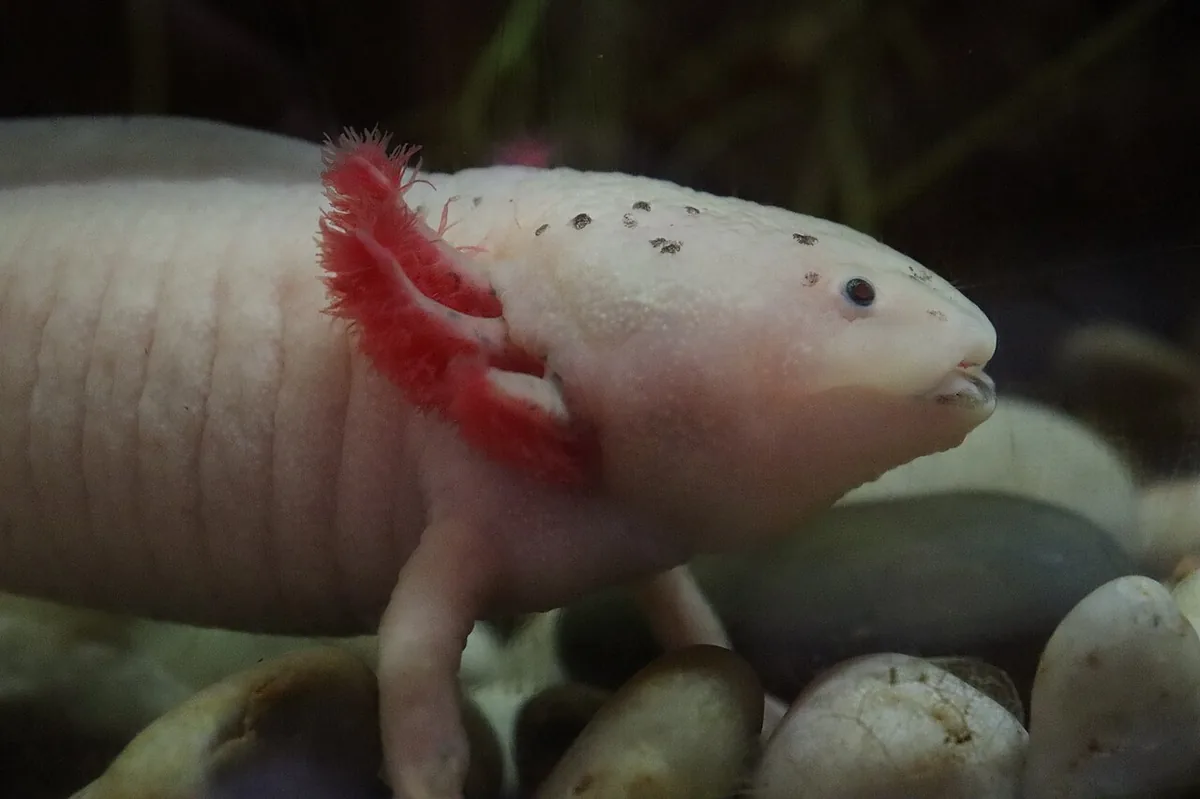
Is an axolotl right for you?
Axolotls are excellent for keepers who already understand aquarium husbandry (cycling, water testing, temperature management) or who are willing to learn. They're not "fish-like enough" for traditional fishkeepers to treat casually and not "reptile-like enough" for reptile keepers to use familiar approaches. The husbandry sits in its own category.
Heat is the #1 killer of captive axolotls. If you live somewhere hot without consistent AC, you will need an aquarium chiller. Budget for it.
Size
Adult axolotls: 9-12 inches, with documented individuals over 14 inches. Hatchlings start under an inch.
Tank size
Minimum 20-gallon long tank for one adult axolotl. 40 gallons for two. Floor footprint matters more than depth, axolotls walk on the bottom and rarely use the upper water column.
Glass aquariums standard. Lid is essential (axolotls can jump out).
Water, the most critical factor
Axolotl health is overwhelmingly determined by water quality.
- Dechlorinated water only. Use Seachem Prime, ReptiSafe, or age tap water 24+ hours. Chlorinated tap water kills axolotls within hours.
- Cycled tank required. Beneficial bacteria convert ammonia (toxic) to nitrate (less toxic). Cycle the tank for 4-6 weeks before adding the axolotl. Adding axolotl to an uncycled tank causes ammonia burns.
- Filtration: Sponge filter or hang-on-back filter rated for the tank size. Avoid strong current, axolotls don't tolerate it.
- Water changes: 20-25% weekly. Test ammonia (should be 0), nitrite (should be 0), nitrate (under 20 ppm).
- pH: 7.4-7.8 ideal.
Temperature, the second critical factor
- Ideal: 60-65°F (16-18°C)
- Tolerable: Up to 70°F (21°C)
- Dangerous: Above 72°F (22°C). Above 75°F (24°C) causes rapid decline.
If your room temperature exceeds 70°F regularly, you need an aquarium chiller. Fans across the water surface help marginally. Ice packs in bottles work in emergencies but aren't sustainable.
Heat stress symptoms: forward-curling gills, refusing food, increased mucus production, becoming pale.
Substrate
This is debated. Options:
- Bare bottom: Easiest to maintain, no impaction risk.
- Fine sand (silica or pool filter sand): Allows natural foraging. Acceptable for adults.
- Gravel or pebbles: AVOID. Axolotls swallow them; impaction is common and often fatal.
Many keepers use bare bottom for juveniles (under 5 inches) and switch to sand for adults.
Diet
Carnivorous. Staples:
- Earthworms (best staple): Nightcrawlers, red wigglers. Cut to size for smaller axolotls.
- Axolotl pellets: Salmon-based commercial pellets (Xtreme Bottom Feeder pellets, Hikari Sinking Carnivore).
- Frozen bloodworms: For variety, especially juveniles.
- Occasional whole prey: Small earthworm pieces, mealworms (limited, chitin), small ghost shrimp.
Avoid: Live fish (parasite risk), wax worms or super worms as staple, anything from outside (pesticide risk).
Feeding: adults every 2-3 days; juveniles every 1-2 days. Remove uneaten food after 15 minutes.
Handling
Don't, except when absolutely necessary. Axolotl skin is permeable and delicate; soaps, lotions, and oils on human skin damage them. If you must move one (cleaning, vet), use wet powder-free nitrile gloves and a soft fine-mesh net.
Common health problems
- Ammonia burn: From uncycled water. Symptoms: pale, raised gill filaments, lethargy. Fix water quality immediately.
- Stress / heat decline: From temperatures over 70°F. Forward-curling gills, refusing food.
- Impaction: From substrate ingestion. Surgical removal often necessary.
- Fungal infection: White cotton-like growth on skin. Salt baths or methylene blue treatment.
- Floating (gas buildup): From digestion issues or constipation. Fridging (lowering temp to 50°F for 24-48 hours) often resolves it.
Common axolotl mistakes
- Treating like a fish. Different temperature, different diet, different handling rules.
- Uncycled tank. The #1 cause of new-axolotl decline.
- Gravel substrate. Causes impaction.
- Allowing temperature to rise above 70°F. Heat is the #1 killer.
- Cohabitation with fish. Fish stress axolotls, nip at their gills, and carry parasites.
- Cohabitation with another axolotl in too-small tank. They bite each other's limbs and gills.
- Strong filter current. Stresses them.
- Feeding from gravel. Causes substrate ingestion.