White's Tree Frog Care Guide
Is a White's tree frog right for you?
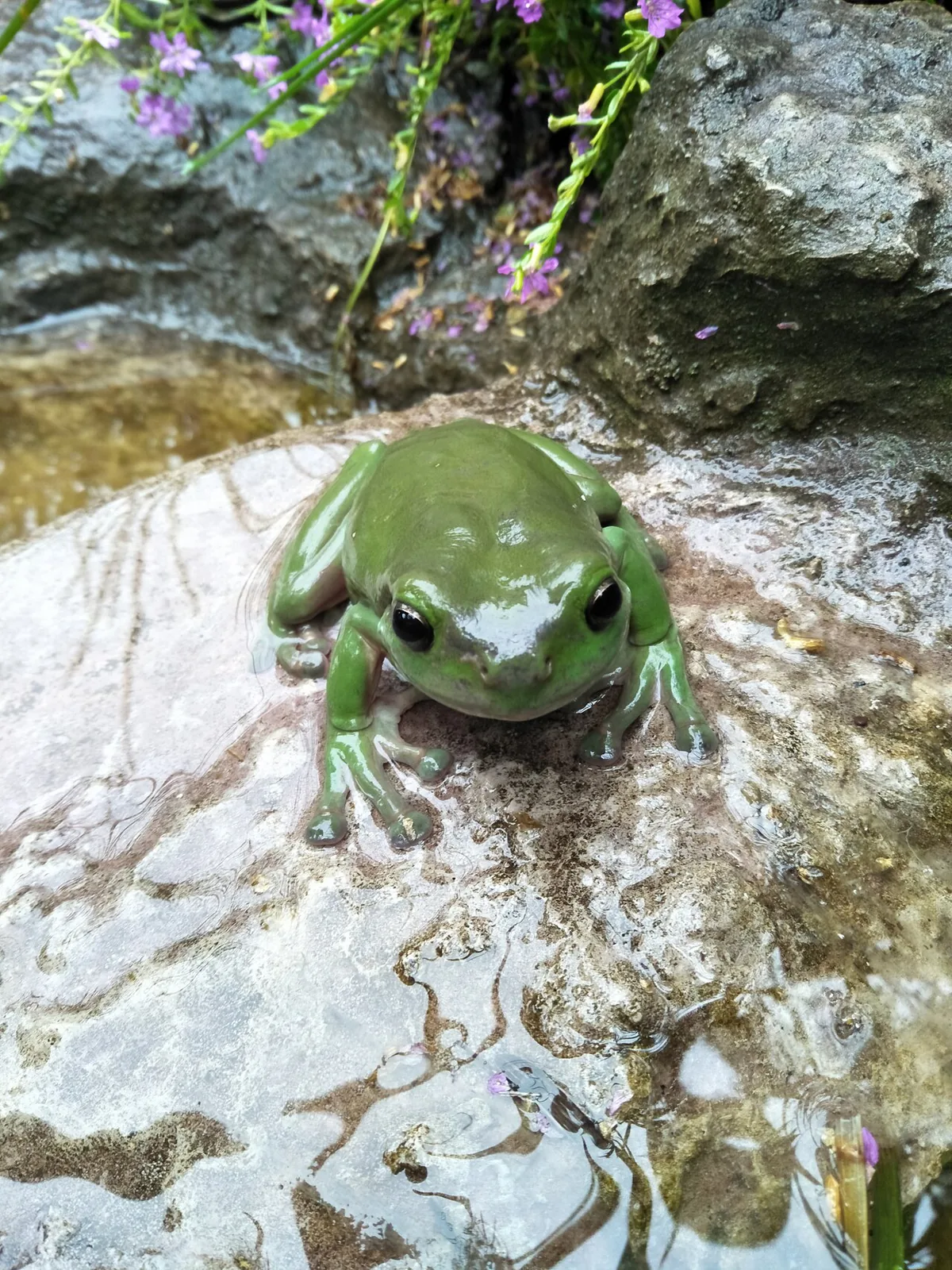
White's tree frogs are excellent beginner frogs. Calm, hardy, large enough to be observable, and tolerant of slightly imperfect husbandry. They're often suggested as the first frog for new amphibian keepers, and the suggestion is generally right.
The catch: they become obese easily, they're nocturnal so you'll mostly see them at dusk, and they're long-lived (15-20 years).
Size
Adult: 3.5-4.5 inches body length, females larger than males. They look bigger than they are because of their stocky, fold-of-skin appearance.
Enclosure
Minimum 18" × 18" × 24" tall (45 × 45 × 60 cm) for one. Glass or sealed PVC. Heavily planted, with sturdy branches and broad-leaved plants (pothos, philodendron, sturdy live or artificial plants). Water dish large enough for the frog to soak in.
Substrate: coco fiber + sphagnum moss + leaf litter; or bioactive setup. Avoid loose particulate that could be ingested (small bark, pebbles).
Temperature
- Day: 75-80°F (24-27°C)
- Night: 65-72°F (18-22°C)
- Maximum tolerated: 85°F briefly; sustained above hurts them
Most rooms suffice without supplemental heat. If needed, low-wattage halogen or ceramic heat emitter on the warm side, on a thermostat.
Humidity
50-70%, cycling between high (after misting) and moderate. Mist 1-2 times daily; allow dry-down. Constant high humidity (without ventilation) causes bacterial skin issues.
UVB
Optional but increasingly recommended. Low-output UVB (Arcadia ShadeDweller, Reptisun 5.0) supports vitamin D3 metabolism. White's tree frogs can survive without it but benefit measurably from low-output UVB.
Diet
Insectivorous. Staples: crickets, dubia roaches, BSFL. Variety: hornworms, silkworms, the occasional waxworm.
Gut-load insects 24-48 hours before feeding. Dust with calcium at most feedings; multivitamin once weekly.
Feeding schedule:
- Juveniles: 5-7 small insects every other day
- Adults: 3-5 appropriately-sized insects 2-3 times per week
Important: White's tree frogs become obese easily. An obese frog is at risk of fatty liver disease and shortened lifespan. Adjust feeding frequency to body condition, you should see slight definition between the body and limbs, not rolls of fat.
Handling
White's tree frogs tolerate brief handling better than most amphibians, but always with wet powder-free nitrile gloves. Soap, lotion, and oil residue on bare hands damages amphibian skin. Limit sessions to a few minutes.
They're not pets you take out for fun. Necessary handling only.
Common health problems
- Obesity: Very common. Major welfare issue. Reduce feeding.
- Metabolic Bone Disease: From inadequate calcium or UVB.
- Bacterial skin infections: From poor water quality in soak dish or chronic high humidity without ventilation.
- Chytridiomycosis: Devastating fungal disease. Quarantine new arrivals 30+ days.
- Impaction: From oversized prey or substrate ingestion.
Common White's tree frog mistakes
- Overfeeding. Obesity follows. Most adults don't need daily food.
- Bare-hand handling. Damages skin.
- Dirty water dish. Change daily, they soak in it and absorb anything in it.
- Inadequate ventilation. Causes bacterial issues.
- Cohabitation with smaller frogs. They'll eat each other.