← Fire-Bellied Newt care guide
Fire-Bellied Newt Enclosure and Habitat
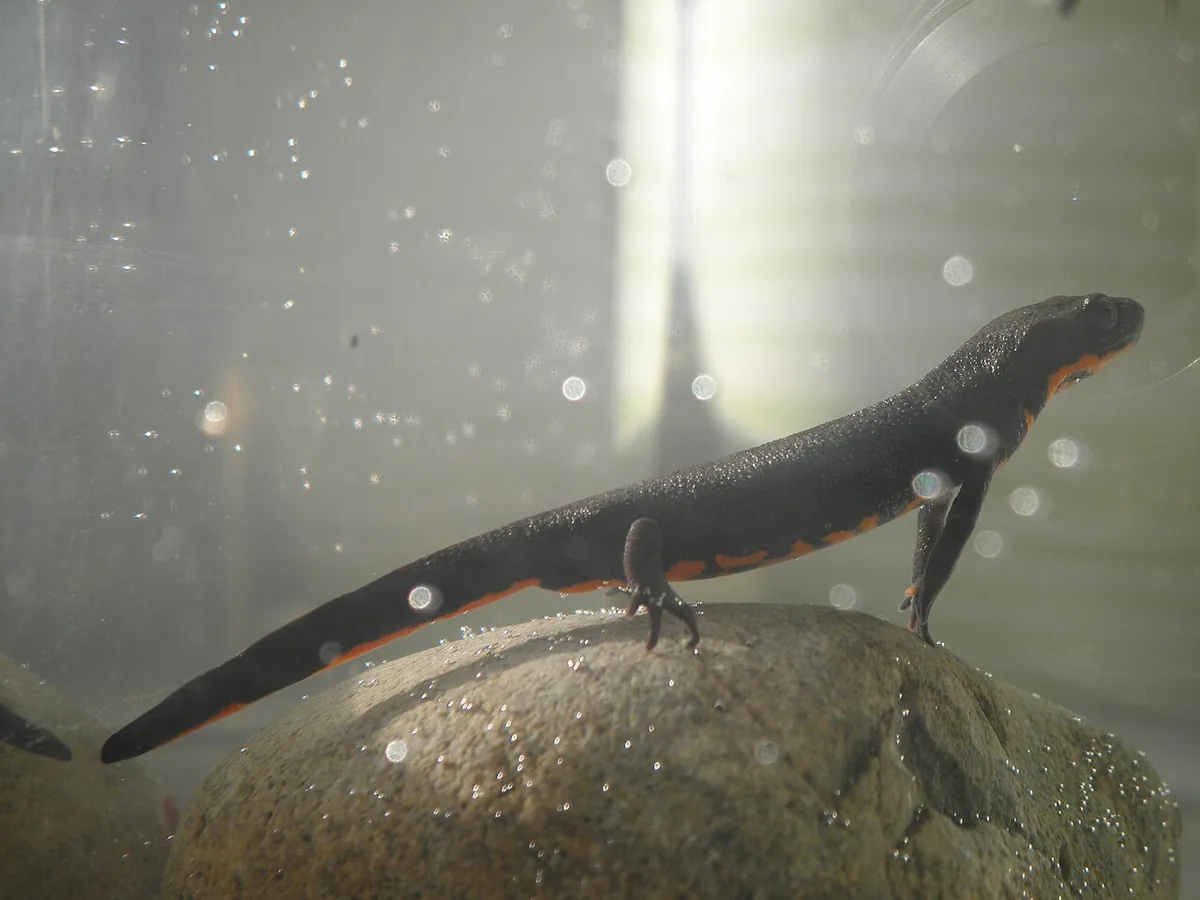
Fire-bellied newts need cool water and a way out of it. The published figure on this site is around 50 litres for one or two animals, arranged mostly as water with an accessible land area.
What published sources give
| Figure | Size | Notes |
|---|---|---|
| One or two newts | ~50 L aquarium with a land area | From this site's care guide |
| Water temperature | 14-20°C (57-68°F) | Avoid above 23°C; over 26°C not recommended |
| Arrangement | Mostly aquatic, but land access required | They haul out |
| Cooling | The main equipment question | Not heating |
Checked September 20, 2026. Where sources differ the range is shown rather than averaged. These are the figures published as minimums; none of them is a maximum.
What changes as they grow
Juvenile
Smaller volumes work but swing faster in temperature and chemistry, which is the argument for the published figure.
Adult
Around 50 litres for one or two. What matters more than volume is that the water stays cool and the newt can always get out of it.
Enclosure mistakes specific to this species
Untreated tap water, or residue on anything that goes in
Amphibian skin is highly permeable and absorbs what it touches. Chlorine and chloramine in tap water, soap residue on decor, and hand lotion on a keeper's fingers all reach the bloodstream in a way they never would with a reptile. Dechlorinate everything and rinse anything new.
A lid that does not latch
Frogs are better escapers than most people expect, and a dried-out amphibian dies quickly. Lids need to latch rather than rest, particularly on climbing species.
Letting the tank sit at room temperature
This is the failure that kills most fire-bellied newts. They want water between roughly 14 and 20°C, and a tank in a heated room through summer is a slow welfare problem despite a potential 10-15 year lifespan.
No accessible land area
They are primarily aquatic but still haul out, and an enclosure with no reliable exit from the water is incomplete.
Housing with fish
Fish out-compete slow-feeding newts and may nip at them, which is an enclosure decision as much as a feeding one.
Enclosure hazards that apply to almost every setup
Five hazards come up across nearly every species on this site: contact burns from unguarded heat, UVB that never reaches the animal, cutting ventilation to hold humidity, unsecured decor, and trusting a bulb's wattage instead of a thermometer. They are set out in full, with sources, on our enclosure hazards page, which is worth reading once against any setup including one that looks finished.
Signs the enclosure is wrong
Animals tell you about their housing through behaviour before they tell you through illness. None of these is a diagnosis; each is a reason to look at the enclosure and, where noted, to call a vet.
| What you see | What it can mean |
|---|---|
| Reduced appetite in a settled newt | Check water temperature first; it is the usual cause. |
| Floating listlessly or staying out of water | Water quality or temperature. |
| Skin lesions | Water quality, or something absorbed through the skin. Veterinary attention. |
| Escapes | They climb better than expected; lids need to latch. |
Common questions
How big a tank does a fire-bellied newt need?
Around 50 litres for one or two newts, arranged mostly as water with an accessible land area. Volume matters less for this species than keeping the water genuinely cool.
What temperature should a fire-bellied newt tank be?
Between roughly 14 and 20°C, or 57 to 68°F. Above 23°C should be avoided and above 26°C is specifically not recommended. Keeping them at ordinary room temperature is the most common cause of decline.
Do fire-bellied newts need land?
Yes. They are primarily aquatic but haul out regularly, so an accessible land area is part of the enclosure rather than optional.